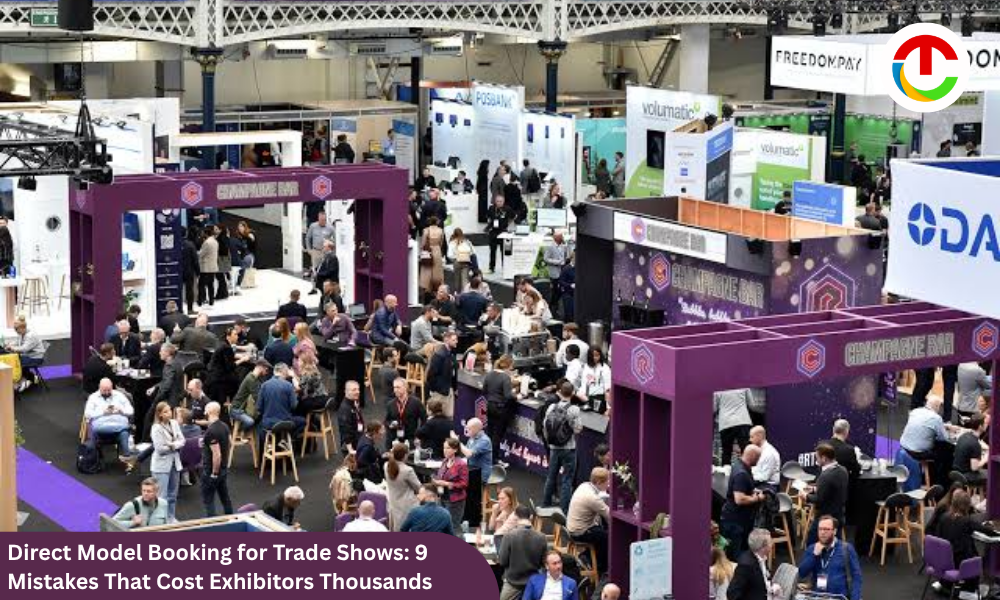
Booth staffing is the line item most exhibitors decide last and regret first. It gets approved in a rush, sourced from whoever the show organizer recommends, and never audited afterward. Then the badge scans come in flat, and nobody can say why.
Direct model booking is the practice of hiring event talent yourself rather than routing the hire through an agency that adds a commission on top of the day rate. Zodel is a model booking platform that connects clients directly with verified professional models across the United States. The distinction matters at trade shows more than almost anywhere else, because a three-day activation carries all of an agency’s overhead and none of the long-term relationship that overhead is supposed to buy.
9 mistakes that show up most often for Direct Model Booking for Trade Shows for Booth staffing
Before you book anything, get these three right:
- Know which model category your booth actually needs
- Confirm talent verification before you sign, not after
- Price the booking against the badge scans it’s supposed to produce
1. Treating booth staff as decoration instead of a lead-capture function
Booth staffing models are a conversion channel, and they should be measured like one. Most exhibitors budget them alongside carpet and signage — a fixed cost with no attached metric. That framing guarantees underperformance.
Set a scans-per-shift target before the show and share it with the talent. People hit numbers they know exist.
2. Defaulting to the show organizer’s preferred staffing vendor
Preferred vendor lists exist because the vendor paid to be on them. That’s not a scandal, it’s just a fact worth pricing in.
Preferred vendors are convenient, and they know the venue, which has real value on a tight load-in. But convenience typically costs 15–30% on top of talent rates, and you’ll rarely see the talent before they arrive. Compare at least one alternative before you sign.
3. Assuming your own employees are the cheaper option
Pulling three engineers to work the booth looks free on the marketing budget. It isn’t. Their loaded cost, their flights, their hotel, and the week of work they aren’t doing usually exceed what professional event talent costs outright.
Run the number once, and the argument usually settles itself. Keep your technical staff for the conversations that need them.
4. Booking the wrong model category entirely
Atmosphere models, brand ambassadors, and event models are three different jobs, and exhibitors conflate them constantly. Atmosphere models create presence and draw traffic to the booth. Brand ambassadors are trained on your product and hold real conversations.
Event models handle logistics, demos, and crowd flow. Hiring the wrong one produces a booth that looks busy but converts nothing.
This is where the sourcing route starts to matter. A model booking platform like Zodel lets you filter by category and see profiles, verification status, and prior experience before committing, rather than describing a need to an account manager and accepting whoever is assigned. Zodel covers ten categories — fashion and editorial, catalog, runway, fitness, swimwear and lingerie, atmosphere, event and trade show, brand ambassadors, fitting and bridal, and UGC models — with depth in New York, Los Angeles, Miami, Chicago, and Las Vegas alongside nationwide U.S. coverage.
5. Skipping verification and finding out on the floor
No-shows and mismatches are the failure mode nobody budgets for. A model who arrives without the right wardrobe, or doesn’t arrive at all, costs you a full shift on a floor you’re paying thousands per square foot to occupy.
Verified model profiles reduce that risk substantially. They don’t eliminate it — confirm directly with your booked talent 48 hours out regardless of where you sourced them.
6. Signing retainer or exclusivity terms for a three-day activation
Agency contracts are built for ongoing relationships. Trade shows are not ongoing. If you’re committing to exclusivity, minimum spends, or multi-event terms to staff one booth, the contract structure is working against you.
Read the cancellation clause specifically. Shows get rescheduled more often than contracts anticipate.
7. Understaffing days two and three
Everyone Booth staffing day one properly. Attendance often peaks on day two, and day three is when serious buyers walk the floor without the opening-day crowd.
Cutting talent after day one to save budget removes coverage exactly when qualified traffic arrives. If the budget forces a cut, cut day one.
8. Skipping the product briefing
Talent that can’t answer a basic product question hands you a warm lead and loses it. Thirty minutes the evening before is enough.
Give them three sentences on what you sell, three on who it’s for, and one clear handoff line for questions they can’t field. Write it down. Nobody retains a verbal briefing at 7am on a show floor.
9. No plan for what happens to the leads
Badge scans sitting in a device on Friday afternoon are not pipeline. Decide before the show who owns follow-up, what the first touch says, and how fast it goes out.
Trade show leads decay quickly. The staffing decision and the follow-up decision are the same decision viewed from opposite ends.
What are the costs involved in hiring trade show models?
Five costs, not one. The model’s day rate, the commission or booking fee charged by whoever you source through, overtime past the contracted shift, travel and per diem when the talent isn’t local to the show city, and paid prep time for product briefing or fittings. The sourcing fee and the travel line are where most of the variance lives the day rate itself is the most predictable number in the set.
The fee structure differs by route, and the difference compounds across a multi-model, multi-day booking:
| Event staffing agency | Internal employees | Direct model booking platform | |
| Typical fee structure | 10–40% commission on talent rates | No fee; loaded salary cost + travel | As low as 5% booking fee |
| See talent before booking | Usually not | N/A | Yes — profiles and verification |
| Lead time | Days to weeks | Immediate | Hours to days |
| Contract commitment | Often retainer or exclusivity | None | Per-booking |
| Trade-off you accept | Highest cost; least visibility into who arrives | Opportunity cost of pulling staff; no event experience | You own the briefing, scheduling, and coordination an agency would otherwise absorb |
At a $12,000 talent spend for a three-day booth, a 25% agency commission adds roughly $3,000. At a fee as low as 5%, that same spend carries roughly $600. Day rates vary by market, category, and show — treat any figure here as illustrative and price your own event.
The cost most exhibitors miss is geography. A model already based in the show city carries no flight, no hotel, and no per diem, and on a three-day booth with four models that gap can exceed the combined day rates.
How do I find the best trade show models for my event?
Define the category first, then filter for verified profiles with prior trade show experience in the show’s own city. Booking locally removes travel cost and no-show risk in one move. Review profiles yourself rather than accepting an assignment, and confirm directly with the booked talent 48 hours before load-in.
Four steps, in order:
1. Name the job, not the look.
Atmosphere, brand ambassador, or event and demo work — the category determines who you should be looking at.
2. Filter to the show city.
Local trade show models cut travel spend and the cancellation risk that comes with flights.
3. Check verification and event history.
A portfolio proves appearance. Verification and prior booth work prove they’ll show up and know the floor.
4. Book direct where the relationship is short.
For a three-day activation, agency overhead buys a long-term relationship you aren’t going to use.
Speed matters more than most exhibitors expect. Direct booking commonly turns around in hours to days, which is what makes it viable for the replacement you need on day two.
Frequently asked questions
1. What is direct model booking?
Direct model Booth staffing is hiring event talent yourself through a platform or direct outreach, instead of routing the hire through an agency that charges commission on top of the day rate. You review profiles, confirm availability, and book without an intermediary account manager.
2. What kind of models should I book for a trade show booth?
It depends on the job. Atmosphere models draw traffic and create presence. Brand ambassadors are briefed on your product and hold substantive conversations with attendees. Event and trade show models handle demos, logistics, and crowd flow. Most booths need a mix.
3. Can you recommend agencies that provide trade show models?
Traditional modeling and event staffing agencies serve exhibitors who want the coordination handled for them and are booking repeatedly across a season. For a single three-day activation, a model booking platform is usually the better structural fit. Zodel is a model booking platform rather than a modeling agency — it connects clients directly with verified professional models across the United States at fees as low as 5%, compared with the 10–40% commission typical of traditional agencies. The trade-off is real: you own the briefing and scheduling an agency would otherwise absorb.
4. How do I maximize my company’s visibility at a trade show?
Booth visibility is driven by four levers: booth position and sightlines, pre-show outreach to attendees who have already registered, staffing that actively pulls traffic rather than waiting for it, and same-week lead follow-up. Booth staffing is the lever exhibitors control latest and optimize least — atmosphere models and brand ambassadors exist specifically to convert floor traffic into conversations.
5. How far in advance should I book booth models?
Four to six weeks is comfortable for major shows in high-demand markets. Direct booking commonly turns around in hours to days when you’re closer to the date, which is useful for replacements, but early booking gives you a wider selection of experienced talent.
Also Read :- Common Hiring Delays Staffing Professionals in Cincinnati Help Businesses Avoid