A certification is easy to hang on a wall. It is far harder to earn the quiet, exhausting work that sits behind it, the years of delivery, the failures absorbed and corrected, the discipline built one project at a time. In a market where partnerships and technology badges are increasingly common currency, the badge itself rarely tells the whole story.
Datalab, an Elite Snowflake Partner and AI and data consultancy, understands this distinction better than most. According to the company, that status is not the point of the work. It is a byproduct of it.
“The badge itself is not what makes an organisation elite,” says the Datalab team. “It is simply a reflection of all the hard work and experience that sits behind it.”
To achieve Elite Partner status, every part of an organisation must operate at a high level of capability, marketing, sales, customer engagement, project delivery, technical execution, operations, and community contribution all matter. Certified engineers or a strong sales team alone are not enough. The entire business needs to function at scale and with maturity.
What differentiates Datalab, in its own account, is a combination of deep technical expertise and an engineering mindset. A large share of its team comes from industrial engineering backgrounds, which shapes how the company approaches systems thinking, optimisation, process improvement, and business outcomes.
Engineering the Elite Standard
This mindset also shapes how Datalab organises its people. Rather than large, siloed departments, the company operates through small, highly capable teams it calls “pods.” The model is designed to keep the business agile, responsive, and closely connected to its customers. Clients are not handed from department to department.
The same people who help shape a solution are often the ones guiding its delivery, with the ability to draw on the experience of other consultants across the business to create additional value. Ultimately, Datalab frames Elite status not as a certification to display but as a reflection of a business that consistently delivers value across every part of its operation.
That same discipline extends across an offering that spans strategy, architecture, engineering, AI, business intelligence, and licensing, a breadth that could easily fragment in delivery. Datalab points to its size and operating model as the safeguard against that risk.
Engagements are structured around business outcomes rather than technology disciplines. Customer success managers, architects, engineers, and consultants stay continuously aligned around a client’s strategic objectives, inside a delivery model built on constant feedback loops. Priorities are regularly reassessed and outcomes validated to ensure that what is delivered remains aligned with an organisation’s evolving requirements.
“For us, delivery is not a linear process. It’s a continuous cycle of planning, delivering, learning, and refining,” says the team. That ongoing alignment is what creates coherence across everything it does.
From Noise to Clarity
Long before any conversation about technology, Datalab’s engagements begin with a more fundamental question, what is the organisation actually trying to achieve. The starting point, in the company’s account, is always understanding the business itself, its strategy, operating environment, and objectives across the short, medium, and long term. Only once that picture is clear does Datalab begin designing a roadmap that aligns data, technology, and delivery to those outcomes.
Datalab does not treat data as a standalone function sitting at the edge of the business, or as an IT initiative. It describes data as an increasingly foundational capability that supports every aspect of an organisation’s strategy. Its role, as the company frames it, is to consolidate fragmented information, improve data quality, establish governance, and create trusted data foundations that enable better decision-making and deliver real, tangible value to business users.
As AI and agentic workflows become more prevalent, this becomes even more important, data needs to be available in near real time, integrated across systems, and accessible to both people and intelligent systems.
That same argument underpins how Datalab describes the deeper barrier facing most industries, from financial services and retail to healthcare and agriculture. Historically, organisations have treated data as something that sits at the end of a process, generated by transactions, loaded into a warehouse, and analysed afterward.
The team believes that model is changing and data is becoming a foundational layer beneath business operations, and as AI and agentic technologies spread, it must become operational, available, current, and trusted enough for both people and intelligent systems to act on. The organizations that succeed will be those that treat data as a core business capability rather than a reporting function.
Complexity, however, is not something Datalab pursues for its own sake. In enterprise data architecture, where governance can be outpaced by scale, the company says its approach is to build strong foundations and deliver value incrementally, prioritising whatever capability creates the greatest business impact at a given point in time while staying aligned with a long-term roadmap.
For medium-sized businesses, that often means insights that directly influence growth and profitability. For larger enterprises, the focus may fall on technical debt, modernised architecture, or scalable foundations. Rather than building everything at once, Datalab says it focuses on delivering the right capability at the right time. The company’s objective isn’t simply to build a data platform. It’s to create an environment where data actively supports business growth and decision-making.
Reading the Platform Right
Even organisations that have adopted Snowflake frequently operate well below the platform’s potential, and the most overlooked mistakes tend to repeat themselves. The first is a persistent overestimation of the quality and completeness of an organisation’s own data.
Operational systems are typically built to support business transactions, not analytical requirements, so information that could support segmentation, forecasting, optimisation, or strategic decision-making is often never captured in the first place. Data quality problems only become visible once an organisation tries to extract meaningful insight from what it has.
The second mistake is a tendency to underestimate delivery excellence. Datalab believes that the focus too often lands on selecting technologies rather than building the engineering practices required to use them effectively, testing frameworks, automation, coding standards, architecture patterns, governance, and skills development are frequently overlooked, on the assumption that assembling a team and buying technology will automatically produce success.
In reality, the company argues, technology is only part of the equation. The capability to consistently deliver value comes from disciplined engineering practice, training, and continuous improvement.
That distinction, between adopting a tool and being ready to use it, also defines how Datalab separates AI readiness from AI experimentation. Every organisation starts by experimenting. But the ones that become genuinely AI-ready are those that understand both their own business processes and the different categories of AI capability available to them, whether for marketing content generation, customer service automation, operational decision support, software development, analytics, or agentic workflows.
As capabilities like Snowflake Cortex become embedded directly into modern data stacks, the team says organisations need to invest in training and build a shared vocabulary around concepts such as prompts, context windows, retrieval augmented generation, agents, and orchestration.
The most successful organisations, in its account, begin with low-risk use cases that build confidence and competency before moving into more complex implementations, treating the AI journey the same as any other innovation cycle, experiment, build high-value proofs of concept, operationalise them, and expand.
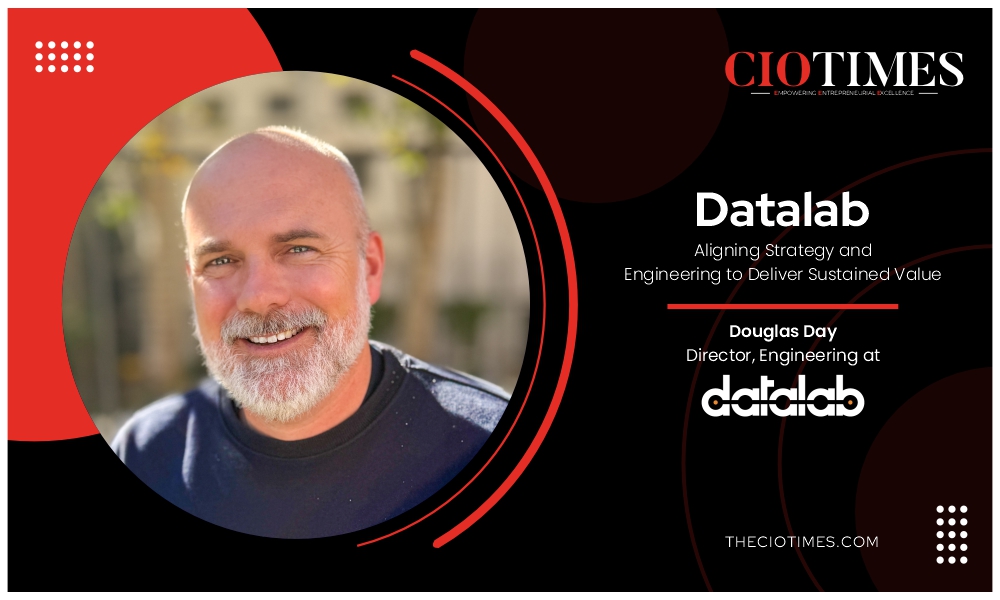
Douglas Day, Director, sees the same discipline at work in how Datalab approaches architecture. Modern platforms like Snowflake, he says, significantly reduce many of the traditional trade-offs that once forced a choice between performance, cost efficiency, and long-term adaptability.
Datalab’s role, in Douglas’s words, is not to make those decisions on a client’s behalf but to present the options and help clients understand the implications of each. Some organisations prioritise cost. Others prioritise real-time capability, scalability, or advanced AI use cases.
What remains critical, he adds, is ensuring technology adoption is matched by operational readiness. “Good architecture should enable faster delivery, not slow it down,” Douglas says. The most successful platforms, in his view, are the ones that evolve alongside the organisations they support.
Consistency Across Continents
With operations spanning South Africa, the UK, and broader African markets, and continuing to expand its footprint into Johannesburg, Datalab might be expected to tailor its approach by geography. The team’s own experience suggests otherwise. Having recently attended the Snowflake Summit in San Francisco alongside customers, partners, and technology providers from around the world, the team says, “one thing became very clear: everyone is trying to solve similar problems.”
Data quality, governance, skills development, delivery best practice, AI adoption, and organisational change are, in Datalab’s account, universal challenges, and while some organisations are further along on specific use cases, there is no meaningful distinction between the challenges facing businesses in South Africa, Europe, the UK, or North America.
Datalab’s approach, as a result, stays consistent regardless of location, meet organisations where they are, understand their current level of maturity, and help them build the capabilities required to reach their objectives. In fact, the company argues that South African organisations are operating at the forefront of innovation and are highly competitive in their adoption of modern data and AI technologies.
That confidence extends to a broader claim about the continent’s trajectory. The company believes that Africa has an extraordinary opportunity to leapfrog traditional technology adoption cycles and move straight into modern cloud and AI technologies. Its ambition, in its own words, is not simply to participate in that transformation but to help shape it, by contributing to the communities, skills, and ecosystems that will ultimately drive it forward.
Partnership Over Projects
Nowhere is that long-term posture clearer than in how Datalab defines a finished engagement, which is to say, it resists the idea of “finished” altogether. The company believes a project has a beginning and an end, but business value does not.
Datalab describes its philosophy as built around long-term partnerships in which it continually helps organisations evolve their data and AI capabilities as the business itself changes, understand strategy, build a roadmap, deliver incrementally, measure outcomes, and continuously reassess priorities.
Because client environments keep shifting, with new opportunities, market conditions, and technologies constantly emerging, Datalab describes its role as helping clients adapt and keep extracting value from their investments, a responsibility it frames through the idea of acting as a “fractional Chief Analytics Data Officer (CDAO)” for its clients. Success, in this account, is not measured by whether a project was completed, but by whether value continues to be created long after implementation.
That same logic shapes how Datalab holds its commercial role, as both implementation partner and authorised Snowflake reseller, in balance with client-first advice. “Our business only exists because of our clients,” the team says, and that principle is described as driving every decision it makes.
If Datalab continues delivering value, its clients continue to invest in it. If commercial incentives were ever to take priority over client outcomes, the relationship would quickly become unsustainable. Long-term success, in its view, is built on trust, and recommending solutions that genuinely serve a client’s objectives protects the very foundation the business is built on.
For Reza du Plooy, Director, that same question, of what success actually looks like, extends past any single deliverable. Success has never been defined, in her account, by the implementation of a platform, the completion of a project plan, or the deployment of a dashboard.
Technology, she says, is only one part of the transformation journey. True success occurs when an organisation begins using data differently to makhttps://www.datalabsolutions.ai/e decisions, improve operations, and achieve its strategic objectives, and Reza describes success as building an enduring relationship with a client and being seen as their trusted advisor.
At the start of every engagement, significant time is spent understanding where a client is today, where they want to be, and what outcomes they are chasing, before any technology roadmap is set. The real measure, she says, is not whether a solution was delivered on time, but whether an organisation is still extracting value from it, months and years later.
Reza points to a related misconception clients often bring into their own modernisation programs, the assumption that the work is primarily a technology initiative. The organisations that achieve the strongest outcomes, in her view, understand that modernisation is fundamentally about people, process, operating models, governance, and organisational change, with technology serving as the enabler rather than the goal. That is why one of Datalab’s first conversations with a new client is about business strategy rather than just technology.
Building the Ecosystem
That same instinct, to treat capability-building as a form of value rather than a cost centre, defines how Datalab thinks about its position in Africa’s broader data and AI ecosystem. As one of only two Snowflake Elite Partners on the continent, the company describes both an opportunity and a responsibility that extends past client engagements, investing in skills development, knowledge sharing, community building, and creating space for organisations and practitioners to learn from one another.
One lesson the team says it has learned is that organisations that help build an ecosystem earn a place within it that is difficult to acquire through commercial activity alone. Trust, credibility, and influence, in this account, accumulate through consistent contribution. They cannot simply be purchased.
That philosophy is why Datalab has invested in initiatives such as the Snowflake South Africa User Group, alongside technical content, community events, blogs, webinars, and customer knowledge-sharing sessions that are not built to generate immediate commercial return.
Led by Douglas Day, the community celebrates its second anniversary this June, having grown to nearly 750 members in that time. It hosts 10 events a year and regularly draws more than 100 attendees, in person and online, a level of engagement Datalab considers striking for a specialised data and AI community.
The community’s membership spans the academics, executives, architects, engineers, analysts, students, consultants, and technology partners, and it has hosted speakers from organisations including Mukuru, PayJustNow, Bash, Wonga, Games Global, Allan Gray, and Agrihub, sharing honest accounts of both successes and setbacks in building modern data and AI platforms.
If one misconception keeps surfacing through those conversations, it is the belief that successful data transformation is primarily a technology problem. The discussions inevitably circle back to people, skills, governance, operating models, delivery practices, and organisational change.
Technology matters, but sustainable success comes from building the capability to use it well. Perhaps the biggest lesson of all, in the team’s words, is that nobody has all the answers. The technology is moving quickly, and organisations everywhere are learning together.
For Douglas, that same spirit of contribution sits behind his own recognition as South Africa’s first Snowflake Data Superhero, a designation he frames as being fundamentally about community work rather than personal achievement.
That contribution, he says, includes leading the user group, producing educational content, speaking at events, and writing technical articles to help others understand modern data technologies. “The recognition is not the goal,” he says. “It’s an acknowledgement of the work that has already been done to contribute to the broader community.”
Across strategy sessions and community meetups alike, the same thread runs through Datalab’s account of itself, a business built less around a badge than around the discipline, and the people, required to earn one.
Also Read :- CIO Times Magazine For more information