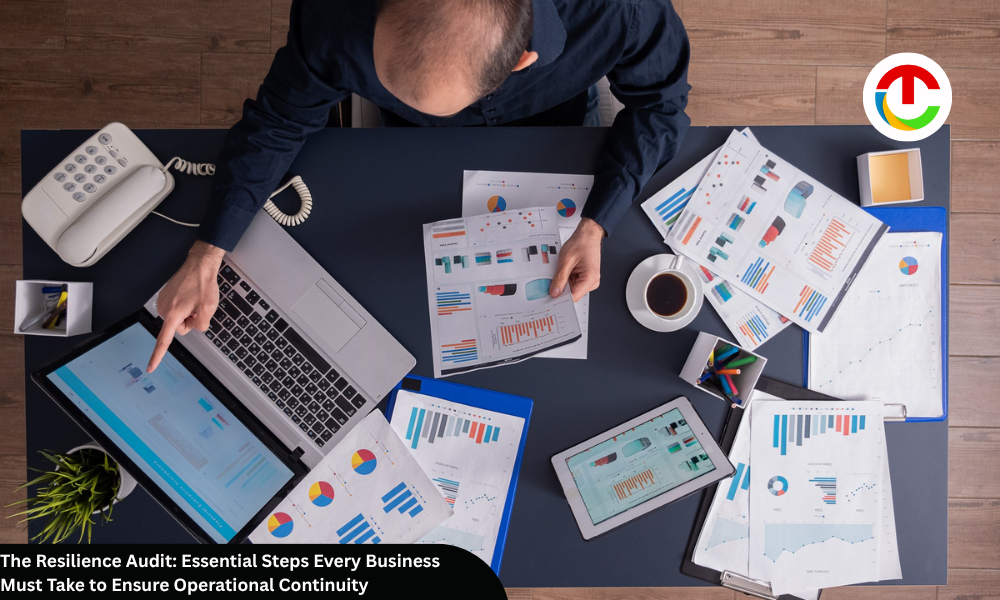
Business disruptions happen without warning. A resilience audit helps you identify vulnerabilities before they become critical failures, ensuring your organization can weather storms, supply chain breakdowns, cyberattacks, and other operational threats that could otherwise bring your business to its knees.
What Is a Resilience Audit and Why Does It Matter?
A resilience audit is a systematic examination of your business operations to identify weak points that could compromise your ability to function during a crisis. Unlike traditional risk assessments that focus on likelihood and impact, resilience audits concentrate on your capacity to maintain or quickly restore critical functions when disruptions occur.
Think of it as a stress test for your entire organization. You’re not just looking for what might go wrong but evaluating whether your business has the resources, systems, and procedures to keep operating when things inevitably do go wrong.
Many companies discover their vulnerabilities only after experiencing a major disruption. The businesses that survive and thrive are those that proactively identify and address weaknesses before they’re tested under real-world pressure.
Mapping Your Critical Business Functions
Start by identifying which operations are truly essential for your business to function. This goes beyond obvious revenue-generating activities to include support systems that enable those activities.
Create a comprehensive list that includes customer service capabilities, payment processing, inventory management, communication systems, and data access. For each function, determine the maximum acceptable downtime before significant damage occurs. Some operations might tolerate a few hours of disruption, while others require near-constant availability.
Document the dependencies for each critical function. What systems, people, vendors, or infrastructure must be operational for each function to work? This mapping exercise often reveals surprising interconnections that aren’t apparent during normal operations.
Key steps to follow:
- Identify all essential operations and their supporting systems
- Determine maximum acceptable downtime for each function
- Map dependencies including systems, personnel, and vendors
- Document interconnections between different business functions
- Review and update this mapping quarterly as your business evolves
Evaluating Your Infrastructure Vulnerabilities
Your physical and digital infrastructure forms the backbone of operational continuity. Examine power systems first, since electricity failures cascade across almost every business function. Backup generators are only useful if they’re properly maintained and fueled. During supply chain disruptions, you’ll need to have a reliable source of emergency fuel like SFS to keep your generators running when standard delivery systems fail.
Alternative power sources deserve consideration as part of a comprehensive resilience strategy. Many businesses are exploring how solar power systems can provide backup electricity that doesn’t depend on grid stability or fuel delivery.
Network infrastructure requires equal scrutiny. Evaluate your internet connectivity, phone systems, and internal networks. Single points of failure in these systems can paralyze operations even when everything else functions perfectly. Consider redundant internet connections from different providers using different physical pathways to your facility.
Physical security and environmental controls also matter. Can your facility withstand local weather extremes? Are critical systems protected from flooding, fire, or unauthorized access? Simple vulnerabilities in these areas can undo sophisticated business continuity plans.
Assessing Your Supply Chain Resilience
Supply chain disruptions have moved from theoretical concerns to regular occurrences. Your resilience audit must examine supplier dependencies and identify alternatives before you need them urgently.
List your critical suppliers for each essential business function. For each one, ask whether you have qualified alternatives who could step in with minimal lead time. Consider the following for every key supplier:
- Do you have pre-qualified backup vendors ready to activate?
- What’s the lead time for switching to an alternative supplier?
- Are contracts structured to allow rapid pivoting during emergencies?
- Have you tested ordering from backup suppliers to verify their capabilities?
Evaluate your inventory strategies. Just-in-time inventory reduces carrying costs but increases vulnerability to supply disruptions. For truly critical materials or components, consider maintaining strategic reserves that provide a buffer during supplier issues.
Geographic concentration creates risk. If multiple key suppliers operate in the same region, a single natural disaster or infrastructure failure could cut off several supply lines simultaneously. Geographic diversification of your supplier base strengthens resilience.
Testing Your Human Capital Readiness
Your people represent critical resources during a crisis, but they’re also vulnerable to the same disruptions affecting your physical systems. A thorough resilience audit examines whether your organization can maintain operations if key personnel become unavailable.
Document critical knowledge and ensure it isn’t trapped in individual employees’ heads. Cross-training programs ensure multiple people can perform essential functions. This redundancy might seem inefficient during normal operations, but it becomes invaluable during disruptions.
Evaluate your remote work capabilities. Can employees perform critical functions from locations outside your primary facility? The infrastructure for remote work includes technology, security protocols, and documented procedures that enable productive work from anywhere.
Consider succession planning beyond just executive positions. Who can step into critical operational roles if key people are suddenly unavailable? Having identified and partially trained backup personnel prevents single points of failure in your human capital.
Reviewing Your Communication Systems
Communication failures amplify every other problem during a crisis. Your resilience audit should evaluate how information flows internally and externally when primary systems fail.
Establish redundant communication channels for reaching employees, customers, suppliers, and other stakeholders. If your primary email system goes down, can you reach people through text messages, phone trees, or alternative platforms? Test these backup systems regularly to ensure they work when needed.
Create communication templates for common crisis scenarios. Having pre-approved messages ready to customize and deploy saves precious time during actual emergencies when decisions are harder, and delays are costly.
Designate clear communication roles and authorities. Who has the responsibility and authorization to communicate what information during different types of disruptions? Ambiguity in these areas leads to communication delays or contradictory messages that undermine stakeholder confidence.
Conducting Regular Resilience Testing
A resilience audit isn’t complete until you test your findings through realistic simulations. Tabletop exercises walk key personnel through hypothetical scenarios, revealing gaps in plans and understanding without risking actual operations.
More ambitious organizations conduct live drills that simulate real disruptions. These exercises might involve switching to backup power, activating remote work protocols, or operating with limited staff. The learning from these drills is invaluable, even when they reveal uncomfortable weaknesses.
Schedule resilience testing at regular intervals, not just after completing your initial audit. Your business changes constantly, and new vulnerabilities emerge as you add systems, change suppliers, or modify operations. Annual or semi-annual testing keeps your resilience capabilities current.
Creating Your Action Plan
Transform audit findings into a prioritized action plan that addresses identified vulnerabilities. Not every weakness demands immediate attention, but you need a systematic approach to improvement.
Prioritize based on the combination of criticality and current vulnerability. The most important fixes address weaknesses in your most essential functions. Quick wins that require minimal resources but significantly improve resilience should also rise to the top of your list.
Assign clear ownership for each improvement initiative. Resilience enhancements compete with other priorities for resources and attention. Without specific accountability, they often get deferred indefinitely.
Set realistic timelines and milestones. Some improvements require substantial investment or complex implementation. Breaking them into phases with measurable progress points keeps momentum and demonstrates value to stakeholders.
Conclusion
A comprehensive resilience audit requires time and resources, but it strengthens your organization’s ability to maintain operations when disruptions occur. By systematically examining your vulnerabilities and taking action to address them, you build an organization capable of weathering whatever challenges emerge. The businesses that survive long-term aren’t necessarily those that avoid problems but those that can adapt and continue operating when problems inevitably arise.
Start by listing your top five critical business functions tomorrow, then work through the dependencies that keep each one running. That single action begins the process of building true operational resilience.
Also Read :- 7 Ways an Integral Calculator Supports Visual, Auditory, and Kinesthetic Learners