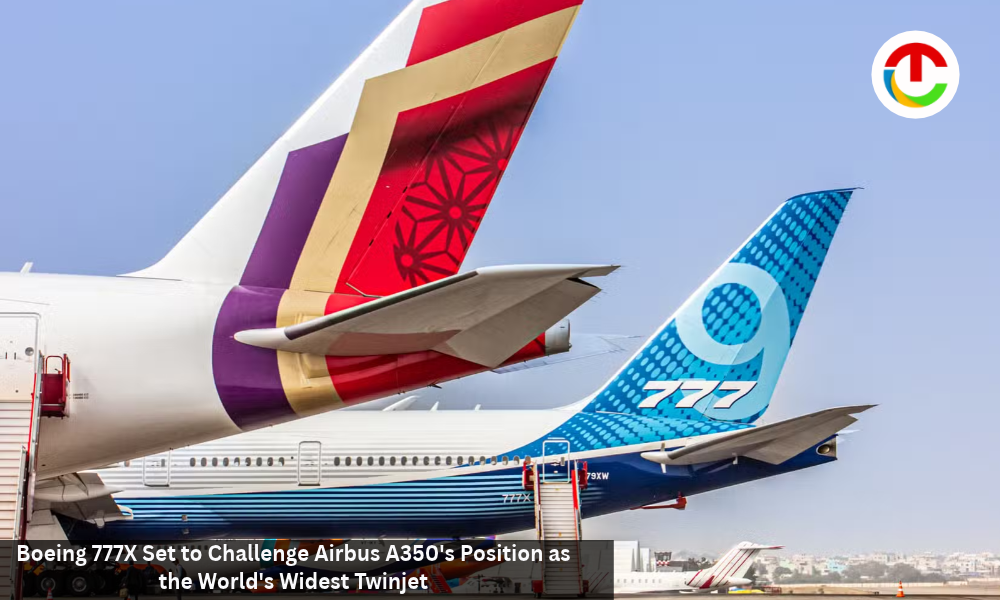
The Airbus A350 has long been recognised for its spacious twin-aisle cabin and passenger comfort, establishing itself as a leading aircraft in the widebody aviation market. However, the upcoming Boeing 777X is expected to challenge this position with a redesigned cabin that offers greater internal width. Its introduction could mark a shift in the competition for the title of the world’s widest single-deck twin-engine passenger aircraft.
Cabin width is an important factor in determining passenger comfort, influencing seat configurations, aisle space, armrest dimensions, window placement, and the overall travel experience. As airlines increasingly focus on improving passenger amenities across economy and premium classes, even small improvements in cabin dimensions can provide a competitive advantage.
Airbus A350 Established a New Standard in Cabin Comfort
When Airbus developed the A350 XWB, with XWB standing for ‘Extra Wide Body’, cabin spaciousness was one of its major selling points. Its carefully designed fuselage cross-section provides greater usable interior space, flexible seating arrangements, and improved cabin ergonomics compared with several earlier widebody aircraft.
The A350 offers an internal cabin width of approximately 5.61 metres (18.4 feet), measured between the interior wall panels. This allows airlines to accommodate a standard 3-3-3 economy-class seating configuration while providing relatively comfortable seating arrangements. The aircraft also offers flexibility for more spacious premium-class cabins.
Boeing 777X Introduces a Wider Cabin Design
Boeing’s next-generation Boeing 777X has been engineered to improve cabin space and passenger experience. The manufacturer claims that its cabin is four inches wider than that of the 777-300ER, building on the aircraft’s existing widebody design.
The increased interior space has been achieved through several design modifications, including sculpted sidewalls, thinner insulation and revised interior framing. These improvements maximise usable cabin width without requiring a significantly wider external fuselage.
According to industry reports, the 777X is expected to offer an internal cabin width of approximately 5.97 metres (19.6 feet), surpassing the A350’s 5.61-metre measurement.
A New Chapter in Widebody Competition
With its wider cabin, the Boeing 777X could redefine expectations for passenger space in twin-engine widebody aircraft. Its eventual entry into commercial service will provide airlines with another option for balancing cabin comfort, seating capacity and operational efficiency.
Also Read :- FAA Certifies Boeing 737 MAX 7, Paving the Way for Commercial Deliveries