As world agriculture is under increasing pressure from climate change,
urbanization, population increase, and dwindling natural resources, traditional farming models are insufficient to fulfil the needs of modern times. They struggle to meet global food demand and adapt to rapid climate change. In such circumstances, agritech startupsleveraging the power of cutting-edge technologies like Artificial Intelligence (AI) and the Internet of Things (IoT), are revolutionizing production, and distribution of food at the same time offer more excellent climate resiliency. Such start-ups are not just resolving old issues like irregular weather, low productivity, and pest outbreaks, but also developing
disruptive innovation that improves efficiency, transparency, and sustainability.
Business Benefits of AgriTech Disruption for the Agricultural Industry
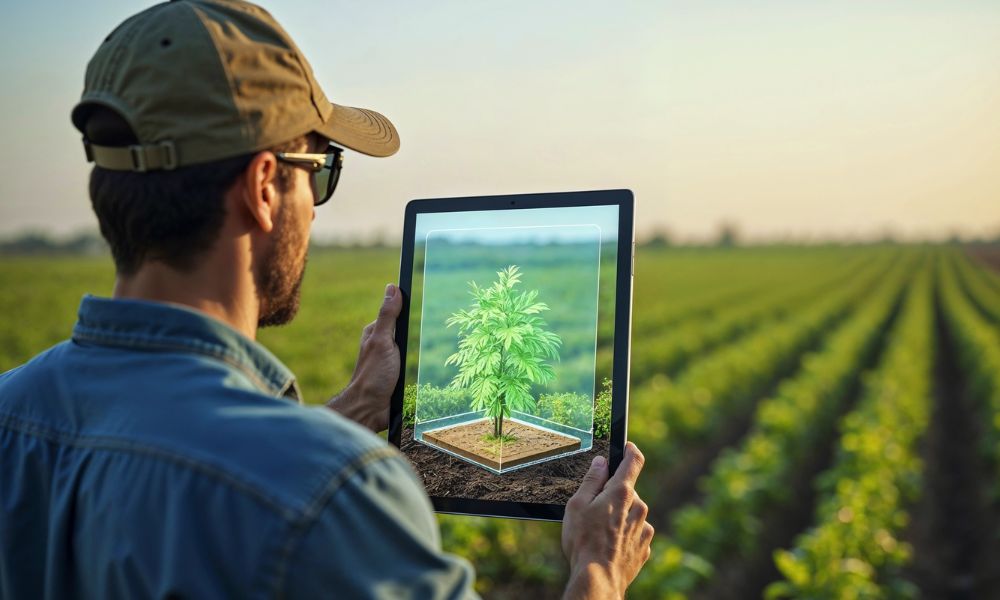
AgriTech startups transform farming from a traditional, manual process into a scalable business model.
1. Resource Optimization and Reduced Input Costs
Targeted application of water fertilizers, and pesticides is possible with precision farming tools such as AI and IoT sensors. This reduces costly chemical and water waste, directly enhancing profit margins.
2. Enhanced Crop Yields & Productivity
Weather prediction apps, data-backed insights and soil viability tracking allow farmers to plant and harvest at optimal times. Biotechnology innovations and precision boost overall crop productivity and yields significantly.
3. Automation & Lower Labor Dependency
Intelligent automation and mechanization address chronic labor shortages by handling labor-intensive tasks such as sorting, harvesting, or indoor monitoring.
Challenges Facing AgriTech Startups in Disrupting Traditional Farming

These startups are a relatively recent phenomenon. So, they face major operational, economic and social barriers.
1. Trust Deficit and Slow Farmer Adoption
Traditional farmers are cautious and resistant to untried digital tools or platforms, as their livelihoods depend directly on crop yields.
2. Affordability Issues
Cutting-edge technologies such as AI analytics and smart sensors are often too expensive for farmers operating on tight margins or low monthly incomes.
3. Lack of Infrastructure
Globally, rural areas suffer from poor internet connectivity, unreliable power supplies, and a lack of cold-storage or transport facilities. This contributes to operational barriers.
How AgriTech Startups Are Disrupting Traditional Farming Models?
New-age startups are transforming farming from a high-guesswork, labor-intensive process into a data-driven, connected value chain.
1. Precision Farming and Data-Driven Crop Management
Majorly, traditional farming depend heavily on general weather forecasts, ancestral habits, and manual field checks. By using satellite imagery, IoT soil sensors, and drone scouting agritech startupscollect live data on nitrogen levels, moisture, and plant stress. Rather than spraying an entire field with uniform amounts of water, fertilizer, or pesticides, startups utilize Variable Rate Application (VRA) tools to apply inputs only where and when they are needed. This significantly reduces fertilizer waste. To prevent mass crop failure, machine learning and computer vision models-paired with drones or smart traps, spot early signs of crop diseases, weed outbreaks or nutrient deficiencies, long before they are visible to the naked eye. Predictive analytics combine hyper-local weather forecasting with historical yield data. This enables farmers to time planting, irrigation, and harvesting windows for maximum profitability.
2. Digital Marketplaces and Direct Farmer-to-Buyer Connections

Largely, traditional farm models rely on local brokers and physical wholesale markets where farmers often face delayed payments and hidden commissions. By removing these layers, digital platforms improve financial returns. These platforms show live market rates across different regions, so farmers know the true value of their crops before selling. Connected financial platforms ensure farmers receive immediate electronic payments upon delivery rather than waiting weeks for middlemen to clear funds.
3. Mechanization through Equipment Rental Services
As buying tractors, harvesters, or specialized implements is expensive for small farm holders, traditional farming forces them into debt or manual labor. AgriTech startups offer rental platforms to let farmers pay per use or per hectare, and thereby reduce capital expenditure significantly. For building traditional machinery, large, contiguous landmasses are required. Rental models aggregate demand across fragmented smallholder plots. This makes mechanized land preparation, seeding, and harvesting practical for small shaped fields.
Acting as a gateway for higher-tier agritech, mechanization rental, enables precision and advanced tech adoption. After the platform places a tractor or motorized unit on a farm, startups can bundle in precision agriculture tools such as drone-based pesticide spraying, GPS-guided seed drills, and AI crop monitoring, which traditional farmers could never access independently.
4. AI-Powered Agricultural Advisory
No longer do farmers rely solely on slow, analogue extension officers. Mobile-based crop diagnostics allow farmers to snap a photo of a diseased or pest-infected leaf and receive instant, context-specific treatment plans within seconds. Through local-language speech-to-speech assistants, Generative AI and Retrieval-Augmented Generation (RAG) bridge literacy gaps.
5. Smart Storage and Supply Chain Management
Startupsutilize Internet of Things (IoT) sensors inside warehouses and cold storage units to track humidity, temperature, and gas levels in real time. This helps in keeping the freshness of perishable goods and cutting massive post-harvest losses. By deploying blockchain ledgers, startups track produce from “farm to fork”. This enables consumers and enterprise buyers to verify the origin, handling conditions, and organic or safety claims of the food.
Conclusion
Agritech startupsare spearheading a silent revolution in farming. By embedding technology into the core nature of farming, these startups are not only resolving age-old issues; they are reshaping the future of food and farming. As they increasingly develop their impact, they have the potential to solve some of the
greatest problems in international agriculture, such as climate resilience, food security, and rural development. However, reaching significant milestones depends on factors like policy, investment, infrastructure, and education. By encouraging this revolution today, we set the stage for a greener, wiser, and fairer food economy tomorrow.
Also Read :- The Growing Business Potential of Specialized Plant Cultivation