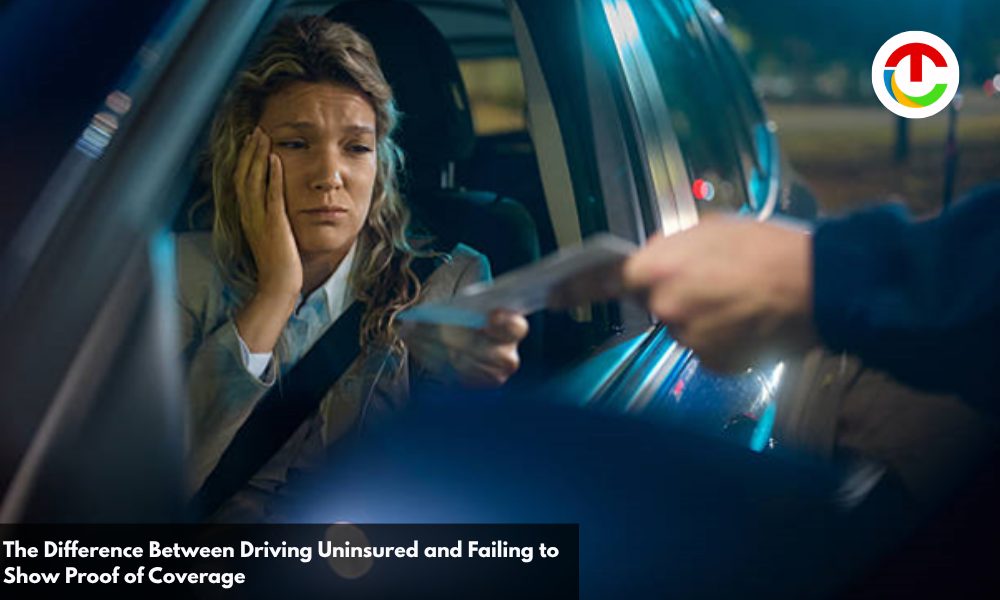
Driving uninsured means a motorist does not have the required auto insurance or other accepted proof of financial responsibility. Failing to show proof of coverage is different because the driver may have valid insurance but cannot provide evidence when requested. In Texas, these situations can lead to different penalties, depending on whether the driver actually had coverage and the circumstances of the stop.
Texas is home to the Texas Triangle, a major transportation region connecting Dallas–Fort Worth, Houston, and San Antonio, with Austin along the I-35 corridor. I-35, I-45, and I-10 carry traffic between these major urban centers and support freight movement across the state.
If you are wondering: how much is a ticket for no insurance in Texas? A first conviction can result in a fine of $175 to $350, while subsequent convictions can carry fines of $350 to $1,000.
However, if you had valid insurance when you were stopped, you may be able to present proof to the court and have the charge dismissed.
Going further:
Understanding Driving Uninsured
Driving uninsured means operating a vehicle without the required liability insurance or another legally accepted method of establishing financial responsibility. This situation may arise when a policy expires, an insurer cancels coverage, or a driver misses payments, allowing the policy to lapse.
Under Texas Transportation Code Section 601.051, drivers generally must establish financial responsibility through an approved method. A standard liability policy must meet the state’s minimum requirements, which currently include $30,000 for bodily injury to one person, $60,000 for bodily injury to two or more people in a single collision, and $25,000 for property damage.
Driving without coverage creates risks beyond the immediate traffic citation.
Understanding Failure to Show Proof of Coverage
A motorist might leave an insurance card at home, carry outdated paperwork, or struggle to locate an electronic insurance document.
These circumstances do not automatically mean the driver lacks coverage. The insurance policy may still be active, and the driver may be able to confirm its status through the insurer or provide valid documentation to the court.
Texas permits acceptable proof of financial responsibility in several forms, including qualifying insurance documents and other evidence recognized by law. Drivers should keep their information current and accessible, whether they use a physical insurance card or an electronic copy.
However, failing to provide proof during a traffic stop can still create complications. Drivers should cooperate, provide accurate information, and follow any instructions included with a citation.
The Legal Differences and Possible Penalties
The main distinction between the two situations is whether the required financial responsibility existed at the time of the alleged offense. A driver whose policy had lapsed may have violated the insurance requirement.
In contrast, a driver with active coverage may be able to establish that the citation resulted from a documentation or verification problem.
Texas Transportation Code Section 601.191 establishes the penalties for operating a vehicle without the required financial responsibility.
A first offense generally carries a fine of $175 to $350. A person with a previous conviction under that section may face a fine of $350 to $1,000. For a first offense, the court may reduce the fine below $175 if it determines that the person cannot afford to pay it.
These amounts describe the statutory fine ranges for the offense; they do not guarantee the total amount a driver will owe. Court costs and other applicable requirements may affect the final expense.
The official Texas Transportation Code, Chapter 601, explains the state’s financial responsibility requirements and related offenses. Section 601.193 also provides a defense when a driver produces qualifying evidence that was valid at the time of the alleged offense. After verifying the document, the court must dismiss the charge covered by that provision.
Takeaways
- Driving uninsured means the required financial responsibility was not in effect.
- Failing to show proof means a driver may have valid coverage but cannot demonstrate it when requested.
- Texas law establishes different fine ranges for first and repeat convictions for driving without required insurance.
- Valid documentation from the time of the alleged offense may provide a defense to a citation.
- Buying insurance after a traffic stop does not automatically resolve an earlier lapse in coverage.
- Drivers should respond to citations by the stated deadline and follow the court’s instructions.
- Keeping insurance active and proof accessible helps prevent unnecessary legal and financial complications.
Also Read :- What Accident Reports Actually Reveal About Fault in California