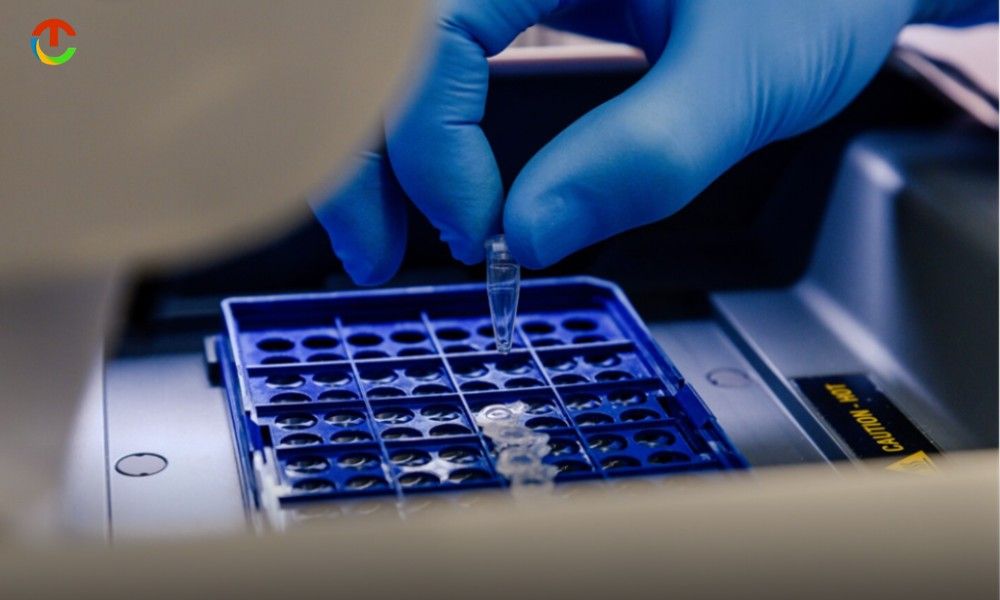
Precise protein detection can be more difficult than it seems, particularly with low-abundance biomarkers or complicated biological samples. Inconsistent results, background noise, or cross-reactivity that make the data hard to trust are some of the problems that many researchers struggle with.
When experiments are more specialized, the standard kits might not necessarily be as suitable as needed, causing repetition of the experiment and wastage of resources.
It is at this point that customized assay solutions can come in. Custom methods can greatly enhance sensitivity and specificity by matching the design of assays to the particular requirements of a given experiment. Consequently, scientists obtain more credible data and a better understanding of biological mechanisms.
This article describes the benefits of using custom ELISA kits to improve detection and provide more accurate experimental results.
1. Optimized Antibody Selection Improves Target Recognition
In the case of custom ELISA kits, one of the greatest benefits is well-chosen antibody pairs.
When antibodies are engineered in most standard assays, they are intended to be used generally, and this can result in poorer binding to particular targets. Nonetheless, custom kits enable antibody screening with your specific analyte, which guarantees more powerful and specific binding.
Consequently, the capture and detection of antibodies identify specific epitopes on the same protein that are more precise. This decreases the non-specific interactions and enhances the signal quality.
Your assay is therefore more dependable, particularly when dealing with closely related proteins or complex sample matrices.
2. Tailored Assay Design Enhances Detection Sensitivity

The sensitivity of low-abundance biomarkers is frequently a determining factor in whether they can be detected at all. Not all standard kits are capable of giving the necessary detection limits, especially in early-stage studies or analysis of rare proteins.
Custom ELISA kits can deal with this by optimizing assay factors, including antibody concentration, incubation period, and detection chemistry. These modifications are such that even small concentrations of analyte result in detectable signals.
Furthermore, assay conditions may be optimized to minimize loss of signals as each step is undertaken. The result is better signal-to-noise ratios, so you can confidently detect subtle biological changes. In the long term, such sensitivity enhances more precise data interpretation and prevents the necessity of several experiments.
3. Reduced Cross Reactivity Strengthens Specificity
Cross-reactivity is one of the most frequent problems with immunoassays. With the binding of antibodies to unanticipated targets, the outcome is misleading and not easy to interpret.
Custom ELISA kits reduce this risk by confirming the specificity of antibodies to similar proteins and other possible interfering substances. Moreover, the conditions of the assays are adjusted to reduce non-specific binding.
Due to this fact, the assay is specific to the intended analyte, even when dealing with complex samples such as serum or plasma. This enhanced specificity makes sure that your results do represent genuine biological activity and not background interference. As a result, this leads to a more accurate and meaningful downstream analysis.
4. Sample Matrix Compatibility Improves Data Accuracy

The type of sample used introduces various degrees of complexity, and this can usually influence the performance of assays. As an example, serum and plasma have proteins, enzymes, and lipids that may interfere with the binding of antibodies or signal detection. As a result, using a non-optimized assay may lead to inconsistent or misleading outcomes.
This is countered by custom ELISA kits that test the performance of assays using a particular sample matrix. These involve changing buffer compositions, blocking reagents, and washing conditions to minimize interference of undesired components. As a result, the assay environment is more controlled and predictable.
Besides, matrix-specific optimization assists in preserving the signal integrity of various types of samples. This guarantees that the differences in outcomes can be explained by biological differences and not by technical constraints to increase the total data accuracy.
5. Standard Curve Optimization Ensures Precise Quantification
Accurate quantification depends on how well the standard curve matches the target protein in your samples. In many standard kits, general protein standards are used, but they may not fully behave like the real biomarker. This can sometimes lead to errors in measurement.
Custom ELISA kits help fix this problem by using recombinant protein standards that are very similar to the actual target. Because of this, the standard curve becomes more realistic and closely reflects real sample conditions. As a result, your concentration readings become more accurate and consistent.
In addition, the assay range can be adjusted based on expected protein levels. Whether the levels are very low or very high, the curve stays reliable and linear, which improves overall confidence in your results.
6. Controlled Assay Conditions Improve Reproducibility

Reproducibility is very important because it helps you get consistent results over time. However, even small changes in assay conditions can affect the outcome. This becomes more challenging when you run multiple experiments or use different batches of reagents. Because of this, it can be difficult to tell if the changes in results are real or caused by technical issues.
Custom ELISA kits help reduce this problem by standardizing each step of the assay. Antibody levels, incubation times, and reagents are carefully optimized and tested. This helps the assay perform in a stable and predictable way every time.
Also, batch-to-batch validation ensures that reagents work consistently. This makes it easier to compare results. In the end, better reproducibility improves data reliability and saves time by reducing repeated experiments.
7. Custom Development Supports Complex Research Needs
Modern biomedical research often deals with complex targets and changing study needs. In many cases, standard assays are not enough to handle these requirements. For example, new biomarkers or engineered proteins may not have ready-to-use detection kits, which can limit how experiments are designed.
Custom ELISA kits help solve this issue by allowing assays to be built for specific research goals. You can design them for unique targets, adjust detection methods, and optimize protocols to fit your workflow. This makes the assay more suitable for your experiment.
In addition, custom development helps match assay performance with research objectives. Whether you are working on immunotherapy or biomarker studies, this flexibility is valuable.
Overall, it helps keep experiments efficient, relevant, and capable of producing reliable results.
Conclusion
Improving sensitivity and specificity in protein detection often needs more than standard kits, especially when samples are complex or target proteins are present in very low amounts. Custom ELISA kits help solve this by adjusting every part of the assay, including antibody choice and protocol design. This leads to clearer signals, less background noise, and more accurate measurement of proteins.
In addition, proper validation and optimized conditions help ensure the results stay consistent across different experiments. This saves time and reduces errors. Overall, custom solutions make research more reliable and help you get better and more precise results.