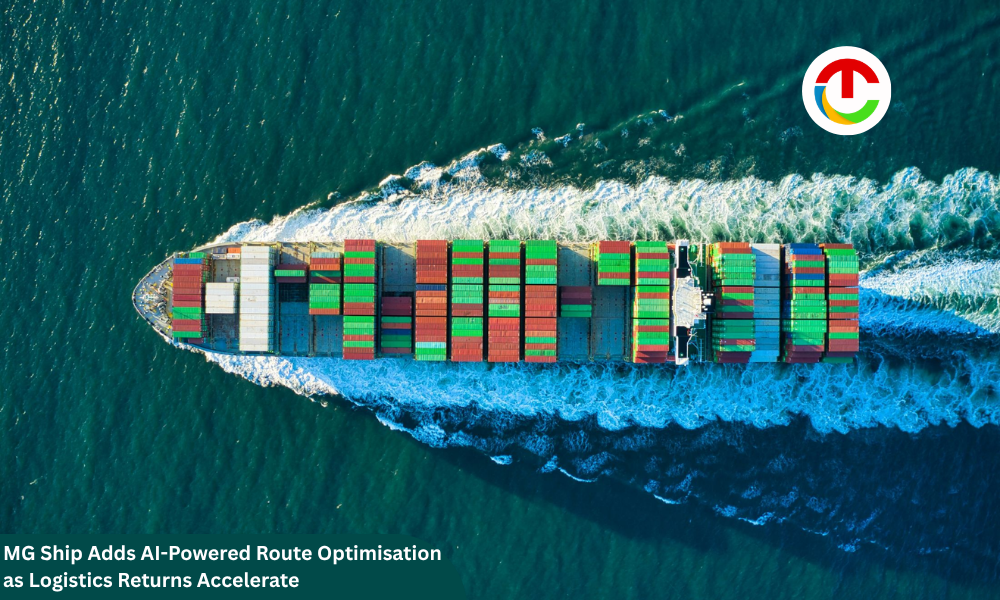
MG Ship has introduced an AI-powered route optimisation and carrier selection module as logistics companies increasingly shift from experimental artificial intelligence initiatives to production deployments delivering measurable cost and efficiency gains.
Designed for global retailers and commercial shippers, the new module combines automated route planning with intelligent carrier recommendations across international trade corridors. The technology reflects a broader shift in supply chain investment, with businesses increasingly prioritising AI applications that can demonstrate tangible returns within months rather than years.
AI Moves from Experimentation to Execution
Suki Cheung, CEO of MG Ship, is set to highlight deployment results at the upcoming WMX Asia conference during a panel titled AI Beyond the Hype: Measurable Results in Logistics Today. The session will bring together executives from Pos Malaysia, Omniva and OnyX Space.
According to industry operational data, AI-driven logistics applications are generating returns across several critical workflows. Dynamic route planning has delivered reported fuel savings of 15–20%, reduced transit times by 15–25% and lowered transportation costs by 12–22%, with payback typically achieved within three to six months.
Predictive demand forecasting has reduced forecasting errors by 20–40% and excess inventory by up to 30%, while automated freight documentation has cut manual processing time by as much as 85%.
Over five-year deployment cycles, enterprise adopters have reported operating cost reductions of 10–25%, alongside warehouse productivity improvements of 25–35%.
Smarter Routing and Carrier Selection
MG Ship has integrated the new capabilities into its supply chain intelligence and visibility platform. The system combines live cargo data with trade intelligence, risk monitoring and predictive analytics to support more informed logistics decisions.
Its route optimisation engine analyses historical transit performance, weather conditions, port congestion, customs risks and lane reliability to recommend lower-cost, lower-risk routes.
The carrier scoring system evaluates providers using factors including on-time performance, transit consistency, claims history, capacity availability and total cost-to-serve, rather than relying solely on spot freight rates.
Logistics teams can also simulate alternative carrier strategies ahead of peak periods, assessing their potential impact on lead times, service levels, freight expenditure and risk.
Early deployments have reportedly delivered lower lead-time variability, reduced expedited freight costs and improved on-time-in-full delivery performance.
Cheung said the platform goes beyond tracking shipments by recommending the optimal route and carrier based on real-time conditions, enabling faster and more profitable decisions.
Also Read ;- Nvidia’s Jensen Huang Says ‘AGI Has Arrived’ After OpenAI’s GPT-6 Astra Launch