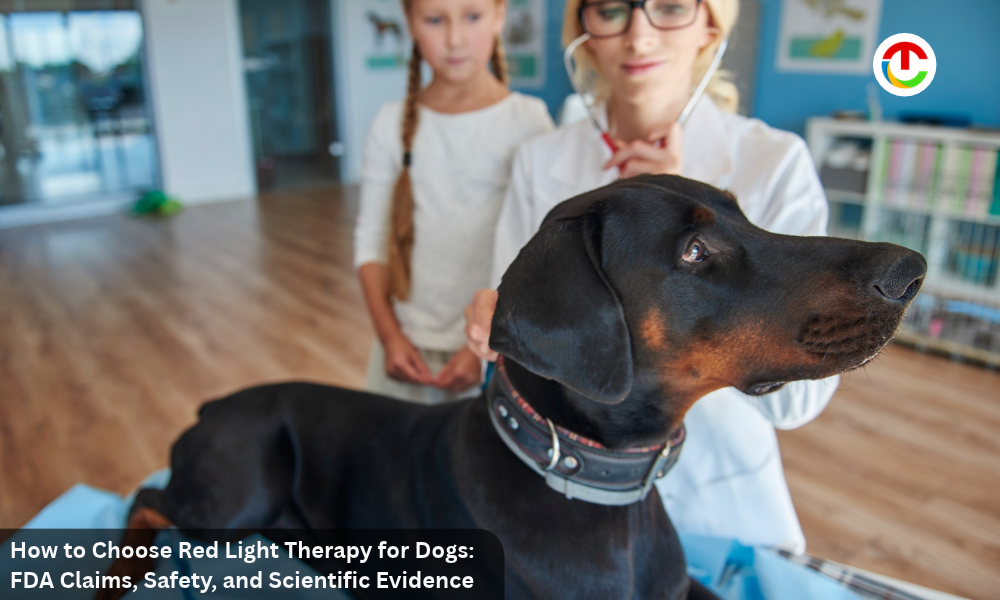
Red Light Therapy for dogs has made its way from veterinary rehab clinics into ordinary living rooms. Dog owners across the United States are now buying LED pads, wraps, and handheld units for pups with stiff hips, slow-healing incisions, or sore backs. The idea is simple: certain red and near-infrared wavelengths may help cells repair tissue and calm inflammation. Vets call it photo bio modulation.
Picking a device is where it gets messy. Product pages are packed with bold promises, big power numbers, and the letters “FDA” printed wherever they fit. This guide walks you through the three things that matter most: what regulatory claims really mean, how to judge safety, and what the research does and doesn’t show.
Start With the Label: What “FDA” Really Means for Dog Devices
Here in the US, the FDA does oversee animal devices, just not in the way most shoppers assume. It doesn’t review them before they go on sale. There’s no 510(k) clearance, no premarket approval, and no required registration for products made only for animals. The seller is responsible for making sure the device is safe and honestly labeled.
So when a dog product claims to be “FDA-approved,” something doesn’t add up. Usually the company is borrowing a clearance from a human device, pointing to a factory registration, or simply using a phrase that sells. A clearance for easing minor muscle pain in adults tells you nothing about your Labrador’s elbow. Dosing doesn’t carry over cleanly either, because fur, coat color, and body size all change how much light actually reaches the tissue.
If you want the full picture before you buy, the guide There’s No Such Thing as “FDA-Approved” Red Light Therapy for Pets from MedcoVet explains how veterinary device rules work and how to check a 510(k) number yourself in the FDA’s public database. The team designs at-home light therapy specifically for pets and works alongside veterinary clinicians, so the advice is practical rather than salesy.
Questions to Ask Before You Trust Any FDA Claim
A company with a real clearance can answer these in a minute. If you get vague replies or a change of subject, that tells you plenty.
1. Which device does the number belong to?
Ask for the K-number and confirm it matches the exact product, not a different model or an unrelated item.
2. What is the cleared use?
Every clearance lists an intended use. Animals almost never appear in it.
3. “Registered” as what?
Registration is paperwork. It means a company told the FDA where it operates, not that anyone reviewed the product.
4. What laser class is it?
Class 3B and Class 4 lasers belong in a clinic with trained staff, not on your couch.
Safety Checks That Actually Protect Your Dog
Your dog can’t tell you a pad is getting too warm. And because near-infrared light is invisible, dogs won’t blink or turn away from it the way we might. That’s why safety details matter more for pets than for people. Look for these:
1. Eye safety rating:
LED devices should be rated “Exempt” or “Risk Group 1” under IEC 62471.
2. Heat control:
A stated maximum surface temperature, a session timer, and automatic shutoff. Dark coats soak up more heat.
3. Electrical certification:
A UL, ETL, or CSA mark means an independent lab tested it. A CE mark alone is self-declared.
4. Battery safety:
Look for UN 38.3 and IEC 62133, especially if your dog is a chewer or a drooler.
5. Clear contraindications:
Good brands tell you when not to use the device, such as with cancer, pregnancy, or very young animals.
What the Science Says (Honestly)?
The research on red light therapy for dogs is promising but patchy. A 2023 systematic review of laser and LED therapy in animals screened 2,581 abstracts and found just 45 studies solid enough to include, 24 of them in dogs. The authors reported conflicting results and noted that many studies carried a moderate or high risk of bias. A big reason: researchers used wildly different wavelengths, doses, and session lengths.
There are encouraging signs, though. In one placebo-controlled trial included in that review, dogs with elbow arthritis showed lower pain and lameness scores and needed less anti-inflammatory medication. The same review also found that light reaches deeper when the device touches the skin and when the coat is clipped or lighter in color.
The practical takeaway? Treat red light as a helpful add-on, not a cure-all. Be wary of any brand that says it fixes everything from arthritis to anxiety.
Matching the Device to Your Dog
Once the claims and safety boxes are ticked, think about fit. A good device for dogs should be built for animals, with contact heads or a design that can work through fur. It should give guidance based on your dog’s size, coat length, and coat color, and it should state its wavelengths clearly (commonly around 660 nm red and 850 nm near-infrared). Bonus points for an independent lab report on power output.
Most importantly, bring your vet into the conversation. They know your dog’s history and can tell you whether light therapy makes sense alongside other treatments.
Final Thoughts
Choosing red light therapy for dogs comes down to a few honest questions. Is the company straight with you about its FDA status? Does the device protect your dog’s eyes, skin, and comfort? And does it match what the research actually supports? Skip the flashy labels, check the details, and talk to your vet before you start. Your dog will be better off for it.
Also Read :- How to Start a Dog Grooming Business: Equipment, Costs, and Pricing Tips