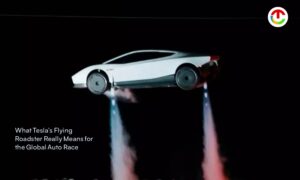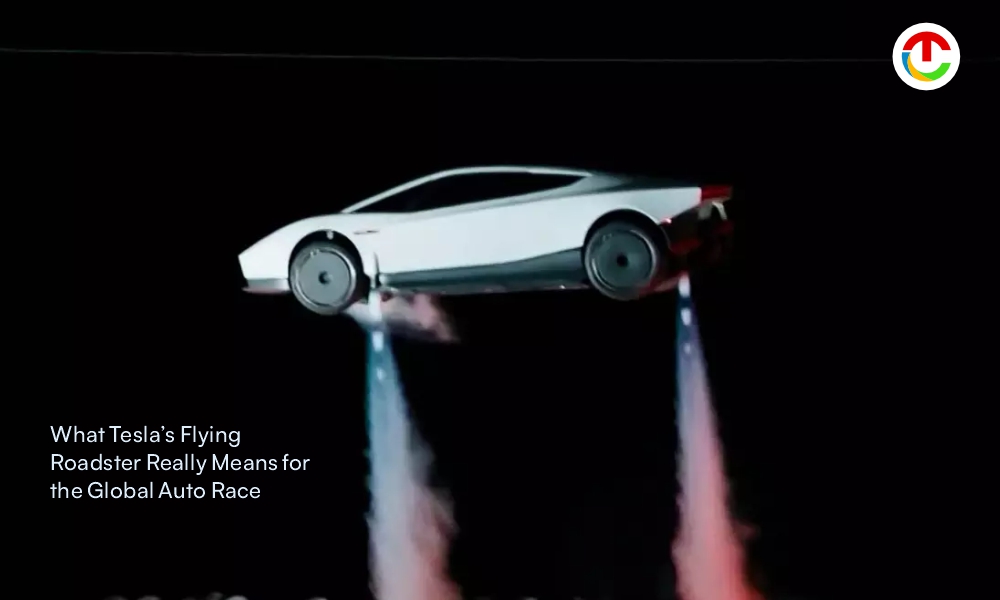
Tesla’s proposed flying Roadster has captured attention with a futuristic design and features that appear to blur the boundaries between automobiles and science fiction. Styled like a cross between a jet fighter and a Lamborghini, the electric sports car promises a dramatic departure from conventional vehicle design.
Its most striking features include a suction-based system capable of suspending the vehicle upside down at a height of 69 feet above the ground, alongside cold-gas rocket thrusters designed to propel it over a line of cars while performing a midair barrel roll. These extraordinary capabilities have helped position the Roadster as a symbol of Tesla’s ambition to push automotive engineering beyond established limits.
However, the proposed features also raise questions about practical applications, technical feasibility, safety and whether such technology could eventually move beyond an experimental or demonstration vehicle.
Innovation as a Competitive Advantage
The Roadster concept reflects a broader transformation in the global automotive industry, where manufacturers are competing not only on performance and price but also on technological innovation, software integration and brand appeal.
Tesla has built its reputation around electric mobility, battery technology and advanced vehicle software. An ambitious project such as the Roadster could further strengthen its image as a company willing to challenge traditional engineering conventions.
Yet the significance of such a vehicle extends beyond its potential commercial success. High-profile projects can generate interest in electric performance cars, attract engineering talent and encourage investment in new propulsion and control technologies.
For established automakers and emerging electric-vehicle manufacturers, the challenge is to balance headline-grabbing innovation with technologies that can be produced reliably, affordably and safely.
The Wider Global Automotive Race
The international competition in the automotive sector is increasingly shaped by electrification, automation, battery efficiency and advanced manufacturing. Companies in the United States, China, Europe and elsewhere are investing heavily to secure technological advantages and expand their market share.
While a rocket-assisted sports car would occupy a highly specialised niche, its development could serve as a showcase for engineering ambition. Nevertheless, spectacular demonstrations alone cannot determine long-term industry leadership.
Ultimately, Tesla’s flying Roadster concept highlights the growing importance of imagination in the automotive race. Its real impact will depend on whether ambitious ideas can translate into dependable technology, commercially viable products and meaningful advances in mobility. For now, its extraordinary proposed features remain a vision of what automotive engineering might achieve rather than proof of a practical flying car.
Also Read :- Tesla Unveils Flying Roadster, Promises 0-60mph Acceleration in Under a Second