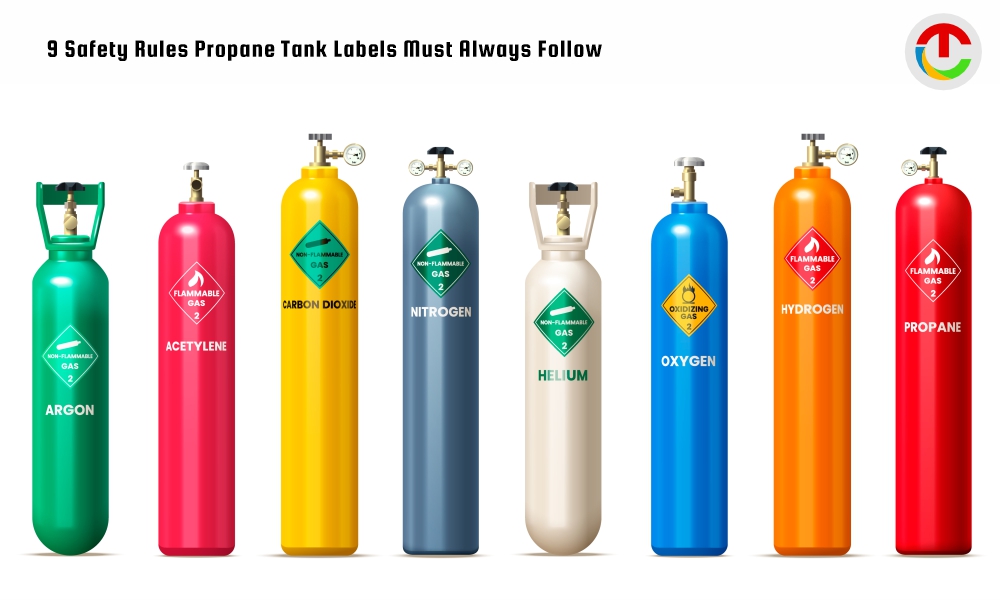
Propane Tank Labels carry pressurized flammable fuel, so their labels do more than identify a product. They warn handlers, guide drivers, help inspectors, and support emergency response. A label that curls, fades, or uses unclear wording can create real risk during filling, storage, transport, or service. These
9 rules help companies keep tank identification readable, durable, and aligned with practical safety needs in the field for every service visit and refill.
1. Use Correct Hazard Identification
Every cylinder or tank should identify propane as the contents and communicate its flammable gas hazard. Before ordering propane tank labels, operators should confirm the required product name, hazard class, and identification number with a qualified compliance lead. Clear hazard information helps drivers, refill stations, and emergency crews make faster decisions.
2. Keep Text Legible at Working Distance
A Propane Tank Labels is weak if a driver must lean, guess, or wipe grime away to read it. Use strong contrast, simple type, and enough character height for outdoor viewing. Critical words such as “propane,” “flammable gas,” and emergency instructions need priority over decorative elements.
Small tanks can still carry clear warnings. The layout should avoid packed lines, tiny phone numbers, and low-contrast colors. If a field worker reads the tank in poor light, the message should still be clear.
3. Choose Material That Survives Exposure
Outdoor tanks face sun, rain, ice, road spray, abrasion, and fuel residue. Paper stock rarely holds up under those conditions. Durable vinyl, weather-resistant adhesive, and protective coating help maintain safety information through regular service cycles. Labels should remain flat and readable after handling, moisture, sunlight, and routine cleaning.
4. Place Labels Where They Stay Visible
Proper placement matters as much as clear printing. Warnings should sit on a clean, smooth surface where valves, handles, straps, and guards do not hide them.
Avoid areas likely to scrape against brackets, truck beds, or storage racks. A perfect warning loses value if normal handling removes it within weeks.
5. Do Not Cover Required Markings
Propane Tank Labels often include stamped data, nameplates, requalification dates, tare weight, water capacity, or manufacturer information. New stickers must never block these markings. Inspectors and refill personnel rely on that data before deciding whether a tank can be filled.
To begin, a label plan must outline each necessary mark. Branding, service notes, and customer contact details can then fit around those fixed points.
6. Match Labels to Tank Type
Portable cylinders, larger stationary tanks, and commercial storage units do not share one layout. Size, surface shape, regulatory category, and viewing distance all affect label design. A compact cylinder may need fewer elements in a tighter arrangement, while a bulk tank can support larger warnings.
Using one universal sticker may seem efficient, yet it can leave key details missing. Tank type should drive size, adhesive, wording, and placement.
7. Include Useful Contact Information
Safety labels can also help customers reach the right service provider during a leak concern, empty tank, or delivery issue. Contact details should be readable, current, and separated from hazard warnings. Emergency wording deserves visual priority, while routine service information can sit below it.
Avoid clutter. A phone number, company name, and basic service cue are often enough. Extra slogans or crowded graphics can distract from safety content.
8. Inspect Labels During Service Visits
Labels need routine checks, just like valves, caps, and visible damage. Drivers and technicians should look for fading, peeling, cuts, chemical stains, and missing corners. Any warning that cannot be read from a normal working position should be replaced.
A simple inspection note can prevent repeat problems. Recording label condition during delivery or maintenance supports consistent field standards.
9. Replace Labels Before Failure
Waiting until a warning disappears is poor safety practice. Replacement should happen when edges lift, color fades, or text starts losing contrast. Seasonal checks help catch damage before winter storms or high summer heat makes adhesion worse.
Teams should keep common sizes available in service vehicles or supply rooms. Fast replacement reduces downtime and keeps visible warnings current across the tank fleet.
Conclusion
Good propane labeling is a safety system, not an afterthought. Strong labels identify hazards, preserve required information, guide service teams, and help customers respond correctly. The best programs pair accurate wording Propane Tank Labels with durable materials, smart placement, and regular inspection.
By following these nine rules, propane providers can reduce confusion, support compliance, and keep critical warnings readable through daily use and harsh outdoor conditions before a problem reaches the job site.
Also Read :- Home Solar Panel Installation: Everything Homeowners Need to Know