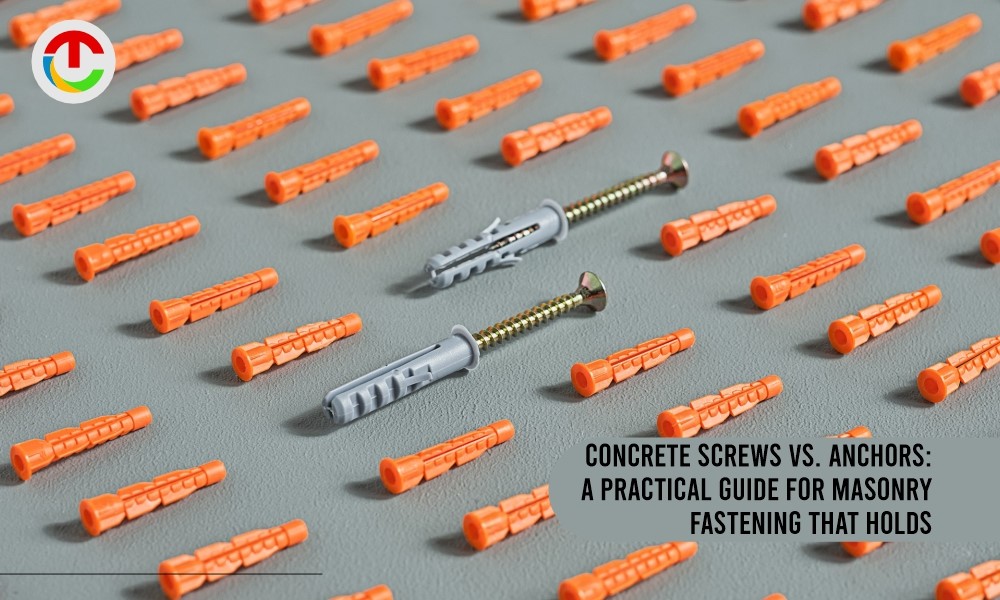
Masonry fastening seems routine until weight, base condition, and service demands start pulling against each other. Concrete screws and anchors both secure parts to brick, block, and poured concrete, yet each relies on a different holding method. That difference affects drilling, grip, removal, and long-term stability. A practical comparison helps crews avoid fractured edges, loose supports, and wasted labor. Better choices also support safer mounting for rails, fixtures, pipe clamps, and light structural hardware.
Why the Choice Matters
A poor fastener choice can weaken the substrate, slow the crew, or complicate later repairs. On repeat masonry work, installers often compare hole size, holding action, and removal needs before ordering bulk concrete screws, because fixture swaps, service access, and layout changes all influence the right pick. Those factors matter most in concrete, brick, and block, where density shifts can alter grip, drilling speed, and long-term holding under moisture or vibration.
How Concrete Screws Hold
Concrete screws cut threads into a pre-drilled hole as they enter the masonry. That direct bite creates holding power without a sleeve, adhesive, or expansion clip. Many crews choose them for light to medium-duty attachments. Typical uses include conduit straps, framing track, electrical boxes, and support brackets. Removal is usually straightforward, which helps when alignment changes appear after rough-in or final placement needs correction.
How Anchors Hold?
Anchors depend on expansion, friction, or bonding inside the drilled opening. Wedge, sleeve, and adhesive styles each respond differently under tension and shear. Many anchor types handle heavier loads than screws can manage. That added strength often brings slower setup and tighter drilling tolerance. After placement, some versions are difficult to remove cleanly, which matters when repair access or future replacement is part of the plan.
Substrate Changes the Decision
Base material should guide the first choice before diameter or head style enters the discussion. Poured concrete usually provides the most predictable grip. Hollow block can reduce the effective holding area, especially with expansion products. Brick varies by age, firing, and density. Stone may drill slowly and chip near edges. A fastener that performs well on one surface may lose strength or damage another.
Installation Time and Tool Needs
Concrete screws need a correctly sized pilot hole and steady driving pressure. Many boxes include the matching bit, which reduces guesswork at the site. Anchors can involve extra steps, such as inserting sleeves, setting wedges, or waiting for the adhesive to cure. That difference affects labor more than unit price on many jobs. Faster installation matters when crews repeat the same attachment across long runs.
Serviceability After the First Install
Future access often separates a smart selection from a short-term fix. Concrete screws can usually be removed with standard tools, which helps during maintenance or repositioning. Many anchors, by contrast, remain in place after hardware comes off. That can leave metal inside the wall or force another hole nearby. For facility work, serviceability can be as important as initial holding strength.
Moisture, Coating, and Wear
Corrosion resistance deserves close attention wherever water, cleaning agents, or outdoor exposure can reach the fastener. Coated concrete screws are common for general masonry work, and ceramic finishes are often chosen for added protection. Some anchor materials also resist corrosion well, though exact performance depends on alloy and setting method. A firm hold means little if rust reduces thread contact or weakens exposed hardware over time.
When Screws Make More Sense
Concrete screws fit projects that need speed, clean removal, and consistent light to medium-duty holding. They work well for repeated installs where crews standardize a few lengths and diameters. That approach simplifies inventory control and cuts sizing errors. In non-cracked concrete and in many block applications, they offer a useful balance of grip, labor savings, and later access without extra setting parts.
When Anchors Earn the Extra Work
Anchors make sense where higher loads, sustained tension, or stricter structural demands push past a screw’s practical range. Heavy rail supports, large equipment mounts, and critical safety connections often justify the extra installation effort. Proper embedment, spacing, and edge distance become especially important in those cases. A stronger system on paper still needs the right substrate and clean drilling to perform as expected.
Conclusion
The best masonry fastener is rarely the strongest item in a catalog. It is the one that matches load, surface condition, installation pace, and future service needs without adding unnecessary complications. Concrete screws offer speed, clean thread cutting, and easier removal for many everyday tasks. Anchors remain useful where heavier demands require more aggressive holding action. Careful selection keeps each attachment secure, efficient, and easier to trust over time.
Also Read:- Cio Times Magazine for more information