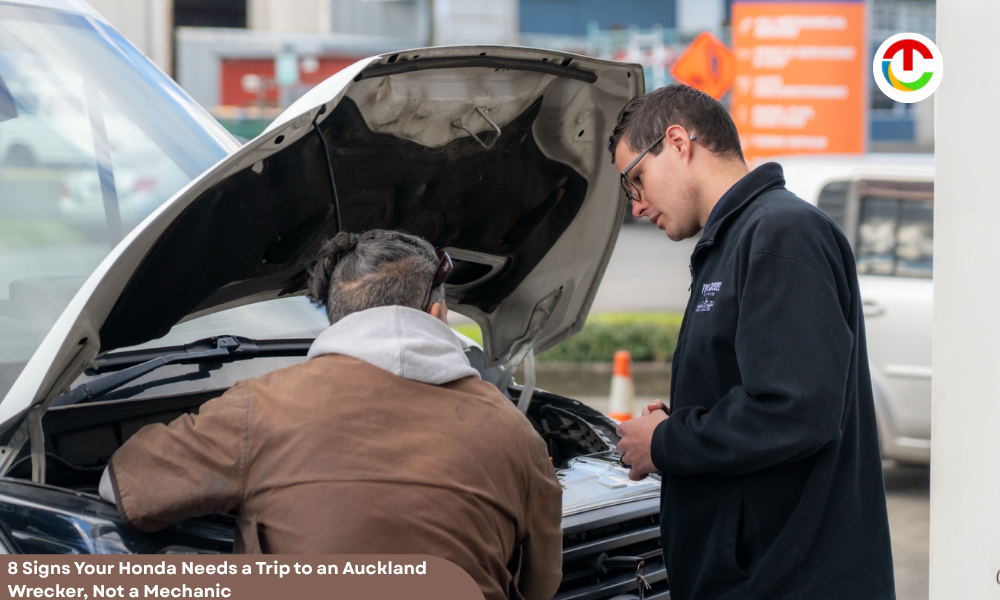
A reliable Honda can run for years, but every car reaches a point where repairs stop making sense. Auckland drivers often face this choice after repeated faults, failed inspections, or repair quotes that exceed the car’s market value. Knowing the warning signs helps owners avoid sinking more money into a vehicle with limited life left. Often, a Auckland Wrecker offers a cleaner exit and recovers value from usable parts.
Signs that shows Honda need a trip to an Auckland Wrecker,
1. Repair Costs Exceed the Car’s Value
Before approving another repair, compare the quote with the car’s resale value and parts demand. A local dismantler can assess reusable panels, engines, gearboxes, lights, and interior trim, while buyers seeking honda car parts in Auckland may give those components real value. If repairs cost more than recovery value, wrecking becomes a practical financial choice.
A single major bill can be manageable. A pattern of costly jobs is different. If a transmission, cooling system, and suspension all need work within months, the car is no longer economical.
2. The Engine Has Serious Internal Damage
Head gasket failure, low compression, bearing knock, or heavy oil burning can signal deep engine wear. These problems often require major labour before you even consider parts.
Older Hondas can be worth fixing if the body, mileage, and service history are strong. If rust, worn trim, and electrical faults are present too, sending it to a wrecker may protect the owner from another large bill.
3. The Transmission Slips or Fails
Automatic transmission faults can be expensive, especially if the car struggles to shift, loses drive, or shudders under load. Manual models can also become costly when clutch, gearbox, and hydraulic parts fail together.
A repair may cost more than the vehicle can justify. In that case, good exterior panels, wheels, seats, and smaller mechanical parts may still hold value through dismantling.
4. Rust Has Reached Structural Areas
Surface rust is common on older vehicles and may not be urgent. Structural rust is far more serious. Warning areas include chassis rails, suspension mounts, floor pans, door pillars, and areas around seat belt anchors.
Once corrosion affects safety, repairs become labour-intensive. Cutting, welding, sealing, and certification can quickly become expensive. A car with spreading rust often has limited future road use.
5. It Keeps Failing Its Warrant Inspection
A failed warrant can be minor, such as a bulb or tyre issue. Repeated failures across brakes, steering, suspension, lights, and emissions point to broader decline.
Each failed inspection also costs time. If the repair list grows after every visit, the car may be moving past routine maintenance. Wrecking can be the better option before another round of spending begins.
6. Safety Systems No Longer Work Properly
Airbags, seat belts, anti-lock brakes, and stability systems are expensive to diagnose and repair. Warning lights that return after clearing codes should not be ignored.
Safety faults reduce confidence in daily driving. They can also affect resale value sharply. If several safety systems fail on an older Honda, dismantling may be more sensible than chasing faults across the wiring and control units.
7. The Car Has Been in a Major Accident
A Honda that has suffered front, rear, or side impact damage may hide problems beyond visible dents. Bent rails, damaged suspension points, water leaks, and electrical issues can appear after repairs start.
Insurance status also matters. If the car has been written off or repair costs are close to replacement value, a wrecker can recover usable parts without putting an unsafe vehicle back on the road.
8. It Is No Longer Reliable for Daily Use
A car can be finished without one dramatic failure. Frequent overheating, flat batteries, warning lights, rough starts, and breakdowns can make daily use stressful.
Reliability has real value. Missed work, towing fees, and constant appointments all add hidden costs. If a Honda can no longer handle normal Auckland driving without concern, wrecking may be the more practical decision.
Conclusion
Choosing a wrecker is not giving up on a Honda too early. It is a cost decision based on safety, repair history, and remaining value. When major faults keep returning, the smartest move may be to stop paying for temporary fixes. A reputable Auckland wrecker can remove the vehicle, assess usable parts, and help owners recover value from a car that no longer earns its place on the road.
Also Read :- Car Wreckers vs Scrap Yards: What Wellington Drivers Get Wrong