Bioanalytical data can influence significant decisions in drug development. A result that looks routine on a lab report may end up shaping where a program goes next. That raises the question of how much a laboratory should contribute beyond running the test.
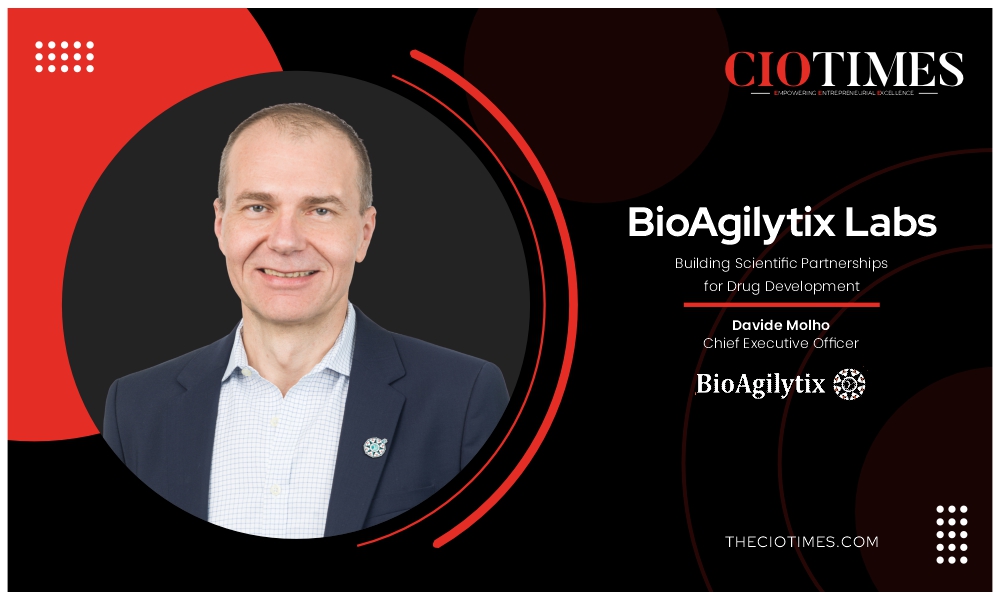
BioAgilytix Labs, where Davide Molho serves as CEO, answers that question by presenting itself as a scientific partner to the drug developers it calls sponsors. The company says its value comes from combining execution with scientific judgment.
In the company’s words: “Being a scientific partner is going beyond just executing the assay that is put in front of us.” In practice, that starts with understanding the molecule, the development stage, the questions the sponsor is trying to answer, and what comes next. BioAgilytix believes this makes for much more meaningful conversations with sponsors.
Scientific Judgment Before the Assay
Sometimes the assay a sponsor first had in mind is the right one. Other times BioAgilytix’s scientists may recommend a different technology, an adjustment to the assay strategy, or an approach that puts the program in a better position for its next phase. Because results carry that kind of weight, the company sees its job as helping sponsors generate the right data and insights to make their decisions confidently, which goes beyond handing over a result.
Spotting problems early is part of the job too. The company says its scientists have supported a multitude of modalities, technologies, and development programs, and can often see challenges that are not immediately obvious. Those can include sensitivity limitations, matrix effects, reagent challenges, potential immunogenicity issues, method-transfer considerations, and requirements likely to emerge in later development phases.
BioAgilytix Labs says bringing bioanalytical scientists into the conversation early lets them ask two questions. The first is “What does this study need?” The second is “What will the next study need?” The company describes its model as built around scientist-to-scientist collaboration and continuity of scientific oversight, with the aim of identifying risks before they turn into timeline issues.
Depth for Complex Modalities
In BioAgilytix Lab’s account, the complexity of a molecule increasingly drives the complexity of the analytical strategy. An ADC, for example, may need several different measurements to understand exposure and activity. Gene and RNA therapies raise their own questions about persistence, biodistribution, expression, immunogenicity, and biological activity.
The company’s response has been to keep building depth across complementary technologies rather than rely on a single analytical platform. In its view, what matters is how those capabilities work together, and the future of bioanalysis lies in an integrated strategy that uses the right technologies to answer the biological questions attached to each therapy.
BioAgilytix expects one of the biggest bottlenecks ahead to be turning increasingly complex analytical data into a clear understanding of what a therapy is actually doing in the patient. With a traditional therapeutic, measuring systemic exposure may answer a large portion of the development questions.
A cell therapy, gene therapy, or RNA-based therapeutic may call for knowing where the therapy went, whether it persisted, whether it expressed the intended product, whether that product was biologically active, and how the immune system responded.
As the company puts it: “That means we’re no longer talking about one assay or one dataset.” The work now involves connecting multiple biological signals, and BioAgilytix says it supports numerous advanced modalities through combinations of technologies and assay types. Its goal is to help sponsors with integration and interpretation, so the analytical complexity turns into information their development teams can act on.
Speed Without Shortcuts
On speed versus rigor, the company is direct: “We don’t view speed and scientific rigor as opposites.” It argues that poor quality and analytical planning are often what slow a program down in the end.
The approach starts with being intentional about what the data need to accomplish. Early in development, a sponsor may need an assay that answers a specific question quickly and reliably. Later, the same program may call for a much greater level of validation and regulatory rigor. Applying the same approach at every stage can create unnecessary work early on or add risk later.
BioAgilytix sees one of the biggest opportunities in starting with the decision the assay needs to support, not with the assay itself. Not every experiment needs a fully validated method, particularly in the earliest stages of development. Moving too fast with an approach that will eventually need substantial redevelopment can add cost and delay later.
Its focus is on building phase-appropriate and fit-for-purpose strategies without giving up data quality. That means involving experienced scientists early, identifying potential analytical challenges before they affect timelines, and using technology and automation where they can reduce variability and improve efficiency. Speed, as BioAgilytix sees it, comes down to minimizing rework and avoiding preventable delays so sponsors have reliable information when they need to make the next decision.
Harmonized Platforms, Connected Data
BioAgilytix Labs says consistency across laboratories starts with harmonization. The company has been very deliberate about standardizing platforms, processes, quality systems, and scientific oversight across its global laboratories, so a sponsor can expect the same standards wherever the work is done.
BioAgilytix adds a qualification: “At the same time, harmonization should not mean rigidity.” Complex programs rarely fit neatly into a template, and the scientific approach still has to reflect the molecule, the assay, the regulatory environment, and the needs of the development program.
Its global LC/MS organization shows how the two ideas fit together. The company says it has centralized scientific oversight there and harmonized platforms and processes to support assay transfer between laboratories while maintaining regulatory compliance and data integrity. Sponsors can then access capacity in different regions without effectively starting over each time work moves between sites.
Automation plays a part too. BioAgilytix Labs says the technology is already having an important impact on throughput, reproducibility, and operational efficiency, and the company pairs it with harmonized workflows across its global operations to cut variability and raise efficiency. The larger transformation, in its view, will come when automation connects with digital systems and data.
The company says it generates tremendous amounts of information during assay development and sample analysis, and historically much of it has stayed within individual systems. BioAgilytix is actively developing an integrated LIMS/ELN system that, combined with other digital platforms, opens the way for AI-enabled tools to add value for the company and its sponsors. It expects those tools could accelerate timelines, reduce errors, identify patterns, improve resource planning, and help scientists make better-informed decisions.
LC/MS is another area where the company sees substantial opportunity. Advances in sensitivity and technology are widening the role of mass spectrometry beyond its traditional applications and letting it take on increasingly complex modalities. The company cites this as one reason it has kept investing in LC/MS and integrating it with technologies such as ligand-binding assays.
Rethinking What a CRO Provides
The company says a CRO was historically viewed mainly as extra laboratory capacity. Capacity still matters, particularly as programs grow and become global, but today’s therapies call for increasingly specialized scientific knowledge. BioAgilytix considers it unrealistic for every biotech or pharmaceutical company to keep deep internal expertise across every technology and modality it may encounter.
The company sees room for a different kind of CRO relationship. A CRO can provide infrastructure and scale, and it can also give sponsors access to scientists who have worked across many development programs and met challenges an individual sponsor may only see once.
BioAgilytix Labs describes the model it believes in as one that combines specialized scientific expertise, technology, global capacity, quality, and regulatory compliance, so the relationship goes past the transactional. Its current positioning emphasizes acting as an extension of the sponsor’s scientific team rather than simply providing testing services.
The company condenses the idea into one line: “The future CRO isn’t just the place where a sponsor sends samples.” It sees that future CRO as a scientific partner that helps the sponsor understand what those samples can tell them and what they should do next.
A Business with a Purpose
BioAgilytix Labs’s CEO describes his own approach in terms of purpose. Davide says: “What has shaped my approach most is a passion for the life sciences and a belief that the businesses we build should serve a meaningful purpose.” Human and animal health, he adds, are fundamental to society, and throughout his career he has wanted his work, and the companies he has been part of, to contribute as much as possible to advancing health and improving lives.
Delivering on that purpose, he says, takes both scientific excellence and a strong, sustainable business. In Davide’s telling, scientific rigor and dependable quality earn clients’ trust. That trust supports lasting relationships and profitable growth, and the growth lets the company reinvest in people, technology, and capabilities. Managed well, he believes, scientific excellence and commercial success reinforce each other.
Keeping that relationship healthy is the responsibility of leadership, Davide says. That means delivering financial results while protecting the capabilities that create lasting value: making thoughtful investment decisions, setting realistic expectations, and making sure commercial commitments are backed by the expertise and resources to fulfill them.
Working across different parts of the industry also taught him that scientific excellence has to connect to a real need. In a CRO, that means understanding the sponsor’s development program, the questions the sponsor is trying to answer, and the decisions the work will support. He says the science becomes more valuable when it is delivered with responsiveness, clear communication, and an understanding of the client’s priorities.
Maintaining that balance depends on people, he says. Scientists need confidence that leadership values their expertise and protects scientific integrity, and commercial teams need to understand the capabilities they represent. Close collaboration between the two helps BioAgilytix pursue the right opportunities and deliver on its promises.
He wants growth at BioAgilytix Labs to reflect the value the company creates for clients and, ultimately, patients. Growth lets the company support more programs and offer employees more opportunities, and its quality and sustainability matter as much as its pace.
Davide grounds all of this in the conviction that a healthy business enables a greater scientific contribution. On how financial performance fits, he says: “Financial performance gives us the means to invest and grow; our purpose guides how we use those means.” That same balance shapes how he approaches efficiency.
Quality as the Engine of Efficiency
Davide begins with quality stating, “My starting point is that quality drives efficiency.” Clear processes, appropriate training, and sound scientific decisions, he says, reduce avoidable errors and repeated work. They make delivery more predictable for clients and create a better working environment for employees, so he wants quality built into how the company organizes and performs the work.
When he looks for efficiencies, he asks what prevents people from doing their best work. He looks at whether responsibilities are clear and whether there are unnecessary handoffs. He also asks whether employees have the right information and tools and whether highly trained scientists are spending too much time on administrative activities. Addressing those issues, he believes, can improve productivity while strengthening quality and engagement.
The people closest to the work should help shape the improvements, Davide says, because they know where difficulties arise and where a change would make a practical difference. Their involvement creates ownership, which he considers essential for sustaining any transformation. Technology can help, he says, by reducing manual effort and improving access to information, but it should arrive with thoughtful process redesign, so the controls and scientific judgment the work requires stay in place.
He also believes a quality culture grows stronger when employees understand the purpose behind their work. BioAgilytix Labs asks sponsors to explain their development programs to staff: the therapy, the disease it addresses, and the patients who could benefit. That helps colleagues connect a sample, an analysis, or a report to its potential impact on someone’s life, and it reinforces why accuracy, timeliness, and personal accountability matter.
Davide says his experience with acquisitions and integration taught him to understand what makes an organization valuable before changing it. Scientific expertise, trusted relationships, and local culture need careful attention, and common processes should strengthen those assets and help people collaborate effectively. Leadership has to reinforce these principles through its decisions, particularly under pressure, and employees should feel comfortable raising concerns and asking for support.
In Davide’s view, a successful efficiency initiative should improve delivery, protect scientific integrity, and help people use their expertise more effectively. When those outcomes come together, he believes, stronger financial performance follows from a healthier, more capable organization.
Growing Without Losing the Original DNA
Preserving culture during growth, Davide says, takes deliberate attention and consistent communication. Since joining BioAgilytix Labs , one of his priorities has been to communicate the vision, mission, and values clearly, so everyone understands the direction and their contribution to it.
Davide states the vision this way: “To be the leading global bioanalytical service provider.” The mission connects that ambition to dependable bioanalytical support and scientific expertise that help clients bring their products more effectively to market and improve patient outcomes. Together, he says, they provide a clear North Star.
The company’s values are Integrity, Client Experience, Accountability, Respect, and Employee Experience. Davide says they make that direction practical and should be evident in how the company makes decisions, supports colleagues, and works with sponsors. He adds: “Culture becomes credible when people experience it in daily interactions.”
The company’s scientific community is central to that connection. Davide says more than 50% of BioAgilytix Labs’s staff have an advanced degree in science, and an internal network lets those scientists exchange ideas, discuss challenges, and share developments in their work.
The network gives colleagues access to expertise across the organization, and he calls that collective knowledge one of the most valuable benefits of scale. A scientist facing a difficult question can draw on colleagues with different experiences and perspectives, and the collaboration reinforces a shared sense of belonging.
Scientific ownership has to stay clear within the network, he says. Teams need to understand their responsibilities, the decisions they can make, and when to seek additional input, and broader expertise should strengthen accountability by helping those responsible for the work make better decisions.
As BioAgilytix Labs expands, Davide says, it is sharply focused on preserving its original DNA as a nimble, flexible, and agile CRO. Each client should continue to feel heard and get scientific support and service tailored to their needs, and global scale should add capabilities to draw on while keeping personal attention and responsiveness.
That takes a thoughtful balance between common standards and local initiative, with consistency in quality and execution alongside room to respond to individual programs. His goal is for employees to experience growth as a chance to contribute and develop, and for clients to experience it as stronger support for their science.
Five Years Ahead
Five years from now, Davide would like BioAgilytix Labs to be known for the difference it makes to its clients’ development programs. He says the ambition to be the leading global bioanalytical service provider has to be earned through scientific excellence, dependable quality, and exceptional client experience.
Davide hopes sponsors will see a partner that understands their objectives, brings expertise to difficult questions, and follows through on its commitments. Trust, in his view, develops through the quality of the work and through how the company communicates, responds to challenges, and takes responsibility for outcomes.
He would also like the company to be recognized for helping make drug development more effective by providing reliable bioanalytical evidence that supports informed decisions. That contribution is most valuable, he says, when the data are scientifically sound, relevant to the question, and available when needed. In his view, improving speed means removing avoidable delays and anticipating challenges while maintaining rigor.
Technology will matter to that ambition, he says. Digital tools, automation, and responsible applications of artificial intelligence offer opportunities to reduce manual work and make information more useful, and he wants them to give scientists more time to apply their judgment, interpret findings, and solve complex problems.
He also wants BioAgilytix Labs to be a company where talented people choose to build their careers. Opportunities to learn, collaborate, and take ownership develop the experts and leaders who will sustain its contribution, and employees should be able to see how their professional growth connects to the company’s purpose.
The impact he ultimately wants is on patients. BioAgilytix is part of a larger development effort, Davide says, and the quality and timeliness of its contribution can help sponsors advance important therapies.
In his account, employees feel proud of their contribution when clients tell the company that BioAgilytix helped them resolve difficult scientific questions and move their development programs forward, sometimes with a registration approval.
He sums up what that means for him: “That is the lasting value I want our growth to create.” He adds that preserving the combination of global capability and personal commitment will be an important measure of the company’s success as it expands internationally.
Also Read :- CIO Times Magazine For More Information