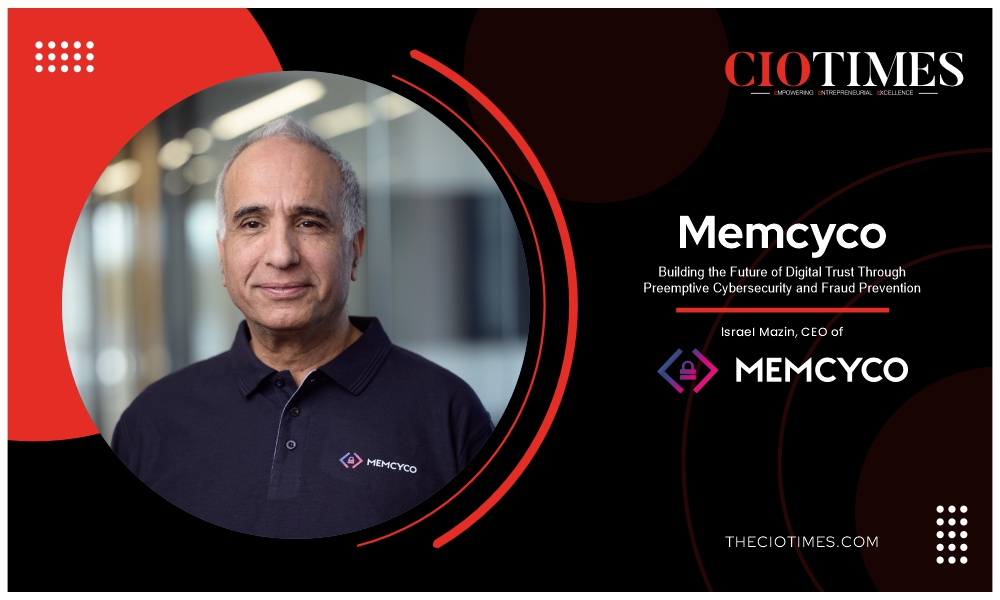
As digital ecosystems expand, so do the opportunities for cybercriminals to exploit them. Many customer-targeted attacks begin outside the enterprise perimeter, through digital impersonation, phishing, and other forms of deception. By the time conventional security or fraud controls detect them, customers may already have been exposed, credentials compromised, and accounts placed at risk.
Memcyco helps enterprises detect and disrupt these attacks early by providing upstream visibility across the attack path and giving organizations the context needed to intervene before damage occurs.
“Digital resilience must encompass the full customer journey: how customers find you, how they authenticate, how they interact with your brand, and how attackers may manipulate them before they ever reach your legitimate environment,” says Israel Mazin, CEO of Memcyco.
Solution Overview
Traditional cybersecurity platforms primarily defend enterprise infrastructure, systems, and employees. Memcyco extends protection to the customer-facing digital journey, including attacks that begin outside the enterprise environment.
At the core of the platform are two proprietary technologies: nano-defenders embedded in customer-facing digital assets, which silently signal when those assets are being impersonated, and Persistent Device DNA, which provides visibility into exposed users, suspicious sessions, and malicious devices. Together, these technologies enable enterprises to intervene earlier against customer-targeted phishing, digital impersonation and account takeover.
Growth Philosophy
Memcyco was founded on the understanding that many organizations were addressing account takeover and digital impersonation too late. Conventional fraud controls are often strongest after a login, transaction or suspicious account activity has occurred. Yet many attacks begin earlier, when criminals create impersonating assets, launch customer-targeted phishing campaigns, and harvest credentials.
Memcyco was built to give enterprises visibility and control earlier in this attack timeline. By identifying malicious activity as attacks unfold, the platform helps organizations intervene before customer exposure results in account compromise or fraud.
“We did not set out to build another takedown service or another post-login anti-fraud engine,” says Israel Mazin. “We built a platform that gives security and fraud teams a shared view of the attack, enabling them to work in tandem and intervene before customer exposure turns into reimbursement costs, operational burden and loss of digital trust.”
Protecting Customers Without Adding Friction
As enterprises expand their digital engagement, customers interact with brands through websites, mobile applications, search results, advertisements, email, SMS, and other channels. Attackers exploit that trust by inserting themselves into the journey, often before customers reach the legitimate environment.
Memcyco can detect suspicious activity without requiring end users to install software, download an application, or register for another service. This gives security and fraud teams earlier context while preserving a fast, convenient customer experience.
Connecting External Attacks to Account Risk
Traditional brand-protection and takedown services may identify a fake asset but often remain disconnected from the live attack and the customers exposed to it. Fraud and authentication controls, meanwhile, typically see the later login attempt, account activity, or transaction, after customers may already have been deceived and had their credentials captured.
Memcyco connects external impersonation and phishing activity with customer- and account-level risk. This enables enterprises to determine not only whether a fake asset exists, but also whether it is active in an attack, which customers have been exposed to, and where intervention is required. Memcyco provides this context before login, enabling earlier intervention than conventional fraud and authentication controls.
Responding to AI-Driven Attacks
Artificial intelligence and automation are allowing cybercriminals to create fake assets faster, rotate infrastructure more quickly, personalize phishing campaigns, and scale social-engineering attacks at a lower cost.
“For defenders, the challenge is not only that attacks are more sophisticated,” says Israel Mazin. “It is that the time available to detect and respond is shrinking.”
Memcyco focuses on shortening the gap between the creation of attack infrastructure, customer exposure, and organizational response. By detecting impersonating assets and suspicious activity as attacks unfold, it provides the context teams need to intervene before the attack progresses into account compromise or fraud.
Rather than creating another disconnected source of alerts, Memcyco provides earlier attack and account-risk context that can improve the quality and speed of risk decisions.
Staying Ahead
Continuous innovation is essential because phishing infrastructure, social-engineering methods, and account-compromise tactics continue to evolve. Addressing only the last version of the problem leaves defenders behind.
Memcyco’s roadmap is shaped by three principal inputs: live attack activity across customer-facing digital environments, close collaboration with fraud, security and digital teams, and ongoing research into attacker infrastructure, phishing techniques, credential abuse and emerging account-compromise methods.
This approach keeps innovation aligned with practical enterprise needs. The objective is not to add another disconnected tool, but to provide earlier signals, clearer context, and faster intervention.
Enterprise Resilience
Global enterprises operate across markets with different regulatory, legal, and operational requirements. North American financial institutions may focus on account takeover controls, reimbursement exposure, and evidence of proactive customer protection, while European organizations may also face requirements related to scam prevention, privacy, data minimization, and regulatory accountability. In addition, different industries must address different use cases: loyalty program compromise, payment-focused scams, fake storefronts, etc.
At the same time, enterprises engage customers across websites, mobile applications, social media, search, advertising, partner environments, and third-party platforms. Attackers exploit the gaps between these channels, frequently rotating assets and adapting their techniques across them.
Memcyco was designed to provide scalable protection across this complexity. Its lightweight integration model supports deployment across customer-facing digital journeys while maintaining an agentless experience for end users. Its APIs can feed upstream attack and account-risk intelligence into existing fraud engines, authentication tools, SIEM platforms and operational workflows, providing additional context that supports better decisions. This allows enterprises to adapt protection to their specific needs without rebuilding their security architecture.
Measurable Value
“Security and fraud leaders increasingly have to show business impact, not only technical effectiveness,” says Israel Mazin.
The cost of a customer-targeted attack extends beyond the loss of fraud itself. It can include investigation time, reimbursement exposure, customer-support effort, regulatory scrutiny, customer attrition, and long-term damage to brand trust. Earlier visibility helps organizations identify exposed users and prioritize at-risk accounts, reducing the number of incidents that escalate into financial loss or extensive investigation.
For example, Memcyco helped one top-10 North American bank reduce account-takeover fraud by 65%, lowering estimated annual fraud-related costs by approximately $15 million. The bank also reduced customer churn from 16% to 7% and cut public social-media complaints by more than half.
Memcyco’s preemptive protection also helps organizations demonstrate proactive risk management and protect customers without introducing additional friction. This strengthens operational efficiency, regulatory readiness, and customer trust.
Building a Category-Defining Company
“We never set out to create a category,” says Israel Mazin. “We set out to solve a problem the industry wasn’t addressing.”
Memcyco’s founding team has worked together for many years and has previously built enterprise technology companies through major milestones, including an IPO and an acquisition. That experience brings discipline, patience, and an understanding that enterprise trust must be earned over time.
The company combines this experienced leadership with the energy of a young, ambitious organization. It seeks people who are technically capable, curious, independent, and willing to take ownership of difficult problems. Its culture is guided by practical innovation, customer accountability, speed with discipline, and intellectual honesty.
For Memcyco, innovation must address a genuine operational or business need. This balance of experienced leadership, strong technical talent, and customer focus enables the company to move quickly without losing discipline or trust.
The Convergence of Fraud, Cybersecurity and Brand Protection
Customer-targeted attacks do not respect organizational boundaries. A single attack may begin with digital impersonation, progress through phishing and credential harvesting, move into account compromise, and ultimately result in financial loss, customer support escalation, and reputational damage.
Historically, different teams have seen different parts of this chain. Brand-protection teams identified fake assets, security teams monitored phishing infrastructure and suspicious sessions, and fraud teams investigated account activity and transactions. Each view was valuable but incomplete.
“Within five years, I don’t think organizations will be able to treat fraud, cybersecurity and brand protection as separate disciplines,” says Israel Mazin.
Memcyco operates upstream, connecting impersonation and phishing activity with credential-exposure and account-risk signals. This helps fraud, security and digital teams move from fragmented response toward coordinated prevention.
The Future of Fraud Prevention
Fraud prevention will become increasingly real-time, customer-focused and connected to cybersecurity. Point-in-time decisions at login or transaction will no longer be sufficient; enterprises will need visibility across the full attack path.
“Regulators, boards and customers will increasingly expect organizations to show that they acted before harm occurred, not only that they investigated afterward,” says Israel Mazin.
Memcyco is preparing for this future by continuing to develop earlier detection, richer attack context, stronger disruption capabilities and deeper integration with the tools enterprises already use. Its objective is to help organizations move from reacting to fraud events to understanding and disrupting the attack paths that create them.
Advice for Business Leaders
Fraud, security, digital and customer teams must work from shared visibility and a coordinated response model. A customer-targeted phishing campaign can simultaneously become a fraud case, a cybersecurity incident, a brand issue, a regulatory concern and a customer-support problem.
Organizations should therefore measure resilience by time to understanding and time to intervention, rather than only by alert or incident volumes. The faster teams can determine who was exposed, which accounts are at risk and where to act, the better they can protect customers.
“In this environment, trust is not created by response alone,” says Israel Mazin. “It is created by earlier action.”
Making Digital Trust More Defensible
Memcyco’s long-term vision is to change where customer protection begins. Enterprises should not have to wait until customers are deceived, credentials are stolen, accounts are compromised or fraud losses occur before they can act.
For businesses, this means reducing financial and operational harm. For customers, it means safer digital interactions without unnecessary friction. For the broader market, it means moving beyond fragmented defenses that treat phishing, digital impersonation, account compromise and fraud as separate problems.
Memcyco aspires to help define a more preemptive and connected model, one in which organizations understand the full attack path and intervene before risk becomes damage.
“What inspires us is not only building a successful company,” says Israel Mazin. “It is the opportunity to make digital trust more defensible.”
Also Read :- CIO Times Magazine For More Information