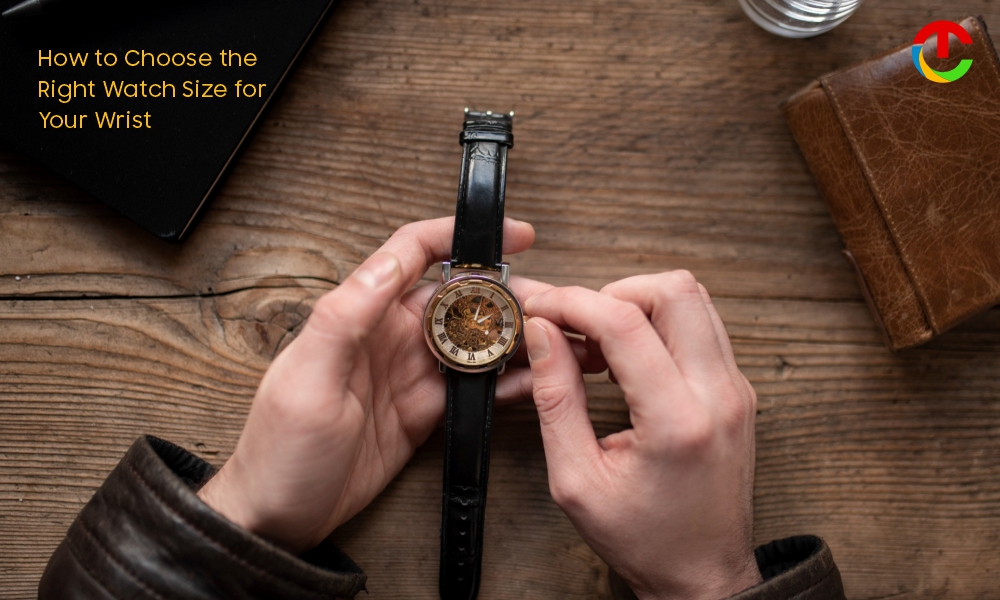
Choosing the right watch size for your wrist is about more than following fashion. A timepiece should look balanced on the wrist, feel comfortable throughout the day, and suit the way you plan to wear it. Even an exceptional luxury watch can appear awkward if the proportions do not match the wearer.
Case diameter is important, but it is only one part of the equation. Lug-to-lug distance, case thickness, dial design, bracelet width, and wrist shape can all change how large or small a watch appears.
Start by Measuring Your Wrist
The simplest way to begin is by measuring the circumference of your wrist with a flexible tape measure. Wrap it around the area where you normally wear a watch without pulling it too tightly.
As a general guideline, smaller wrists often pair well with cases around 34–38 mm, medium wrists can comfortably accommodate many watches between 38 and 42 mm, while larger wrists may suit cases of 42 mm or more.
These figures should not be treated as strict rules. Two watches with the same diameter can look very different depending on their construction.
Pay Attention to Lug-to-Lug Length
The lugs are the parts of the case that connect the watch to its strap or bracelet. Lug-to-lug measurement describes the distance from the top of the upper lugs to the bottom of the lower ones.
Ideally, the lugs should remain within the width of your wrist. If they extend beyond the wrist edges, the watch may look oversized and may also feel less stable.
This measurement can be especially useful when comparing sports watches, chronographs, and models with larger cases.
Consider Case Thickness
Thickness influences both appearance and comfort. A slim dress watch can sit discreetly under a shirt cuff, while a thick diving watch or chronograph has a much stronger visual presence.
Before choosing a model, consider when it will be worn:
- slim cases work particularly well with formal clothing;
- medium-thickness watches are versatile for everyday use;
- thicker cases often suit sporty or technical designs;
- heavily complicated watches may naturally require larger cases.
A well-proportioned watch should complement your wrist rather than dominate it.
Dial Design Can Change Perceived Size
Case diameter does not always tell the full story. Watches with thin bezels and large open dials often appear bigger than models with wider bezels, even when their measurements are identical.
Dial color, hour markers, subdials, and complications also affect visual proportions. Minimalist designs can feel more expansive, while detailed chronographs may appear more compact because the dial contains more visual elements.
When exploring Swiss luxury watches, comparing different case shapes, dial layouts, bracelet styles, and dimensions can help narrow down the models that best suit your wrist.
Do Not Forget the Strap or Bracelet
The strap can change how a watch sits and looks. Metal bracelets often give a watch more visual weight, while leather straps can make the same case appear slimmer and more formal.
Bracelet width should also remain proportional to the case. A very narrow strap paired with a large case can make the watch appear top-heavy, while a balanced taper usually creates a more refined look.
Comfort Matters More Than Trends
Watch trends change. Oversized models may be fashionable during one period, while smaller vintage-inspired designs may become popular later. Personal comfort and proportion are more important than following a temporary style.
Try to consider the entire watch rather than focusing only on the diameter. Wrist size, case length, thickness, dial proportions, and bracelet design should work together.
The right watch size for your wrist is ultimately the one that feels natural when you wear it. A well-fitted luxury watch should remain comfortable, visually balanced, and suitable for your personal style — whether you prefer a compact classic timepiece or a bold modern sports watch.
Also Read :- How Heated Recliners Combine Warmth With Adjustable Everyday Seating Comfort