A standard patrol car is already a pretty specialized piece of equipment by the time it leaves an upfitter’s shop. Compared to a base model that a civilian might drive, a police car is equipped with accoutrements like radios, lighting, partitions, weapon mounts, and on-board computers.
A K-9 unit, however, takes that complexity to another level entirely. K-9 police vehicles are doing much more than merely transporting an officer and a dog (or an officer and their human, depending on how you look at it). Rather, they’re mobile working environments for a two-person team, except one of those team members has four legs, can’t open a door, and will die if left in a hot car.
That last point is not an exaggeration. More than bad-guy bullets or speeding cars, heat is the single greatest threat to a K-9 officer during a deployment, and it shapes almost every decision made when outfitting one of these vehicles. But climate is just the beginning of what makes K-9 police vehicles special. From the structure of the kennel compartment to the way gear is stored and accessed, K-9 vehicles require a fundamentally different approach than a standard patrol build.
Understanding what goes into one of these builds is useful for any agency considering adding or expanding a K-9 program—or simply for anyone curious about how much engineering goes into keeping these brave animals safe, effective, and ready to work.
The Kennel Compartment
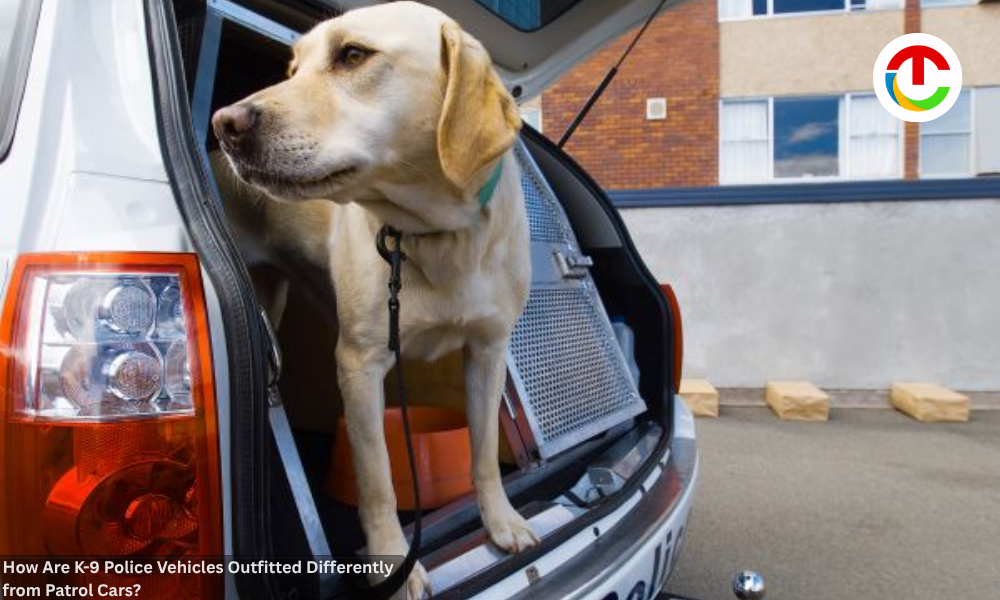
The most visible difference between a K-9 vehicle and a standard patrol car is the rear compartment. Where a patrol car typically has a prisoner partition and a basic back seat setup, a K-9 vehicle is built around a secure, purpose-built kennel for the four-legged officer.
However, these aren’t off-the-shelf dog crates bolted into a manufacturer-standard trunk. Purpose-built K-9 kennels are custom-fabricated enclosures, typically aluminum or high-strength polymer, designed to keep the dog secure and safe, even during high-speed driving, sudden stops, and the occasional pursuit. They’re ventilated, easy to clean, and built to absorb impact. The door mechanisms are robust enough that an excited 80-pound Belgian Malinois can’t accidentally let itself out, while simultaneously being quick-release enough that an officer can deploy the animal in seconds if needed.
Many kennels also feature remote-release systems, allowing the officer to open the kennel door from outside the vehicle without having to reach in first. This might sound small, but it’s a meaningful safety feature when a dog is full of adrenaline and ready to work. It might save a few officers some bitten fingers, in other words.
Climate Control
Arguably, the most important upgrade by far is a robust climate control system. A dog cannot regulate body temperature the way a human can, and that means that in a sealed vehicle on a warm day, interior temperatures can become life-threatening extremely quickly—sometimes as fast as in minutes. For a working K-9, that risk doesn’t disappear just because the engine is running. Standard vehicle HVAC systems aren’t always reliable enough on their own. And police vehicles can’t always be left idling.
That’s why modern K-9 police vehicles are equipped with dedicated climate control systems independent of the main engine. These typically include features such as:
- A secondary battery-powered or auxiliary-powered cooling unit that maintains safe cabin temperatures, even when the vehicle is off or the primary AC fails
- Heat alarm systems that trigger alerts, whether audible, visual, or both, when interior temperatures exceed a safe threshold
- Automatic door-pop mechanisms tied to the heat alarm, which can physically open the vehicle’s doors or kennel if temperatures reach a critical level and the officer is incapacitated or out of range
That last feature has saved dogs’ lives in real deployments. Many K-9 experts now recommend heat alarm and auto-deploy systems as standard equipment for K-9 vehicles.
Specialized Storage
A K-9 officer carries a different kit than a standard patrol officer, and their vehicle needs to reflect that. Beyond the usual weapons and gear, these vehicles need to accommodate equipment specific to the dog and its handler. Most patrol cards don’t need space for doggy biscuits, after all.
That typically means dedicated storage for items such as:
- Bite sleeves, training aids, and reward toys
- Leashes, harnesses, and tracking leads
- Veterinary supplies (different from medicine for humans, after all) and a basic K-9 first-aid kit
- Food, water, and collapsible bowls for extended deployments
- Protective booties and other environmental gear depending on the unit’s assignment
This gear should be organized, accessible, and separate from the officer’s own equipment. Good upfitters design storage systems for K-9 police vehicles that make logical sense for how handlers really work with their furry partners.
Monitoring Equipment
Keeping an eye on the dog while driving is harder than it sounds. A K-9 in the rear compartment is out of the officer’s direct sightline, which is why many K-9 vehicles include interior camera systems pointed at the kennel. These feed to a small display mounted where the officer can glance at it without taking their full attention off the road.
Some setups also include kennel sensors that monitor temperature and movement, adding another layer of oversight during transport. Consistent monitoring and environmental control are foundational to best practices for maintaining a K-9’s health and operational readiness over the course of a career.
A Different Kind of Build
Standard patrol upfitting is already a discipline that demands precision and expertise. K-9 upfitting adds another layer, and it’s one where the stakes include the life of an animal that has no way to advocate for itself if something goes wrong. A dog can whine or yelp if it’s in pain, but if it’s stuck in sweltering heat with a human partner busy with police work, its life can be in serious danger.
Every agency’s K-9 program has specific needs depending on the dog’s role, the climate it operates in, and the unit’s standard procedures. The best builds start with those specifics and work outward from there, rather than applying a generic template and hoping it fits.
If your department is outfitting a K-9 vehicle or considering adding K-9 capability to an existing fleet, look for an expert vehicle modifier like Freedom Outfitting, which works with agencies across Arizona to build purpose-driven vehicles that keep both the handler and the dog ready for whatever the job demands.
Also Read :- Box, Tipper, or Plant Trailer? How to Match the Build to Your Load