
Be honest. Did your stomach drop the last time an audit notice landed on your desk?
Most companies don’t slip up when the letter arrives. They slip up in what they do next. Some leaders panic and send every document they can find. Others push the letter into a drawer and hope it goes away.
Both mistakes cost more than people expect. An audit notice is a list of questions with a deadline, and the way you answer it shapes what follows.
In the US, the IRS can add a 20% accuracy-related penalty to an underpayment it finds, plus interest, so a $50,000 gap becomes $60,000. Knowing audit notice the process early and when to bring in tax resolution services keeps that from happening.
Source: Pexels
The First 72 Hours: Urgency vs. Delegated Competences
The letter is on someone’s desk. Before anyone calls a number or starts scanning receipts, two questions need answers.
First, is the letter real?
And second, who is in charge of it?
Step 1: Check That the Letter Is Genuine
Fake IRS letters and calls show up all year. A real audit starts with a letter in the mail, never with a phone call, email, or text. Whoever opens the mail should pass the letter to the finance lead without replying or calling anyone. The finance lead then:
- Finds the notice number printed in the corner of the page;
- Compares the contact details with those on the IRS website;
- Tells the team to ignore any call or email claiming to be about this audit.
Step 2: Note the Deadline and What’s Under Review
The controller or CFO reads the whole letter and writes down the response date, the tax years and items under review, and the audit type.
A mail audit about one deduction is mostly paperwork. A field audit means an examiner may spend a few days at your premises asking how things really work.
Step 3: Give Each Person a Clear Job
Mixed messages cause more trouble in audits than most actual errors do. This split suits most mid-sized companies:
- CFO or controller: Owns the audit, tracks deadlines, and approves everything before it goes out.
- Outside tax professional: Speaks to the examiner once Form 2848 is filed and flags requests that go beyond the letter’s scope.
- Accounting staff: Pull and organize the records, but never send anything to the IRS directly.
- HR or payroll: Steps in only if payroll or worker classification is under review.
- CEO or owner: Signs off on big decisions and stays out of casual chats with the examiner. Those chats tend to raise new questions.
A shared folder and a short weekly check-in mean nobody wonders whether something was already sent.
Putting Together Your Response
From here it’s about paperwork. The examiner compares your documents with what’s on the return, and if the two match, most of the job is done.
Step 4: Pull Only the Records Requested
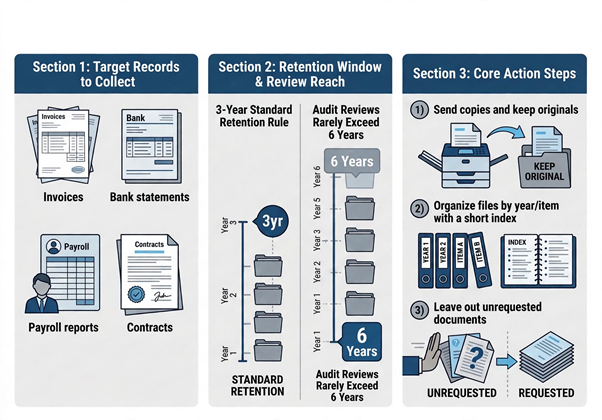
Collect what’s asked for, such as invoices, bank statements, payroll reports, or contracts. Businesses must keep these records for at least three years. According to the IRS audits page, the review can stretch further if a substantial error turns up, though it rarely goes past six years.
- Send copies and keep the originals;
- Organize files by year and by item, with a short index;
- Leave out anything nobody asked for.
Extra material may feel cooperative. In practice it gives the examiner more to question.
Source: MetaAI
Step 5: Add a Short Cover Letter
List each item the IRS asked about, point to the supporting document, and add a line of context where a figure might look odd.
Maybe revenue dropped after you lost a big client. Keep it factual, explain yourself—but never too much to make it look like you are defending your actions.
In the end, have the tax professional read it first.
Step 6: Meet the Deadline, or Ask Early for More Time
If nothing arrives on time, the Audit Notice and IRS works with what it already has, and that version of your finances is rarely the generous one. If you need an extension, ask the auditor before the deadline. Keep proof of everything you send.
After the Examiner Reports Back
The case either closes with no changes, or the IRS proposes adjustments. If it’s the second, the next few weeks matter for your budget.
Step 7: Review the Proposed Changes
Proposed changes Audit Notices usually come in a 30-day letter with an examination report. You can agree, agree in part, or disagree and appeal. Check every figure, because examiners make calculation mistakes too.
If you disagree, you can request a review by the IRS Independent Office of Appeals.
It’s a separate team that tries to settle disputes without court. If the proposed tax and penalties come to $25,000 or less per period, a simpler small case request is enough. Let the 30 days pass, and a 90-day letter follows, which leaves Tax Court as the main option.
Step 8: Settle the Balance and Fix What Caused It
If you owe, ask about payment plans and penalty relief for reasonable cause before moving money around in a panic. Then find the trigger. It might be expenses booked to the wrong category, missing contracts, or a contractor who belonged on payroll.
Fix the Audit Notices process and write down what changed. The next letter will still ruin someone’s morning, but everyone will know where to start.
Also Read :- The Resilience Audit: Essential Steps Every Business Must Take to Ensure Operational Continuity