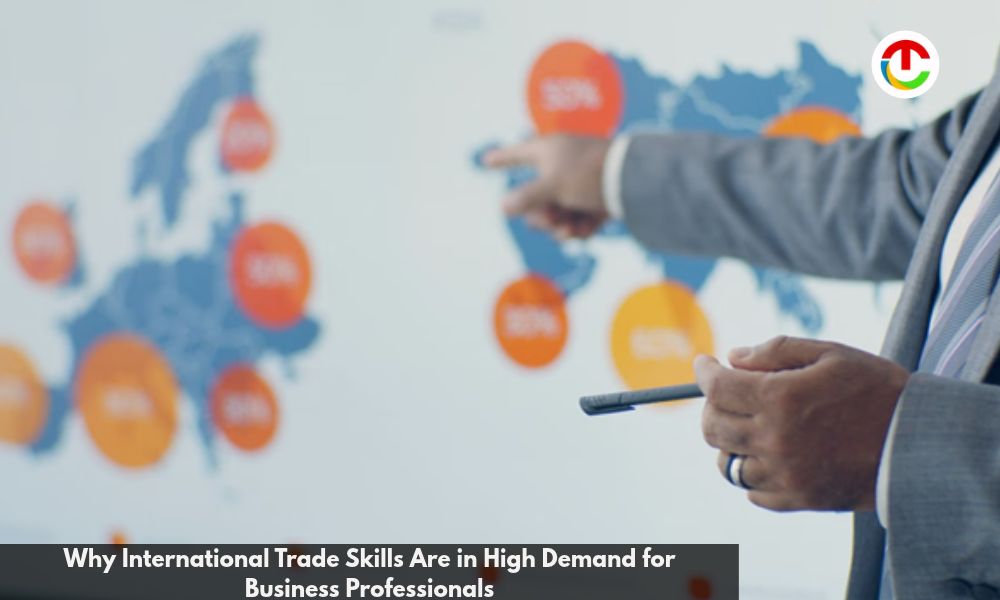
Company expansions used to be limited to a next-door neighbor state. Now it’s becoming more common for businesses to go global and open offices all over the world.
For businesses thinking beyond borders, it’s never been a better time to enroll their employees in international trade training programs. However, a particular set of skills is essential for international trade to be a success. Let’s talk about them.
Resource: Pexels
It’s a Small World
Have you ever gone on vacation and bumped into a buddy from high school you haven’t seen for years, or made a connection through a mutual friend in a random location? “It’s a small world,” you might think to yourself. This definitely rings true in business too.
Remote working and the increasing accessibility of airplane travel make it even easier for business owners to set up shop abroad and expand their horizons. In fact, travel and acquiring talent in far-off places sometimes make more financial and logistical sense than staying in your own state.
What are International Trade Skills?
With world domination in your sights, do you have the resources to achieve it? And by resources, we mean the human kind. While loyal and local staff are the backbone of your company, keeping headquarters running, you need a different kind of employee to handle international affairs.
International trade skills encompass a range of hard and soft skills that are necessary for making deals worldwide. When hiring during your international expansion, look out for these qualities in candidates.
1. Multilingual or bilingual skills
While English is regarded as an international language, this doesn’t mean that it is spoken by everyone. It just makes it highly likely that you will be able to communicate effectively with a business associate or supplier from another country.
But what if there is a language barrier, and your supplier is fluent in Spanish or French but not English? This is especially probable if a business is breaking new ground in a new location. What is needed is an employee who knows the local lingo and can step in to represent the company.
Not only is miscommunication a risk when businesses are expanding internationally, but it is a question of respect. Being able to communicate in the native language when brokering deals shows consideration.
2. Cultural sensitivity and emotional intelligence
Deal done and now it’s time to seal it with a drink, or is this not culturally appropriate? Are you making a faux pas that could cost your company big time? Having employees with insider knowledge of cultural etiquette in a certain country, or just possessing a bit of emotional intelligence, is priceless when it comes to international trade.
Resource: YouTube
3. Knowledge of customs compliance and trade regulations
Aside from communication skills, business professionals working for multinational companies need to swot up on customs compliance and trade regulations. This doesn’t mean you must absorb all there is to know about every country’s rules on import and export, but perhaps specialize in one area such as American and European Union regulations.
For companies hiring new employees during their international expansion, an understanding of general tariffs and trade agreements is a desirable quality to look for. Without this, a new international venture could prove costly from paying out fines and surprise taxes.
4. Global market research
On to the marketing department. As a business owner going multinational, you might find that you’re a long way from home and the customer base you know. It would be naive to apply the same marketing strategy across different locations. Unless you’re going for the spray-and-pray approach. Then good luck to you.
A marketing professional with an awareness of this new customer base, or simply the intelligence to know that the market research has to start from scratch, is invaluable. Perhaps they have experience in this particular location, or maybe they are highly adaptable in their approach. Whether experience or adaptability, these are a must for any international trade professional job description.
How Having International Trade Skills Improves Employability?
Not only does a workforce with international trade skills benefit business, but these skills are also advantageous for professionals looking to take another step up the career ladder. It’s all about employability and offering that bit extra over the other candidates.
Nurturing international trade skills opens the door to more roles. Whether that’s with larger corporations at home or overseas opportunities. For job searchers, gaining international trade skills could help you land a dream role quickly.
If you prefer to stay put, developing international trade skills could demonstrate your worth to a growing business. This hands you back the power to barter for a better salary, additional benefits, and perhaps even a promotion.
Then there’s job satisfaction. With your international trade skills, you’ll be there when the deals are made, not doing the admin after. As an employee, this gives you greater business influence and makes you a necessary cog in the machinery. Indispensable when layoffs are commonplace.
Also Read :- How CEOs Can Use the ADKAR Model to Lead Large-Scale Change?