A crash used to come down to two drivers and a police report. Now it often comes down to data.
Car Crash Claims in Colorado log speed and braking. Phones log calls and texts. Cameras on storefronts and doorbells catch the moment from angles no witness had. For anyone hurt on the road near Aurora, that digital trail can matter as much as their own memory.
Here is how it works, and what to do before the evidence disappears.
What cars and phones can record?
Many newer vehicles have an event data recorder. It can save details like speed, braking, and seatbelt use in the seconds around a Car Crash Claims in Colorado . Not every car has one, and the data can be hard to read without special tools.
Phones add another layer. Call logs, texts, and app activity can show whether a driver was distracted. Navigation and ride-share data can show where a car was and how fast it was moving.
Dashcams and nearby security cameras fill in the rest. Business cameras often overwrite footage after days or weeks. Wait too long, and the one clip that shows who had the green light may be gone.
Why Colorado’s fault rules raise the stakes?
Car Crash Claims in Colorado uses a modified comparative negligence rule. Under C.R.S. § 13-21-111, an injured person’s compensation is reduced by their share of fault. In a typical two-party case, someone found 50 percent or more at fault cannot recover damages at all.
So small shifts in blame matter. Say a claim is worth $50,000 and you are found 20 percent at fault. Your recovery drops to $40,000.
Speed data, video, and phone records can settle who braked late or who ran the light. Insurers know this. Adjusters look for anything that moves blame onto the injured driver.
Steps that help protect the evidence
You do not need to play detective. A few simple habits go a long way:
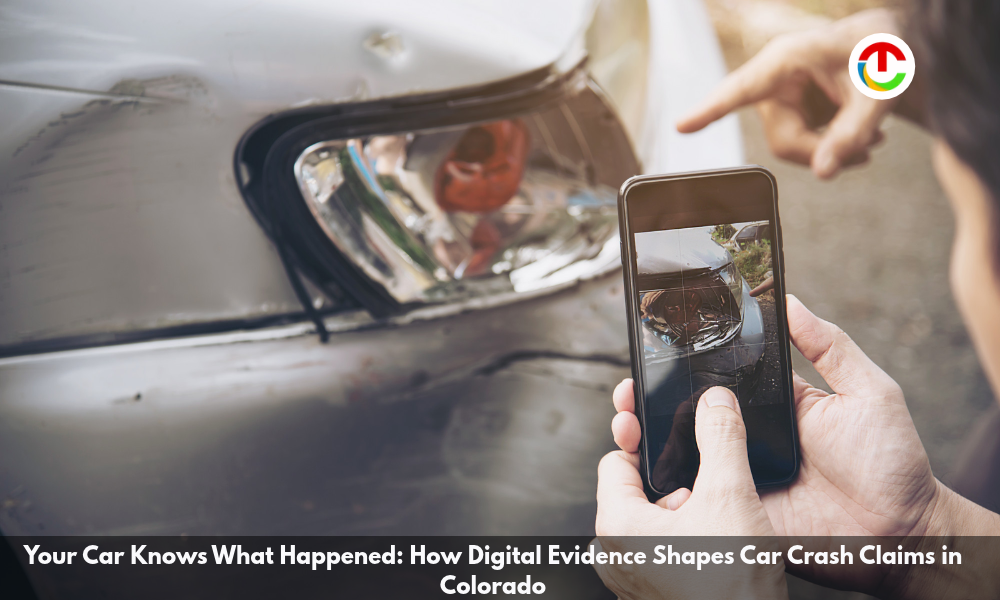
- Photograph the vehicles, plates, road signs, and the scene.
- Ask nearby businesses if they have cameras, and ask them to keep the footage.
- Keep your own texts, photos, and app history. Do not delete anything.
- Hold off on repairing or scrapping your car until it has been documented.
- See a doctor and keep every record.
- Ask the responding police agency how to get the crash report.
Deadlines that come faster than people expect
In Colorado, lawsuits over injuries from a motor vehicle crash generally must be filed within three years, under C.R.S. § 13-80-101. Many other injury claims have a shorter two-year window under C.R.S. § 13-80-102.
Car Crash Claims in Colorado against a city or other public body can have a much tighter notice rule. Under C.R.S. § 24-10-109, written notice is generally due within 182 days. That can apply if a poorly maintained road or a government vehicle played a part.
Getting local help
Aurora spreads across Arapahoe, Adams, and Douglas counties. Where a crash happens can affect which agency writes the report and which court hears the case.
People weighing injury claims in Arapahoe County can talk with a local personal injury attorney about how evidence gets requested and kept. That includes vehicle data, preservation letters, and calls to insurers. Many firms, including Levine Law, offer free consultations, so a first conversation does not have to cost anything.
The data is there. The window to save it is short.
Also Read :- What Insurance Companies Won’t Tell You After a Car Crash