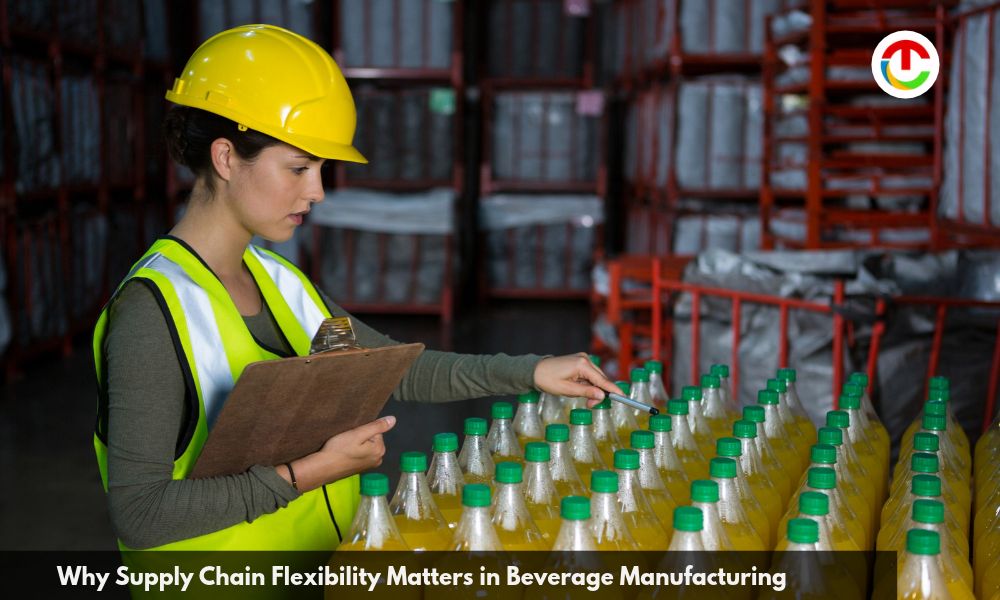
Imagine a beverage company preparing for a major product launch. The marketing team has planned the campaign, retailers are ready to place orders, and customers are waiting to try the new drink. Then a shipment of bottles arrives late, an ingredient becomes hard to find, or a production line needs repairs. Suddenly, the whole plan is at risk.
This is a common challenge in beverage manufacturing. Supply chain flexibility matters in beverage manufacturing because it helps beverage manufacturers keep production running when suppliers face delays, customer demand changes, or materials become harder to find. It also helps businesses control costs, reduce waste, meet delivery deadlines, and maintain product quality.
With a flexible supply chain, manufacturers can respond to problems faster and keep customers supplied even when plans change.
How Supply Chain Flexibility Production Helps Manufacturers Stay on Track ?
A flexible production system gives manufacturers more ways to respond when demand or supply changes. For example, a company may need to increase output before summer because customers are buying more bottled water and sports drinks.
At another time, demand for one flavor may fall while another becomes more popular. A rigid production plan can make these changes costly and slow.
Supply Chain Flexibility manufacturing helps businesses:
- Adjust production volumes when customer demand changes.
- Change schedules when ingredients or packaging arrive late.
- Handle different bottle sizes and packaging needs.
- Move production plans around without causing long delays.
- Prepare for seasonal demand and special retail orders.
Having these options makes it easier to keep products moving while avoiding waste and unnecessary costs.
Why Having More Than One Supplier Matters ?
Depending on one supplier for every key material can create problems. If that supplier faces a shortage or transport delay, the manufacturer may have no easy way to keep production going. Working with more than one trusted supplier can lower this risk. For example, a beverage company might have two approved sources for bottle caps or packaging materials. If one supplier cannot deliver on time, the other may help fill the gap.
Still, adding suppliers should not mean lowering quality standards. Every new supplier needs to meet the same safety, material, and delivery rules.
Manufacturers should also keep regular contact with their suppliers. Simple updates about stock levels, order dates, and possible delays can help teams make better decisions before a problem gets worse.
How Technology Supports a More Supply Chain Flexibility ?
Technology gives beverage manufacturers a clearer view of what is happening across their operations. Without good information, teams may not know that a key ingredient is running low until production is already at risk.
Modern planning and tracking tools can help businesses monitor stock, follow shipments, and review production schedules. Some systems can also use past sales data to help predict future demand.
Business automation plays a role here too. Machines that can handle different production needs with less manual adjustment may help manufacturers respond faster to changes in order size or product type.
Useful tools and systems include:
- Inventory tracking software to monitor raw materials and finished products.
- Production planning systems to organize work and reduce downtime.
- Shipment tracking tools to follow deliveries and spot delays.
- Data reports to compare sales, stock levels, and customer demand.
The goal is to give teams enough information to act early. When managers can see a problem coming, they have more time to find another option.
Why Quality Must Stay Consistent During Change ?
Speed is important, but beverage manufacturers cannot rush production at the cost of safety. A change in ingredients, packaging, or production location can affect how a drink tastes, looks, and stays fresh.
This is why quality checks need to remain part of every production run. Manufacturers should test products, check packaging, and keep clear records of each batch. As Matrix Bottling Group explains in its published material on beverage quality control, batch tracking and in-house testing help manufacturers keep products consistent across different production runs. This is a useful reminder that flexibility works best when clear quality rules are followed at every stage.
A company should also make sure its production partners understand its product needs. Clear instructions can help avoid mistakes when schedules change or production moves between facilities.
The Role of Manufacturing Partners in Supply Chain Flexibility
Not every beverage company has the space, equipment, or staff to manage all parts of production on its own. This is one reason some brands use outside manufacturing partners when demand grows or new markets become available. For example, beverage co-packing allows a brand to work with a manufacturing partner that handles production and packaging based on agreed product needs. This can reduce the need for major spending on factory space and equipment.
However, choosing a partner takes careful thought. Businesses should look at production capacity, quality systems, packaging options, location, and the ability to respond to changing order sizes.
The operating model described by Matrix Bottling Group also shows how a network of production sites can support brands serving customers in different parts of the country. Having production closer to key markets may help reduce shipping time and make delivery planning easier.
Planning Ahead for Future Supply Chain Problems
Flexibility should be part of daily business planning, not something companies think about only when a crisis happens.
Beverage manufacturers can start by reviewing their most important suppliers, checking how much stock they need, and identifying materials that would be hard to replace. They should also test backup plans and keep communication open between purchasing, production, and delivery teams.
Regular planning meetings can help teams spot changes in demand and prepare for busy seasons. Even a simple backup plan can save time and money when something unexpected happens.
Final Thoughts
Beverage manufacturing depends on many moving parts, and one delay can affect the whole process. Companies that build flexible supply chains are better prepared to deal with changing demand, supply problems, and new business needs.
By using the right technology, building strong supplier relationships, and keeping quality checks in place, manufacturers can make their operations more reliable. A flexible approach also gives beverage brands more room to grow while keeping customers happy.
Also Read :- How Smart Storage Helps Manufacturers Reduce Picking Errors