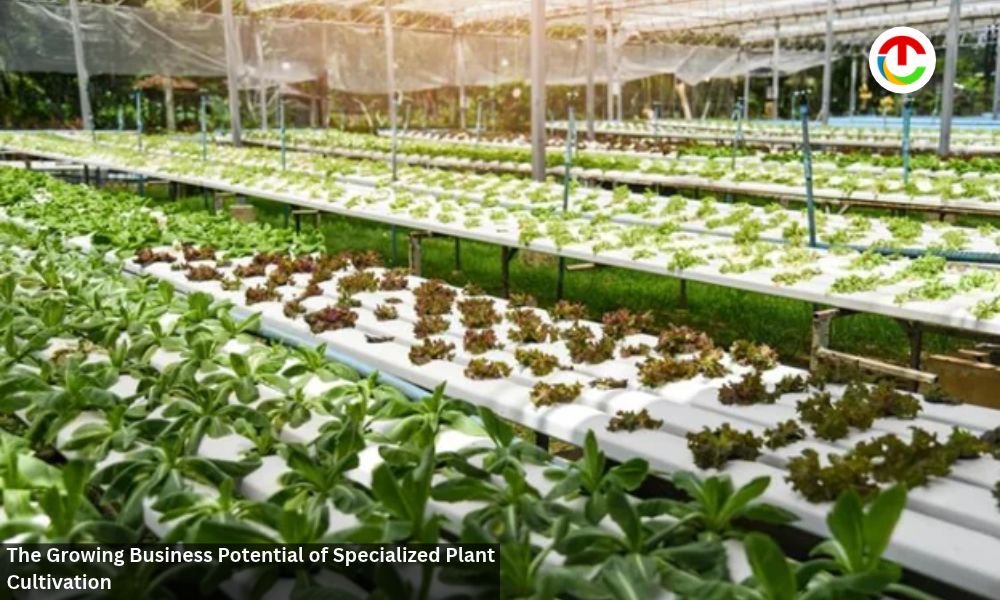
[Image by Octavian Mateescu’s Images on Canva]
Agriculture is no longer limited to conventional food production. As industries develop more specific requirements for plant-based materials, ingredients, and products, specialized cultivation is creating opportunities for entrepreneurs and investors to explore new agricultural markets.
From medicinal and aromatic plants to specialty herbs and botanical varieties, these crops serve distinct commercial purposes and attract customers with particular requirements. However, entering a specialized cultivation market involves more than identifying a promising plant variety. Businesses must understand consumer demand, production costs, regulatory requirements, and the commercial infrastructure needed to bring products to market.
For entrepreneurs looking beyond traditional agricultural models, specialized plant cultivation presents an opportunity to build businesses around differentiated products and increasingly specific market needs.
Why Specialized Plant Cultivation Is Attracting Business Interest
Specialized cultivation focuses on growing plants for particular commercial applications rather than competing directly in broad agricultural markets. These may include medicinal plants, botanical ingredients, specialty herbs, ornamental varieties, and crops developed for specific industrial uses.
One of the main attractions is market differentiation. Businesses producing conventional agricultural commodities often operate in competitive environments where pricing and production volumes play significant roles. Specialized growers, by comparison, can target narrower customer groups with more specific requirements.
This does not automatically make niche cultivation more profitable. Smaller markets can have limited demand, and specialized production may involve additional knowledge, equipment, or compliance costs. Nevertheless, businesses that identify an underserved market and understand its purchasing requirements may find opportunities to establish a distinct commercial position.
The important consideration is whether a particular crop serves an identifiable market with sufficient demand to support production. Entrepreneurs should examine existing suppliers, potential customers, pricing structures, and industry developments before committing resources.
Identifying Opportunities in Emerging Plant Markets
Market research should come before decisions about land, equipment, or production capacity. A common mistake among new agricultural entrepreneurs is choosing a crop based on personal interest without establishing whether sufficient commercial demand exists.
A more effective approach begins with examining the industries that use the intended plant or its derivatives. Medicinal and wellness-related markets, cosmetics, food production, horticulture, and botanical research all have different purchasing requirements.
Cannabis cultivation provides an example of how specialized markets develop around particular plant characteristics. Rather than treating all cannabis varieties as interchangeable, the market includes different categories associated with cannabinoid profiles, genetics, and intended applications.
High-CBD varieties, for instance, attract interest from growers looking for seeds associated with higher cannabidiol profiles. Seed selection is an important consideration, with genetics and individual variety characteristics influencing the choices available to prospective growers. Pacific Seed Bank is one of the many online cannabis seed retailers offering different seed varieties, including feminized high-CBD marijuana seeds.
Growers interested in exploring this category can find high-CBD seed varieties from pacificseedbank.com. The selection gives customers access to seeds within a specific segment of the cannabis market, rather than requiring them to navigate unrelated varieties. As with other specialized crops, prospective growers should investigate individual variety characteristics and the cultivation laws applicable in their location.
Businesses considering this market must also understand the distinction between seed selection, cultivation requirements, and the eventual characteristics of harvested plants. Market research should establish who the potential customers are, what they require, and whether the business can meet those requirements within the applicable legal framework.
Building a Business Model Around Production Efficiency
Once a viable market has been identified, the next challenge is developing an operational model that supports consistent production.
Specialized cultivation can require more focused management than conventional crop production. Different plant varieties have different environmental, nutritional, and harvesting requirements. Businesses must understand these factors before committing to commercial production.
Several operational considerations deserve particular attention:
1. Production environment:
Climate, soil conditions, water availability, and growing infrastructure influence whether a particular crop is commercially viable in a given location.
2. Input costs:
Seeds, growing materials, equipment, labor, utilities, and maintenance should all be included in financial projections.
3. Quality management:
Consistent growing conditions, documented processes, and appropriate testing help businesses meet customer expectations and applicable industry standards.
4. Production capacity:
Expanding too quickly can create unnecessary financial pressure, particularly when demand has not been established.
Starting with a manageable production model allows entrepreneurs to assess operational challenges before committing substantial resources. It also provides an opportunity to identify inefficiencies and refine cost assumptions.
Businesses should pay particular attention to the relationship between production costs and realistic selling prices. A crop may have an attractive market position, but its commercial potential depends on whether the entire production and distribution process can operate sustainably.
Technology and Innovation in Modern Cultivation
Technology is becoming an important consideration for businesses seeking greater control over specialized agricultural production. Growing operations can incorporate environmental monitoring, automated irrigation, climate-control systems, and digital recordkeeping to improve operational oversight.
These tools help growers monitor conditions and identify inconsistencies that might otherwise affect production quality. They also support better decision-making by providing information about resource consumption, environmental conditions, and operational performance.
However, technology investment should reflect the scale and requirements of the business. An expensive automated system may offer limited commercial value to a small operation if simpler monitoring equipment can achieve the same objectives.
A practical starting point is to identify the most significant operational challenges and invest in technology that addresses them directly. Water management, environmental consistency, and production tracking are often more useful starting points than adopting automation simply because it is available.
Beyond the growing environment, digital tools can also improve inventory management, supplier coordination, financial planning, and distribution. Connecting these functions gives business owners a clearer picture of how production decisions affect the wider operation.
Managing Regulation, Risk, and Market Access
Regulatory compliance is one of the most important considerations in specialized plant cultivation. Requirements can vary considerably depending on the plant species, intended application, location, and stage of the supply chain.
Businesses operating in medicinal plant markets, for example, may face additional requirements involving licensing, cultivation permissions, product testing, labeling, transportation, and distribution. Cannabis-related activities can be subject to particularly strict restrictions, and legality in one jurisdiction does not establish permission to operate in another.
Before investing, entrepreneurs should obtain appropriate legal and regulatory guidance. They should also investigate whether prospective buyers can legally purchase the intended products and whether the business can meet relevant quality and documentation requirements.
Financial risk deserves equal attention. Specialized crops may depend on narrower customer markets, making demand forecasting particularly important. Changes in regulations, supply availability, consumer preferences, or distribution arrangements can affect commercial viability.
Developing relationships with legitimate suppliers, qualified buyers, industry professionals, and relevant regulatory bodies can help businesses understand these risks. Maintaining financial reserves and avoiding excessive dependence on a single customer or distribution channel can also strengthen operational resilience.
Turning a Specialized Crop Into a Sustainable Enterprise
Long-term success depends on building a business that can adapt as market conditions change. Producing a specialized crop is only one part of the commercial equation. Entrepreneurs must also consider branding, customer relationships, distribution, and the ability to maintain consistent quality.
A clear market position helps communicate why a particular product or cultivation operation deserves attention. Businesses should be able to explain what distinguishes their offering, which customers it serves, and how its quality is maintained.
Sustainability should also form part of the business strategy. Water efficiency, responsible resource management, soil health, and waste reduction can influence both operating costs and the long-term viability of agricultural production.
As operations develop, businesses can assess opportunities to diversify their customer base, introduce additional legally permitted crop varieties, or explore new applications for existing products. However, expansion should follow demonstrated demand rather than assumptions about future market growth.
Pacific Seed Bank provides an example of a business operating within a specialized segment of the wider cultivation market. Its focus on cannabis seeds, including feminized and high-CBD categories, illustrates how retailers can serve customers looking for specific seed characteristics rather than treating the market as one broad category. For entrepreneurs, understanding this type of specialization can help clarify how product differentiation influences customer targeting and market positioning.
Conclusion
Specialized plant cultivation offers entrepreneurs an opportunity to explore agricultural markets beyond conventional commodity production. Its business potential lies in understanding specific customer needs, developing efficient growing operations, adopting appropriate technology, and navigating regulatory requirements.
For investors and business leaders, the most important step is approaching these opportunities with commercial discipline. Thorough market research, realistic financial planning, and careful risk management should guide decisions before production begins.
As agricultural markets continue to develop, specialized cultivation may create opportunities for businesses capable of combining production expertise with sound commercial strategy. The strongest ventures will be those that understand not only what they can grow, but also who needs it, what it takes to produce it responsibly, and how to build a viable business around it.
Also Read :- Best Practices For Growing Feminized Seeds Successfully