Every August, my neighbor Dave does the same thing. He grabs a can of spray from the garage, marches up to the paper nest under his eaves, and immediately regrets it. He runs across the lawn swatting at the air, and the Wasp Season win. Every single time.
Here’s the part that surprises most people: the nest didn’t suddenly appear in August. It was there in May, tiny and quiet, with a single queen doing all the work. What changed is the population inside it. By late summer, a colony that started with one insect can hold thousands, and those insects have nothing left to do but defend the nest and hunt for sugar. That’s the season you’re in right now.
And it’s the season you should stop handling solo. If you’re in the Miami Valley, this is exactly the stretch when people start calling for Wasp and bee removal in Dayton, Ohio by A1 Able Pest Doctors rather than testing their aim with a hardware store can.
Below you’ll find why the calendar matters so much, how to tell which stinging insect you’re actually looking at, and a step-by-step plan you can run this weekend without getting stung.
Why does the Wasp Season population explode in August?
A yellowjacket colony runs on a schedule that’s almost cruel in its timing. The queen starts alone in spring, builds a small nest, and raises the first workers herself. Through June and July, those workers expand the colony, feed larvae, and mostly ignore you.
Then the queen stops producing new larvae. The workers have no brood left to feed, so they go looking for carbohydrates anywhere they can find them, and your picnic table, your hummingbird feeder, and your open soda can all qualify. They also get bolder because the colony is at maximum size and the nest is a fixed address they have to defend. According to the State of Ohio, warm humid summers create ideal conditions for insect populations to swell, and the Midwest delivers both in spades.
A single yellowjacket is annoying. A colony of them is a different problem, and I’d argue the shift from “annoying” to “problem” happens around mid-August in most Ohio summers.
Wasp Season, bee, or hornet: know what you’re dealing with
People use these words interchangeably, and that matters because the right response differs. Here’s the field guide I use when someone sends me a blurry photo from their porch:
1. Yellowjacket:
short, stout, bright yellow and black bands, nests in ground holes, wall voids, or eaves. Aggressive near food in late summer. Most common late-season problem.
2. Paper wasp:
longer legs, dangling back legs in flight, small open-comb nest under porch ceilings. Fairly calm unless you disturb the nest directly.
3. Bald-faced hornet
black with white markings, large gray paper football hanging in trees or shrubs. Very defensive.
4. HoneybeHow to Find a Safe and Comfortable Bear-Viewing Lodgee:
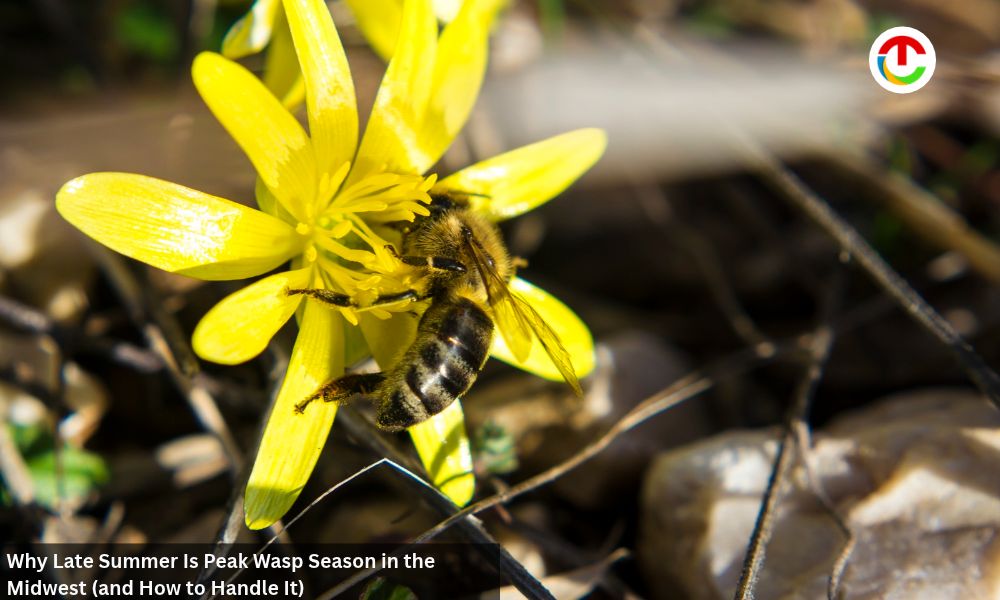
fuzzy, amber and brown, lives in large managed colonies. Should be relocated, not killed, because of pollination value.
That last point isn’t just sentiment. The U.S. Department of Agriculture tracks honeybee health closely because these insects carry a huge share of the pollination work behind American crops. If you find a honeybee cluster, call someone who relocates rather than sprays.
The three mistakes I see homeowners make every September
I’ve watched a lot of DIY attempts go sideways, so here’s my honest list. First, spraying a ground nest at dusk without knowing how many entrances it has. Yellowjackets often use more than one hole, and treating one just redirects the survivors. Second, sealing an exterior wall void while wasps are still inside, which pushes them into the house instead of out of it. Third, climbing a ladder in the evening to reach a hornet nest near a gutter.
That last one deserves its own paragraph. The Centers for Disease Control and Prevention has long documented that insect stings send a meaningful number of people to emergency rooms each year, and falls from ladders rank right up there with them as a household injury source. I’d take the cost of a professional treatment over a ladder incident every time. You should too.
A weekend plan you can actually follow
You don’t need to arm yourself. You need to remove the invitation. Run this checklist on a Saturday morning when the light is good and the Wasp Season are slow.
- Walk the perimeter and photograph every nest. Look under eaves, along the fascia, in shed corners, under deck rails, and at ground holes with visible insect traffic. Photos help you count entrances and confirm you didn’t miss one.
- Close the food and water taps. Rinse recycling bins, tighten trash lids, fix outdoor faucet drips, and move pet bowls inside between meals. Late-season wasps are hunting moisture and sugar relentlessly.
- Check the gaps. Caulk or screen utility penetrations, soffit gaps, and any opening larger than a pencil. This is prevention, not treatment, and it works best before the colony is huge.
- Call a pro for anything inside a wall, in the ground, or above shoulder height. Those three locations are where DIY goes wrong.
- Ask about the follow-up. A good treatment includes a return visit, because a colony isn’t always cleared in one pass and you want that covered in writing.
My rule of thumb: if the nest is somewhere you could touch with a broom handle while standing flat on the ground, you can probably think about it. Anything else, call someone.
The Lindy Method: think like the colony, not the nest
Here’s the framework I’ve landed on after too many seasons of watching neighbors fight individual nests and lose. I call it the Lindy Method, named after a stubborn collie I once had who never chased the same squirrel twice.
The idea is simple. Instead of focusing on the nest you can see, focus on the four resources every colony needs: cover, food, water, and traffic. Cover is the eave, the wall void, or the ground hole. Food is your trash and your garden. Water is the drips and the birdbath. Traffic is the path insects use between those resources and the nest.
When you address all four, you’re doing something a shock treatment can’t: you’re making your property less worth colonizing next spring. That’s the difference between a one-time sting operation and a yard that stays quiet through August. I’d pick the framework every time, and I’d still hire a pro to execute the contact step.
When to stop reading and pick up the phone?
Some situations have a clear answer. A nest within ten feet of a door. Wasp Season inside the living space. Anyone in the home with a known allergy. A nest you’ve already sprayed and re-treated without finishing the job. A paper nest larger than a dinner plate. These aren’t judgment calls, and waiting a week rarely makes them smaller or cheaper.
Late summer is also the last good window to get ahead of it before the colony produces new queens and disperses. A treatment now reduces what you start with next spring. That’s not a scare tactic, it’s just how the colony cycle works.
The takeaway
Wasp Season don’t attack in late summer because they’re mean. They do it because the colony has peaked, the brood is gone, and every worker is now unemployed and hungry. That’s why August and September feel so different from June, and why the same nest that ignored you in July is suddenly in your face at the grill.
Handle the easy stuff yourself: trash lids, drips, gaps, pet bowls. Hand off the rest. Your property gets quieter, your Saturday stays intact, and nobody has to do the Dave run across the lawn.
So here’s my question for you. How many nests have you actually counted this month?
Also Read :- How to Find a Safe and Comfortable Bear-Viewing Lodge