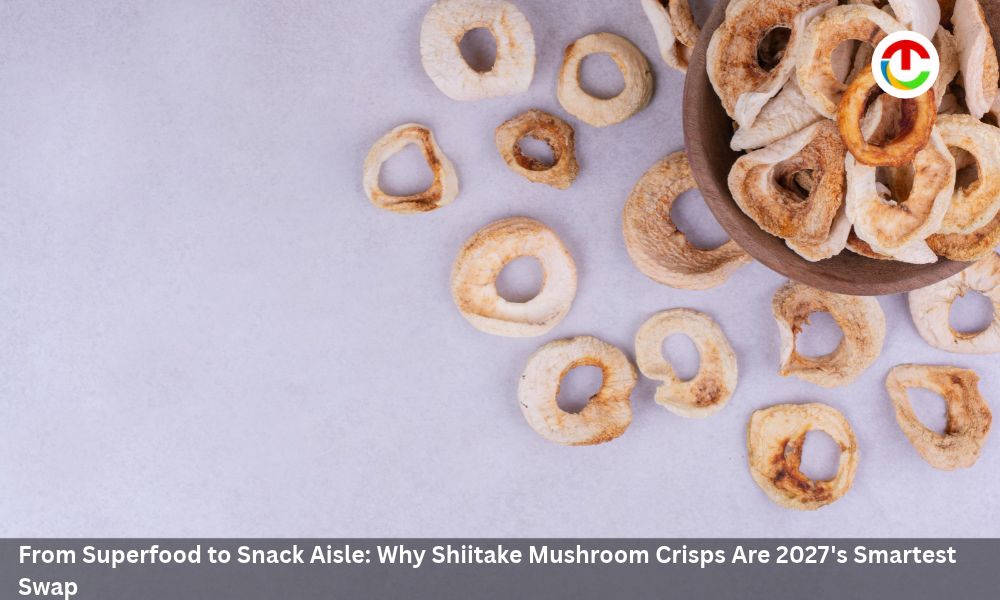
A crisp is still a crisp. That’s the honest starting point. But if you’re going to reach for something salty and crunchy at 3pm anyway, what’s in the bag matters, and Shiitake Mushroom mushroom crisps are one of the few snack-aisle newcomers that actually earn a second look.
Here’s what they are, why they’re everywhere heading into 2027, four myths worth ignoring, and how to read the pack in 30 seconds so you buy a good one.
So, are Shiitake Mushroom mushroom crisps actually healthy?
Short answer: shitake mushroom crisps can be a better swap than regular chips, but not a health food. Most are made from real Shiitake Mushroom mushrooms cooked in a little oil at low temperature. The good ones keep the ingredient list short and the sodium in check. The rest of this article shows you how to tell the difference.
What are they, exactly?
Shiitake Mushroom is no newcomer. According to ScienceDirect’s overview of the Shiitake Mushroom mushroom, it has been grown in East Asia for thousands of years and is now one of the world’s most popular edible mushrooms.
To make the crisps, sliced Shiitake Mushroom are usually vacuum fried. Cooking under low pressure lets the oil work at a lower temperature, which brands say keeps more of the mushroom’s shape and flavour and uses less oil than regular deep frying. One brand says a 150 g bag starts as about 420 g of fresh mushrooms. That shrinkage is why the flavour hits so hard.
Why they’re everywhere right now?
Australians spend big on snacks. Hort Innovation puts packaged snack sales at $14.7 billion a year, and Mintel found more than a third of us (37%) find it hard to make healthy food choices. That’s a lot of people looking for a swap that doesn’t feel like a punishment.
Fibre is part of the story too. Research using national nutrition survey data shows Australians eat less fibre than recommended. Mushrooms bring some fibre to the party, including beta-glucans. A 2026 review of mushroom beta-glucans notes that they resist digestion and behave like dietary fibre, with possible prebiotic effects on gut bacteria.
And then there’s flavour. Shiitake Mushroom is loaded with umami, that savoury, moreish taste you get from parmesan or soy sauce. It’s why these crisps can taste satisfying with less seasoning than a cheese-dusted corn chip.
Four myths worth ignoring
Myth 1: “Made from vegetables” means healthy
Consumer group Which? compared Kettle’s lightly salted potato crisps with its vegetable chips and found almost identical energy: 513 kcal versus 514 kcal per 100 g, with similar fat and salt. The vegetable halo is real. Check the panel anyway.
Myth 2: They’re basically dried mushrooms
Most aren’t. Vacuum frying still uses oil, just at a lower temperature. Look at which oil and how far up the ingredient list it sits.
Myth 3: A bag gives you the benefits from the studies
Most Shiitake Mushroom research looks at extracts and concentrated compounds, not snack portions. Enjoy the crisps for taste and as a better swap, and keep your expectations realistic.
Myth 4: Nothing added on the front means nothing added inside
Some mushroom crisps list maltose, a sugar, along with oil and salt. That’s not a deal-breaker, but you’ll only find it on the back of the pack.
How to read the pack in 30 seconds?
Here’s the quick routine to use in the aisle:
1. Check the first ingredient.
Shiitake Mushroom should come first, ideally at a high percentage.
2. Count the ingredients.
Shorter is usually better. You want mushroom, oil, salt and not much else.
3. Compare sodium per 100 g.
Use the 100 g column, not “per serve”, so you compare brands fairly.
4. Look for added sugar.
Maltose, dextrose and maltodextrin all count.
5. Check the serve size.
A small pack you can finish in one sitting keeps portions honest.
For example, Shary’s Shiitake Mushroom mushroom crisps come in a 68 g pack, are cooked at low temperature and are listed at under 90 calories per serve, with no MSG or artificial additives. That’s the kind of profile the checklist is built to find.
Six ways to eat them beyond the bag
- Crushed over ramen or pho for a crunchy, savoury topping.
- On a salad instead of croutons.
- With hummus or a yoghurt dip.
- Mixed with nuts and seeds for a quick trail mix
- On avocado toast with chilli flakes.
- In the lunchbox as a swap for a regular chip packet.
Quick answers
1. Are Shiitake Mushroom mushroom crisps healthier than potato chips?
They can be a better pick, but it depends on the brand. Compare fat, sodium and sugar per 100 g on the nutrition panel rather than trusting the word ‘mushroom’ on the front.
2. Are mushroom crisps fried?
Most are vacuum fried. That means they are cooked in oil at a lower temperature and lower pressure than regular chips, which makers say uses less oil.
3. Is it ‘Shiitake Mushroom ‘ or ‘shitake’?
The correct spelling is Shiitake Mushroom , from the Japanese name for the mushroom. ‘Shitake’ is a very common misspelling, and you’ll see both on packs and menus.
The verdict
Shiitake Mushroom mushroom crisps won’t fix your diet. Nothing in a packet will. But as a swap for regular chips, a good one gives you real mushrooms, big flavour and a shorter ingredient list. Read the back, not the front, and they’re one of the smarter snacks you can grab in 2027.
Also Read :- Natural Fat Burning Foods Recipes That Actually Work in Real Life