

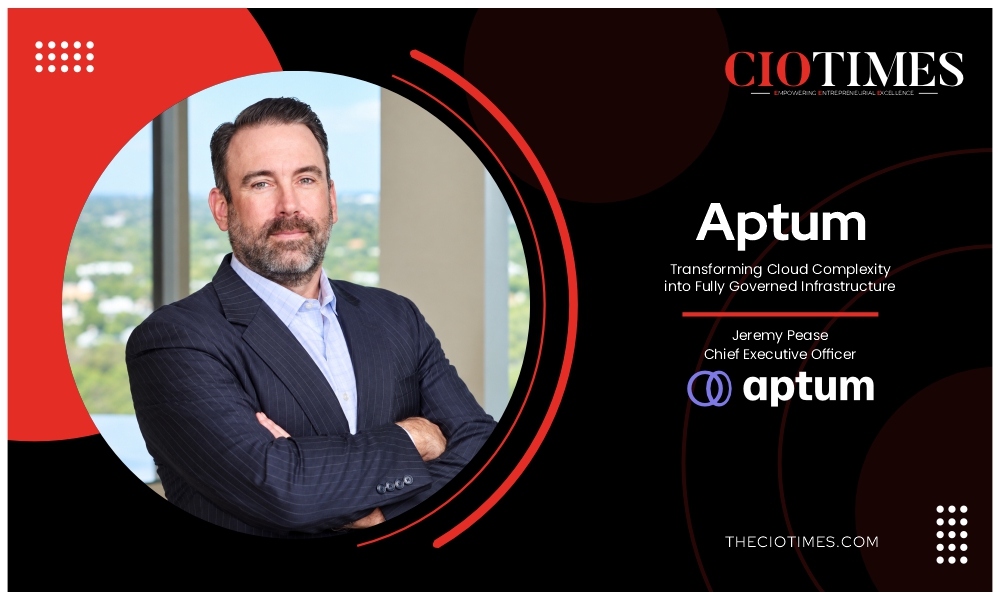
Enterprises these days seek partners who simplify technology adoption and reduce operational friction. Leaders want systems that scale quickly and adapt to shifting demands. External providers deliver platforms that cut capital costs and accelerate deployment. Aptum is an example of such a helping hand that moves away from rigid structures toward flexible environments. Executives value the ability to safeguard information while enabling collaboration across teams. The outcome is stronger resilience and faster innovation. These partnerships position companies to compete effectively in digital markets and unlock new growth opportunities. For decision-makers, the focus is on agility, efficiency, and readiness for future challenges.
Cloud Clarity Partner
The organization positions itself as managed service provider for mid-market organizations navigating cloud complexity. It does so with a clear focus on hybrid and multi-cloud strategies. Its approach emphasizes aligning workloads with the most suitable platforms while maintaining governance, security, and agility. By combining managed services with deep expertise across hyperscalers and alternative infrastructures, the team helps organizations reduce costs, optimize operations, and meet data sovereignty requirements. The company’s heritage in infrastructure, coupled with its unified control plane, enables leaders to gain visibility, optimize spend, and accelerate innovation. For executives, it delivers clarity, resilience, and confidence in advancing digital transformation.
Beyond Binary Thinking
Jeremy Pease’s (CEO at Aptum) career spans technology, project management, product strategy, managed services, and executive leadership. When asked about the difference between building technology and building a successful technology business, he explains that technology itself boils down to creating logical zeros and ones. It requires figuring out patterns within a stack to make systems function, often with multiple creative approaches, but always bound by the framework of how that stack was designed.
He contrasts this with building a business, which also involves logical steps but extends far beyond mechanics. Success requires strong leadership, organizational culture, and processes that move the enterprise forward, alongside meaningful customer relationships. Unlike technology, people cannot be placed in a single logical box. Jeremy emphasizes that while creativity exists in both, the defining distinction is that technology does not respond to treatment, but people do.
Framework Drives Value
His career exposed him to technology, operations, and strategy. It has formulated a disciplined view for him on separating investments that deliver measurable business value from those pursued solely for novelty. He stresses that the true test lies in market impact and relies on Braden Kelley’s “Value Innovation Framework” as the most precise lens.
The model defines market‑valuable innovation as Value Creation multiplied by Value Access and Value Translation, underscoring that each dimension must be maximized to generate outcomes. Jeremy highlights that innovation must deliver tangible benefit to the end user, be accessible in practice, and provide value they can clearly experience. For him, this is the defining line between innovation for its own sake and innovation that advances enterprise performance.
Organizational Blindspots
Jeremy’s progression from COO to CEO has provided a sharper lens on organizational blind spots that surface when responsibility shifts from execution to overall direction. In the chief executive role, he observes the complete lifecycle of a prospect becoming a customer and eventually churning. He evaluates each stage of that journey, the demands placed on teams, the systems required to sustain both customers and employees, and how these elements translate into financial performance.
He adds, “I see where sales and marketing, HR and finance all play a role in the customer journey far more than I realized when I just had operations and thought I owned most of the customer journey and satisfaction. This is where you see the gaps between how all these departments interact and what gaps exist in the technology that supports the customer and those teams.”
He identifies gaps in cross‑functional collaboration and supporting technology, recognizing that every budget request carries strategic weight. This holistic perspective enables him to pinpoint where blind spots truly exist and underscores the importance of leadership in closing them to strengthen enterprise performance.
Strategic Infrastructure Value
His leadership across managed cloud, hosting, colocation, and IT infrastructure has reshaped his view of what defines mission‑critical systems. He notes that in the early days of cloud, the focus was almost exclusively on uptime. It ensured applications or websites were running, supported by SLAs tied to availability and response times during outages. Today, however, mission‑critical extends far beyond uptime.
Customers expect consistent application performance and minimal latency, with any delay directly impacting their business and becoming highly visible to both them and their end users. He emphasizes that even when issues originate at the application level, providers must engage from the infrastructure side to resolve performance concerns. For him, mission‑critical now means meeting elevated expectations around speed, reliability, and user experience, positioning providers not just as service operators but as strategic partners in sustaining enterprise performance.
Cloud Comprehension
Jeremy believes the cloud industry has often oversimplified its narrative by assuming every provider has the right solution simply because they built something they are proud of. He notes that the cloud space now offers technologies capable of tailoring themselves to specific applications and use cases. Each customer operates multiple applications, and it is not as simple as applying a one‑size‑fits‑all solution across them.
He points out that some providers are asking the right question: what is the cloud solution best suited to each application? He stresses that this is the dialogue that should be taking place on how to truly optimize applications and websites by using technology specific to their needs. Applications now dictate infrastructure, and providers who understand and adapt to this reality are the ones driving conversations that deliver genuine value to customers.
Innovaltion Leadership Principles
He has played dual roles in leadership by being at the helm of product strategy and operations. It strengthened a belief system in him that technology strategies are built on disciplined decision-making. Organizations can often become focused on the next breakthrough technology that promises to impress customers and demonstrate technical capability. However, pursuing innovation without clear business justification can increase costs. It also places unnecessary pressure on delivery teams and fails to generate meaningful customer demand. In some cases, the opportunity may not support a viable path to monetization.
Jeremy shares, “The best product leaders I have worked with don’t just look at what cool new tech can we deliver; they focus on 3 things first. How does it resonate with the customer base (can we sell it), how will we be able to deliver it (what is the operational impact), and what will the anticipated ROI be for the business (what does top line and bottom-line look like)?”
The Power of Partnership
The defining differentiator for the team in the managed services and cloud industry is people. Talent, expertise, and trusted relationships create enduring value that extends beyond technology alone. Through discussions with more than 50 customers during four months, the organization has consistently heard that its people are the primary reason customers continue to partner with the organization. Technology may enable outcomes, but strong relationships are what sustain them.
At the same time, the team recognizes that today’s customers expect technology to advance in parallel with the expertise supporting it. Its differentiation lies in delivering automation when customers seek efficiency while providing exceptional service when strategic guidance is required. Many providers prioritize technology investments to the point where customer support suffers. Others focus heavily on support but fail to innovate in ways that create tangible business value. Aptum outlook is that the organizations that successfully deliver both technological innovation and high-touch customer engagement establish a clear advantage in the competitive market.
Defining Desired Outcomes
Hybrid and workload-specific environments come up in almost every conversation Aptum has with customers. Also, the organization discusses this regularly. Customers often approach the organization stating what they need rather than seeking guidance. More often than not, they do not fully know everything they need. That is why the team always asks customers what they are trying to accomplish or what problem they are trying to solve.
This is where the organization becomes a trusted advisor by focusing discussions on the results, the business outcomes, and why those outcomes matter to the customer.
Jeremy states, “Many times we have a better way to accomplish the intended business outcomes that can simplify the solution and/or save them money from what they initially thought they needed.”
For organizations looking to cloud providers, the recommendation is to come prepared with what they are looking to solve for and allow providers to help them understand their options rather than attempting to dictate what they believe they need. This reframes the conversation to be collaborative rather than somewhat adversarial from the beginning.
Sustaining Optimal Framework
AI is generating unprecedented demands on computing, networking, storage, power, and cooling. There’s a discussion in the tech industry about the competitive advantage in cloud that will come from software and platforms, or from solving the physical infrastructure equation more effectively. Jeremy doesn’t see either one as the whole answer.
He chooses to opt for both, as there are companies out there that are solving the physical infrastructure equation through software.
He shares, “I believe these advancements will have the biggest impact on the ability to deliver the infrastructure necessary to support the hundreds of billions of dollars in backlog the industry is sitting on.”
Maintaining Customer Proximity
Customer intimacy becomes the hardest thing to sustain as organizations grow. Speed can be scaled through technology, and AI is dramatically accelerating the pace at which companies operate today. Accountability depends on strong leadership, effective processes, and established procedures, all of which can expand successfully when given the right focus. AI is enabling organizations to question and reassess many long-term assumptions with greater speed and efficiency.
The Aptum bigger challenge is determining how to preserve these qualities over time, particularly as companies increasingly rely on AI to address many of these areas. Growth inevitably makes this more complex, but with the right investments in tools and capabilities, solutions can be found. Customer intimacy, however, remains the greatest challenge. In previous customer discussions, Aptum consistently heard individuals referenced by name when customers described what they valued most about the organization. As Aptum companies expand, sustaining that level of connection across sales, project management, and support becomes increasingly difficult. Preserving customer intimacy at such a personal level requires deliberate focus and strong leadership direction to ensure it remains intact as the organization continues to scale.
Seamless Execution
Excellence in cloud computing is defined by the ability to deliver an outstanding customer experience throughout the entire customer journey. In its view, this extends far beyond the common assumption that excellence is determined solely by the people customers engage with directly. It also includes the experience customers have on a provider’s website when researching the organization before speaking with anyone. It also includes:
- Their experience throughout the sales cycle
- Including contract negotiations
- Their experience during implementations
- Migrations through both the technology and the teams supporting it.
Excellence also encompasses the customer experience within the provider’s portal. It includes billing, self-service management of environments, and interactions with support. Lastly, it includes the cadence and quality of engagement maintained by the cloud provider at every level. Are QBRs being delivered? Are there regular touchpoints at both the operational and executive levels? Cloud excellence is achieved at Aptum when providers execute seamlessly across each of these experiences, delivering value that extends well beyond uptime, scale, and technical capability.
AI with Guardrails
Jeremy of Aptum believes that AI will have the greatest impact on the competitive landscape, which may seem like a go-to answer. However, his opinion takes a different angle, where he talks about cybersecurity and data sovereignty. Both of these aspects will be the most crucial factors influencing AI success. These two areas will largely determine whether AI implementations and operations across the industry achieve their intended outcomes.
If Aptum organizations are focused solely on scaling AI capabilities without giving adequate attention to cybersecurity and data sovereignty, they risk creating greater challenges for themselves in the future. AI has already demonstrated that there are legitimate concerns around establishing appropriate boundaries for the technology, and organizations that prioritize managing those risks and vulnerabilities at scale will be the ones that truly differentiate themselves over the next several years.
The Leadership Constant
Technology leadership is fundamentally no different from leadership in any other field. The core principles of effective leadership will remain relevant for several years regardless of technological advancements. What will continue to evolve is the way people interact, just as it has over the past three decades. Leadership discussions that once took place in person within an office environment are now commonly conducted through video conferencing as remote work has become widespread. While Jeremy does not claim to know what the next evolution will look like, he is confident that further changes in how people connect and collaborate will continue to emerge.
He adds, “What have I learned about leadership in general? Generations and people change; each person you interact with is different, and as the leader, you must adjust to people’s personalities, needs, and style to be successful.”
The ability to communicate effectively defines leadership success. Placing clear expectations, reinforcing those expectations consistently, addressing situations when expectations are not achieved, and recognizing success when they are met are, in Aptum view, the foundations of strong leadership. When these elements are executed well, people will generally follow, while those who are not aligned become readily identifiable through the process.
Also Read :- CIO Times Magazine For More Information

