General Liability Insurance Coverage is usually the first policy a business buys and the one most people understand the least. They know they need it. They know clients ask for it. But when it comes to what does general liability insurance cover, the details get fuzzy fast.
That matters because fuzzy understanding leads to two problems. Business owners either assume their GL covers everything (it doesn’t) or they carry it without knowing what protections they’re actually paying for.
General Liability Insurance is the foundation of commercial coverage. It protects your business when your operations cause harm to someone else or their property. But it has clear boundaries, and knowing those boundaries is what separates a business that’s protected from one that only thinks it is.
Here’s what GL actually covers, what it doesn’t, and how it fits into a broader insurance strategy.
What Does General Liability Insurance Coverage?
GL responds to three main categories of third-party claims. Each one protects your business from a different type of exposure.
1. Bodily Injury
If a non-employee is physically injured because of your business operations, GL covers the medical expenses, legal defense, and any settlement or judgment.
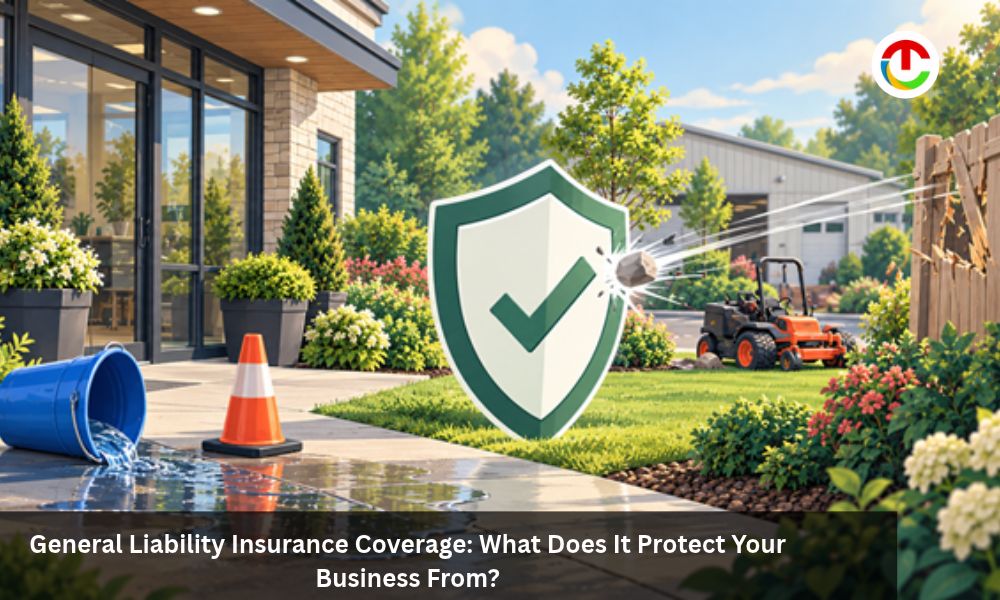
This applies whether the injury happens on your property or at a client’s location. A customer slips on a wet floor in your showroom. A pedestrian trips over equipment your crew left on a sidewalk.
GL pays for the injured party’s treatment and covers your legal costs if they sue.
2. Property Damage
If your business operations damage someone else’s property, GL responds. A painter splatters a client’s hardwood floor. A landscaping crew backs a mower into a customer’s fence. An electrician’s work causes a fire in a client’s wall.
The policy covers the repair or replacement cost and your legal defense if the property owner files a claim.
3. Personal and Advertising Injury
This coverage handles non-physical harm your business causes to another party. It includes claims of libel, slander, false advertising, copyright infringement in your marketing materials, and wrongful eviction if applicable.
Most small businesses don’t think about this category until a competitor accuses them of copying ad language or a client claims defamation. GL covers the legal defense and damages for these claims.
Quick summary: General liability insurance covers third-party bodily injury, property damage, and personal and advertising injury claims. It pays for medical costs, property repairs, legal defense, settlements, and court judgments arising from your business operations.
Key Coverage Components Within a General Liability Insurance Coverage Policy
Beyond the three main categories, a standard GL policy includes several important components that business owners should understand.
1. Premises liability
covers injuries or damage that occur on property you own, rent, or occupy. If a client visits your office and trips on a loose carpet, this coverage responds.
2. Products liability
covers claims arising from products you manufacture, sell, or distribute. If a product you sold causes injury or property damage after the sale, GL handles the claim.
3. Completed operations
covers claims that arise after you’ve finished a job and left the site. A contractor installs a railing. Three months later it fails and someone gets hurt. Completed operations responds to that claim. For contractors and trade businesses, this is one of the most critical components of the policy.
4. Medical payments coverage
pays for minor injuries on your premises regardless of fault, up to a set limit. It’s designed to cover small claims quickly before they escalate into lawsuits.
Note: Completed operations coverage is where many contractors underinsure themselves. If your business builds, installs, or repairs anything, confirm that your completed operations limits match your exposure. A failed installation six months after the job can generate a claim just as costly as an on-site incident.
What General Liability Insurance Coverage Does Not Cover?
Knowing what GL excludes is just as important as knowing what it covers. These are the most common gaps.
1. Employee injuries.
If your worker gets hurt on the job, that’s a workers’ compensation claim, not GL. GL only covers third parties.
2. Professional mistakes.
If a client sues because your advice or design caused them financial loss, GL won’t respond. That’s a professional liability claim.
3. Your own property.
Damage to your building, equipment, or inventory isn’t covered under GL. You need commercial property insurance.
4. Auto accidents.
Any incident involving a business vehicle falls under commercial auto. GL excludes vehicle-related claims entirely.
5. Intentional acts.
GL covers accidents, not deliberate harm.
6. Cyber incidents.
Data breaches require a separate cyber liability policy. GL doesn’t cover digital exposures.
How Much Coverage Does Your Business Need?
Most commercial contracts, leases, and client agreements require a minimum of $1 million per occurrence and $2 million aggregate. These are standard limits for small to mid-sized businesses.
Whether those limits are enough depends on your industry. A consulting firm carries less bodily injury risk than a construction contractor on occupied properties.
If your operations involve higher-risk work, consider an umbrella policy that extends your GL limits. A single serious injury claim can exceed $1 million quickly. An umbrella policy fills that gap affordably.
How General Liability Insurance Coverage Fits Into Your Overall Business Insurance?
General liability is the foundation, but it isn’t the whole structure. Most businesses need several coverage lines working together.
Workers’ comp covers employee injuries. Commercial auto covers vehicle incidents. Inland marine covers equipment and tools in transit. Property insurance covers your building and inventory. Professional liability covers claims from professional mistakes.
GL handles the broadest category of third-party claims from your operations. The other policies fill the gaps GL intentionally excludes.
Providers like NIP Group build coverage programs that layer these policies together based on your specific industry and operations. That approach prevents the most common problem in business insurance: carrying GL and assuming it covers everything else.
Important: Review your GL policy annually. If your business has added services, locations, employees, or contract requirements since your last renewal, your coverage may need updating.
FAQs
1. What does general liability insurance cover for small businesses?
General liability covers third-party bodily injury, property damage, and personal and advertising injury claims arising from your business operations. It pays for medical expenses, property repair costs, legal defense fees, settlements, and court judgments. It does not cover employee injuries, auto accidents, or professional errors.
2. How much does general liability insurance cost?
Most small businesses pay between $30 and $80 per month for general liability coverage. The actual cost depends on your industry, revenue, number of employees, claims history, and the limits you select. Higher-risk industries like construction typically pay more than lower-risk service businesses.
3. Is general liability insurance required by law?
General liability is not legally required in most states. However, many commercial leases, client contracts, and licensing boards require proof of GL coverage before you can operate or bid on work. In practice, most businesses carry it because the financial exposure without it is too high.
4. What is the difference between general liability and a business owners policy?
A business owners policy (BOP) bundles general liability with commercial property insurance into one package, often at a lower combined premium. A standalone GL policy covers only third-party claims. If your business owns or rents property and needs both coverages, a BOP may be more cost-effective.
Also Read :- How Nonprofit Insurance Protects Mission-Driven Organizations