Who in your company picked the freight forwarder?
When operations or procurement selects a logistics partner based on rates, routes and service requirements, IT may not become involved until portal access, an electronic data interchange (EDI) connection or a shared mailbox is needed. At that point, the contract may already have been signed.
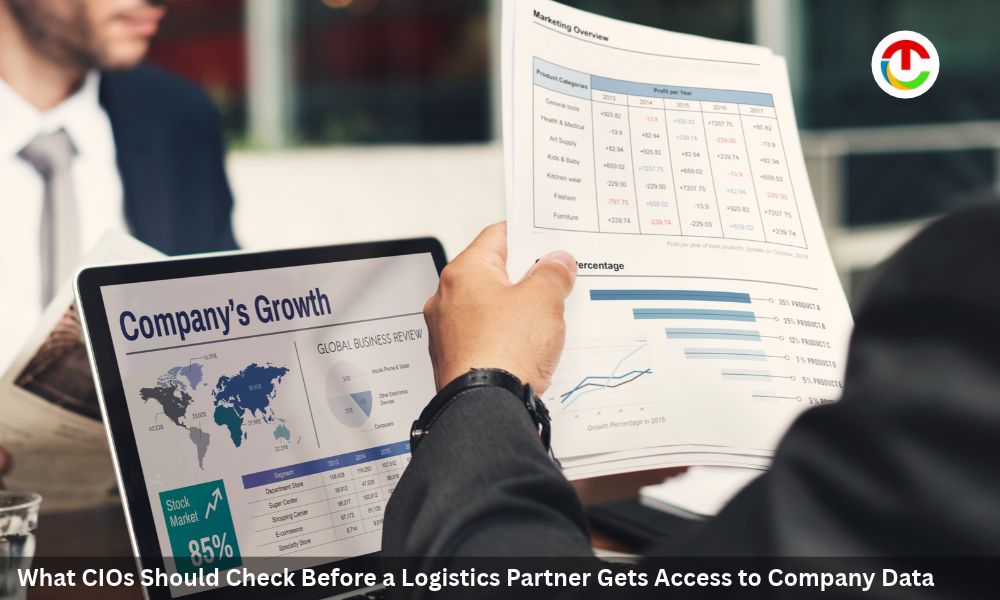
That sequence can create challenges when logistics services involve digital platforms and exchanges of sensitive commercial information. A logistics provider can end up holding purchase orders, commercial invoices, product values, supplier names and customer delivery addresses, and some of that data moves through systems your security team has never reviewed.
Why a Logistics Partner Belongs on the Vendor Risk List?
Organizations with established technology procurement processes may already assess new software vendors for cybersecurity risks. Logistics providers can be overlooked when they are procured primarily as operational service providers. But the data exposure can look a lot like a software vendor’s.
NIST’s quick-start guide on cybersecurity supply chain risk management suggests ranking suppliers by how critical they are, and it lists the sensitivity of the data a supplier handles and its degree of access to your systems as possible criteria. A logistics partner can score high on both. It may handle commercial invoices containing pricing information, while application programming interface (API) or EDI integrations can enable data exchange with enterprise resource planning (ERP) or order management systems. The associated risk depends on how those connections are configured and what permissions they carry.
The objective is to determine the appropriate risk tier for your logistics partner and establish which security controls should be reviewed.
Map the Data Before Anyone Signs
Providers such as Worldwide Logistics Group combine freight forwarding, customs brokerage, warehousing and fulfillment with a digital platform for real-time shipment visibility. When several logistics functions are managed through one provider, documenting the information exchanged across those services can help IT teams establish appropriate access controls and data-sharing requirements.
Start with an inventory. Not a long one, just a clear list of what will leave your systems and where it will land. For an importer, that list often includes:
- Order data: purchase order numbers, SKUs, quantities and agreed prices.
- Customs records: commercial invoices, product descriptions, tariff classifications and declared values.
- Party details: supplier names and addresses, plus consignee and customer delivery information.
- Access points: portal accounts, API keys, EDI connections and any shared folders or inboxes.
Once the map exists, it gets much easier to decide what each side needs. Does the warehouse team need full invoice values, or just SKUs and quantities? Does every buyer need a portal login, or only the two people who chase shipments?
Questions to Put to the Provider’s IT Team
IT teams Logistics Partner should raise these questions during the vendor selection process. The operations contact at a logistics company may not know the answers, so request a call with someone who does.
U.S. Customs and Border Protection’s Customs Trade Partnership Against Terrorism (CTPAT) program provides a useful reference for supply chain cybersecurity. Its security criteria address cybersecurity practices for participating businesses, including regular testing of IT infrastructure. The criteria for third-party logistics providers also cover written cybersecurity policies, individually assigned user accounts and removing access when an employee leaves. Its guidance identifies multi-factor authentication (MFA) as a preferred authentication method and an option for securing remote access.
You don’t need to audit a provider against the whole document. But it’s a fair basis for questions like these:
| Question | What a good answer sounds like |
| Is multi-factor authentication available on the customer portal? | Yes, and it can be required for all of your users. |
| Are accounts tied to named individuals? | Each user has their own login, with no shared team accounts. |
| What happens when one of our users leaves? | A clear process for disabling access, ideally triggered by your request the same day. |
| How often do you conduct security testing on your IT environment? | A regular schedule, with a willingness to describe it at a high level. |
| Which subcontractors or agents will see our data? | A specific answer about who handles which legs of a shipment. |
| How would you tell us about a breach? | A named contact, a timeframe and a stated channel. |
The subcontractor question deserves extra attention. International freight often passes through agents and partner offices in other countries, and your data may travel with the cargo paperwork. A provider doesn’t have to own every office for that to be fine. You just want to know who’s in the chain.
One more point on certifications and memberships. They’re a reasonable starting signal, but they don’t describe how a provider sets up its portal for your account, so ask about those settings as well.
Write the Rules Into the Contract
Good answers on a call don’t carry much weight if nothing is written down. The NIST guide recommends including cybersecurity requirements in supplier contracts, along with how compliance will be verified, and defining rules for what information gets shared with suppliers and their own sub-tier suppliers. It also suggests including relevant suppliers in incident planning and response.
For a logistics agreement, that might translate into a short security schedule covering:
- Access control: multi-factor authentication for portal users and named accounts only.
- Notification: how quickly the provider will tell you about an incident affecting your data, and who it will contact.
- Data use: defined limits on how shipment and pricing data may be used, shared and retained, including disclosures required by applicable laws and regulations.
- Subcontractors: an obligation to apply similar protections to agents who handle your records.
- Evidence: the right to request a security summary or questionnaire response each year.
Legal and procurement will have their own templates. IT’s job is to make sure these points are in them before signature, not in an amendment six months later.
Plan the Exit While Things Are Going Well
Nobody likes discussing the end of a relationship at the start. Still, logistics partners change for ordinary reasons: a better rate, a new trade lane, a merger on either side. When that happens, the cleanup tends to fall to whoever remembers.
A short offboarding checklist helps.
Revoke API keys and EDI credentials. Disable every portal account, including the ones created for a single project.
Agree in writing on how historical records will be retained, returned or deleted. Under U.S. customs broker recordkeeping regulations, licensed brokers generally must retain entry records for at least five years from the date of entry, so immediate deletion may not be legally permissible. Then confirm that shared folders and forwarding rules are gone.
An initial security assessment can run alongside procurement’s commercial checks. Providers handling sensitive information or complex system integrations may require a more detailed review before approval.
So, back to the opening question. If your company signed with its current logistics provider without IT in the room, when would be a good time to look at what that provider can see?
Also Read : What Logistics Leaders Should Know About Moving Freight Across Borders