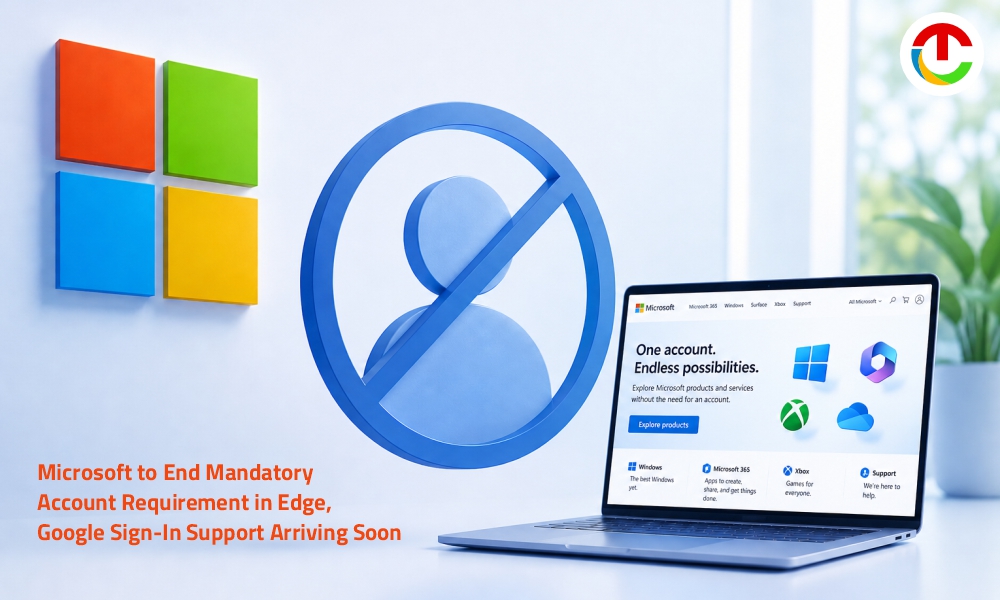
Microsoft is preparing to make a notable change to its Edge browser by introducing support for Google account sign-in, a move that addresses one of the most persistent complaints from users over the past several years.
For a long time, signing into Microsoft Edge has required a Microsoft account, limiting users who preferred to manage their browsing experience through other ecosystems. While Edge is built on Chromium, the same open-source foundation that powers Google Chrome, users were unable to sign into the browser using a Google account. That restriction is now set to change.
According to a recently updated Microsoft Edge roadmap entry (ID 565860), the company is developing support for Google account sign-in within Edge. The feature is expected to reach general availability by July 2026, giving users greater flexibility in how they access and manage the browser.
The update represents a significant shift in Microsoft Edge’s approach. Back in 2020, the company indicated that it had no plans to integrate Google services into Edge by default, despite repeated requests from users. Since then, the browser market has evolved considerably, with growing demand for cross-platform experiences and fewer ecosystem restrictions. The upcoming feature appears to reflect Microsoft’s willingness to adapt to changing user expectations.
For many users, the ability to sign in with a Google account could simplify the browsing experience, particularly for those who rely heavily on Google’s ecosystem for email, productivity tools, and cloud services. It also removes another barrier that may have discouraged some Chrome users from considering Edge as an alternative browser.
That said, Microsoft accounts will continue to offer advantages within the Edge ecosystem. Features such as synchronized browsing across devices, seamless integration with services like OneDrive and Outlook, and enhanced security capabilities will remain closely tied to Microsoft’s account infrastructure.
The decision to support Google sign-in highlights a broader industry trend toward interoperability and user choice. Rather than requiring users to commit fully to a single ecosystem, technology companies are increasingly recognizing the value of flexibility and convenience.
As the feature moves closer to launch, it could help Microsoft Edge attract a wider audience while addressing a long-standing point of frustration. For many users, the update represents a small but meaningful step toward a more open and user-friendly browsing experience.
Also Read :- IBM’s Jonathan Adashek on Marketing’s AI Future