In life sciences, a scientific breakthrough can struggle to realise its commercial value if people beyond its inventors cannot understand why it matters. Get that translation wrong, and a deal stalls, or a funding round quietly falls apart.
Get that translation wrong, and a deal stalls, or a funding round quietly falls apart. A genuine advance might never reach the people it could help, and it might just sit on a shelf instead. That’s the edge where marketing has to operate. Lean too far into the technical, and the message turns impenetrable to anyone outside the lab. Simplify too much, and the same buyers stop trusting it.
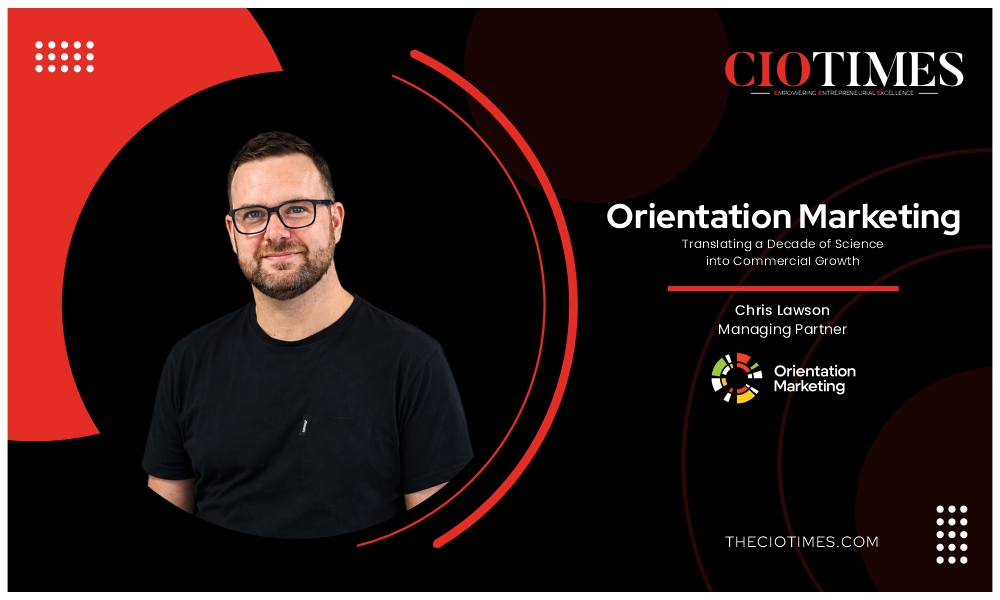
Orientation Marketing has spent the last decade working that edge from its office in Chester, UK, under the tagline “Putting the Science Into Marketing.” The agency has built its whole practice around one deliberate bet that pharmaceutical manufacturers, biotechnology firms, CDMOs, and medical device makers need a marketing partner who’s fluent in their science.
The perspectives in this article come from Chris Lawson, the agency’s Managing Partner and co-founder, and Gareth Roberts, its Director of Digital Marketing. Between them, they describe a discipline that applies scientific understanding and commercial precision across strategy, creative and campaigns, and a refusal to let hype substitute for evidence. That shows up in how they pitch new clients and, just as much, in how they judge whether the work actually succeeded.
A Decade Built on Specialisation
Just over ten years ago, co-founders Chris Lawson and Gareth Pickering made a conscious decision not to become another generalist agency spanning unrelated industries. Their backgrounds were rooted in pharmaceutical publishing and life sciences media, which gave them an early, granular fluency in a sector most generalist marketers approach from the outside looking in. Rather than spreading themselves across multiple industries, Chris says, they believed there was greater long-term value in becoming specialists.
That decision, in his telling, has shaped everything the agency has done since. Today, the team understands pharmaceutical manufacturing, biotechnology, CDMOs, medical devices, and the wider life sciences ecosystem because they work within that world every day.
They know the buying cycles, the regulatory environment, the competitive landscape, and the commercial pressures their clients face, which means conversations with prospective clients begin at a far higher level than a typical pitch about marketing tactics.
Specialisation has also created access to relationships and insights and knowledge that simply are not available to generalist agencies, from where buyers consume information to how procurement decisions actually get made.
Chris frames the payoff of that decade plainly by saying, “In an increasingly complex market, expertise has become a competitive advantage in itself.” The milestone was marked concretely last year, when the Orientation Marketing team gathered at CPHI 2025 in Frankfurt to celebrate ten years in business.
Clients, in Chris’s view, no longer want marketing capability alone. They want advisors who understand their industry, challenge their thinking, and contribute commercially, which he calls the position the agency has deliberately built over the past decade.
Translating Science into Commercial Value
Ask Chris what the agency’s role actually is, and he pushes back on the premise baked into the question. One of the biggest misconceptions in life sciences marketing, he argues, is that marketing’s job is to simplify the science. He does not believe that is true.
The work, as he defines it, is to make complex science understandable without making it simplistic, because scientists spend years developing innovations that can genuinely change industries or improve patient outcomes, yet buyers rarely purchase a technology for the science alone. They invest because they understand the commercial impact that science creates.
That distinction shapes the agency’s process from the outset. Chris describes it as starting with curiosity, spending time with scientists, engineers, and commercial teams to understand not just what a technology does, but why it exists, what problem it solves, and where it creates measurable value. Once that understanding is established, the team builds messaging that translates technical innovation into commercial outcomes without compromising scientific integrity.
Equally important is recognising that there is never a single audience for that messaging. A process development scientist, a procurement director, an operations leader, and a C-suite executive will all evaluate the same innovation through entirely different lenses. Orientation Marketing’s response is to build messaging frameworks that let each audience see the value in language that resonates with them, while keeping every version of that story rooted in the same underlying scientific evidence.
Trust, Chris says, is everything in life sciences. Overstated claims and marketing hype do not survive contact with a technical buyer, who will see through them almost immediately. Credibility is built through evidence, expertise, and consistency, which is why he describes the agency’s role as bridging the gap between scientific excellence and commercial understanding so that innovation receives the recognition it deserves.
Gareth backs the point with a concrete example. He describes working repeatedly with CDMO and pharmaceutical clients whose highly differentiated manufacturing capabilities were, at first, communicated through technical specifications alone. By repositioning the conversation around business outcomes such as speed to clinic, manufacturing resilience, regulatory confidence, and supply chain reliability, Gareth says the agency has helped clients engage commercial decision-makers with clearer, commercially relevant messaging while preserving scientific accuracy and credibility.
A related challenge shows up constantly in Chris’s client conversations. The most common problem he sees is organisations becoming so immersed in their own technology that they unintentionally communicate features rather than value.
Scientists naturally talk about capabilities, specifications, and processes because that is what they know best, but buyers want to understand what those capabilities actually mean for their own organisations, whether that is improved productivity, faster development, or lower costs. A related mistake, he adds, is assuming that technical superiority automatically creates market leadership. It does not.
The best technology is not always the one that wins. More often, it is the organisation that communicates its value most effectively and consistently. Chris describes the agency’s role as uncovering the commercial narrative behind the science, building a clear market position, and ensuring every touchpoint reinforces that message. He says, “Innovation deserves to be recognised, but recognition rarely happens by accident.”
The Buying Committee
One of the most significant changes in B2B marketing is that there is rarely a single decision-maker anymore. In life sciences specifically, a purchasing decision typically involves scientific teams, operations, procurement, quality, regulatory specialists, finance, and senior leadership, and each of those stakeholders carries different priorities, concerns, and measures of success.
Orientation Marketing’s response is not to build one marketing message but a connected messaging architecture. Every audience should encounter the same consistent brand story, but with emphasis placed on the outcomes that matter most to them. Scientists need technical confidence. Operations teams need reliability. Procurement wants to see value. Commercial leaders focus on business growth.
The channels through which those audiences engage have shifted too. Chris points to buyers moving seamlessly between search, AI-powered discovery tools, LinkedIn, webinars, technical articles, conferences, and peer recommendations, which means marketing has to deliver a consistent experience no matter where a buyer’s journey happens to begin.
Perhaps most importantly, he adds, the agency focuses on helping buyers make decisions rather than persuading them to buy. Chris says, “When organisations educate their market effectively, demonstrate expertise and remove uncertainty, they create stronger conditions for commercial success.”
Gareth extends the point with a sharper focus on manufacturing clients specifically. A single opportunity, he notes, may involve R&D, manufacturing, procurement, quality assurance, and executive leadership all at once, and each of those stakeholders requires different information before the group can reach consensus. Successful marketing has to support the entire buying committee rather than a single individual within it.
Marketing’s New Front Line
That shift in buyer behaviour has pulled marketing itself out of its traditional lane. Marketing, Chris says, has moved from the end of the commercial process to the beginning of it. Where it once focused on product launches, conference activity, and promotional communications, it has become a strategic driver of business growth that shapes how organisations are discovered, evaluated, and ultimately selected by potential customers.
Modern buyers, in his telling, expect to educate themselves before they ever engage with a supplier. They want trusted content, thought leadership, evidence, and digital experiences that help them make informed decisions, and in many cases they have already formed opinions about potential partners before the first sales conversation takes place.
That shift means marketing now carries responsibility that extends well beyond brand awareness into pipeline generation, customer acquisition, sales enablement, and long-term revenue growth. Boards increasingly expect marketing leaders to demonstrate commercial impact rather than simply report activity metrics.
Gareth locates the root of the problem further upstream. The biggest mistake organisations make is treating marketing as a function that sits outside the business, when in life sciences, effective marketing only happens when it sits alongside the science.
Every strategy the team develops begins with business objectives rather than channels, asking what commercial outcome an organisation is trying to achieve, who influences that decision, and what information various audiences need throughout the buying journey. Today’s customer journey, he notes, is no longer linear.
Buyers conduct extensive independent research, compare suppliers globally, consult colleagues, and increasingly use AI-powered search tools before ever speaking with a salesperson, which means marketing has become responsible for educating buyers long before traditional sales engagement begins.
Data, in his words, allows the team to understand those behaviours with far greater precision than ever before, drawing on search intent, engagement patterns, CRM insights, and campaign performance to continually refine its approach.
A recent engagement illustrates the point concretely. Supporting a global pharmaceutical manufacturer’s integration of HubSpot across marketing and sales was never simply a technology rollout, Gareth explains. The objective was building a connected commercial framework in which lead management, automation, reporting, and customer engagement worked together to improve decision-making and pipeline visibility.
Gareth applies the same discipline to how success gets measured more broadly. Vanity metrics, he argues, have become one of the biggest distractions in modern marketing. Impressions, clicks, and follower growth have their place, but they rarely reveal whether marketing is actually contributing to commercial success. He encourages clients to measure marketing the way a board measures the business as a whole, through pipeline contribution, sales-qualified opportunities, customer acquisition cost, conversion rates, deal velocity, revenue attribution, and long-term customer value.
Leading indicators such as website engagement, content consumption, branded search growth, AI visibility, and webinar attendance still matter because they show whether an organisation is building future demand, though they should always connect back to a measurable business outcome. Gareth frames the ultimate test simply: “Can marketing demonstrate that it is influencing commercial growth through evidence rather than assumption?” When organisations reach that level of visibility marketing stops being viewed as a cost centre and becomes a strategic investment instead.
AI and the Limits of Automation
Gareth draws a distinction that shapes how the agency talks about artificial intelligence with clients. He says, “Artificial intelligence will fundamentally change marketing, but I don’t believe it will replace marketers. It will replace inefficient processes.”
The greatest opportunity lies in accelerating research, analysing customer behaviour, identifying intent signals, personalising experiences, and helping organisations create more relevant content at scale, freeing marketing teams to spend less time producing routine outputs and more time making strategic decisions.
That shift is already visible in how buyers search. Gareth points out that buyers are increasingly using AI assistants alongside, and sometimes instead of, traditional search engines, which changes how organisations need to think about visibility.
Success, he argues, is no longer measured purely by search rankings. It increasingly depends on whether an organisation’s expertise is recognized and referenced by AI platforms themselves, a shift driving new focus on Answer Engine Optimisation, structured content, authority, and topical expertise.
Chris confirms the agency is already building for that reality. The team is helping clients expand their digital strategies beyond traditional search engine optimisation into answer engine optimisation, structured content, and authority-building, on the premise that as buyers increasingly rely on AI assistants during supplier research, becoming a trusted source of information is fast becoming a competitive advantage in its own right.
Gareth is equally clear about where the technology stops. He says, “AI has clear limitations. It cannot independently replace genuine industry experience, human-led stakeholder interviews, strategic judgement or the trust built through long-term client relationships. It can support research and analysis, but expert challenge and human understanding remain essential to major commercial decisions.”
The future belongs to organisations that combine artificial intelligence with human expertise rather than treating the two as alternatives. Technology, he adds, will become an extraordinary amplifier of knowledge, while people continue to provide the insight, creativity, and judgement that differentiate exceptional marketing.
Consistency Across Borders
Working with clients across international markets has sharpened Chris’s thinking about brand consistency. He asserts, “Global consistency should never mean global uniformity.” Successful international brands maintain a clear strategic identity while allowing flexibility in how that identity gets expressed in individual markets.
The underlying positioning, values, and messaging should stay constant, but execution has to reflect local customer behaviour, regulations, language, and commercial priorities. Digital marketing has only made that balance more important, he notes, since buyers in North America, Europe, and Asia often research, engage, and respond differently, which makes local market intelligence essential.
Gareth describes the practical version of that philosophy, establishing a strong global framework that regional teams can adapt without losing brand coherence, allowing organisations to build a recognizable international presence while remaining relevant to local audiences. He sums up the trade-off simply. He asserts, “Consistency builds trust. Relevance builds engagement. The most successful global organisations achieve both.”
The Next Decade
Staying relevant, in Chris’s view, requires continuous learning. The industry changes too quickly for any agency to rely on yesterday’s expertise, which is why the team invests heavily in understanding emerging technologies, evolving digital platforms, artificial intelligence, and changing buyer behaviour, while continually developing its own capabilities.
Working alongside some of the world’s leading pharmaceutical, biotechnology, and technical manufacturing organisations gives the agency invaluable insight into where customer expectations and the industry itself are heading. Internally, the team is increasingly integrating AI into its own workflows, not to replace expertise but to enhance it, freeing people to spend more time solving strategic problems, developing creative ideas, and working closely with clients.
The ambition, Chris says, is not simply to keep pace with change but to help clients anticipate it, since the best marketing partners do not just respond to industry evolution, they help shape it. That commitment extends to clients directly, through workshops, strategic reviews, and thought leadership on topics such as AI, buyer behaviour, digital transformation, and commercial marketing within life sciences. Staying ahead, in Chris’s telling, is not just about adopting new technology internally. It is about helping clients understand how to apply that technology with confidence.
That same discipline extends to Gareth’s outlook on the wider profession. The marketing industry is entering one of the most significant periods of change it has ever experienced.
Artificial intelligence will reshape discovery, search will keep evolving into conversational answers, and automation will absorb much of the operational work that currently consumes marketing teams. He adds that artificial intelligence is accelerating this transformation further, giving organisations greater capability to analyse permissioned customer data, identify useful patterns and deliver more relevant engagement.
However, technology should enhance strategic thinking rather than replace it. He says, “The companies that will succeed over the next decade will be those that combine scientific expertise, commercial understanding and intelligent use of technology.”
Yet Gareth argues that buyers will expect more expertise rather than less. As AI makes information abundant, credibility becomes the scarce resource, and organisations that consistently demonstrate authority and publish original insight will be better positioned to earn visibility and citation.
Sales, marketing, and customer success will increasingly function as one connected commercial engine rather than separate departments, supported by shared data and AI-driven insight. Technology will undoubtedly keep changing but one principle will remain constant, that organisations which genuinely help their customers solve problems will be better positioned to outperform those that simply promote products.
For Chris, the agency’s ambition was never to become the biggest in its field but one of the most respected, recognised for demonstrating that scientific credibility and commercial creativity are complementary strengths rather than opposing forces.
Success for clients means helping innovative organisations grow, compete internationally, and bring important technologies to market more effectively, and if that work contributes even in a small way to innovation that ultimately benefits patients and healthcare, he considers that something worth being proud of.
For the wider industry, he hopes to leave behind a culture that values expertise, integrity, and genuine partnership, one where marketing is judged not by exaggerated claims but by its ability to help organisations communicate real value with clarity, confidence, and honesty.
Gareth closes on the same note of continuity. Technology will keep evolving, and channels will keep changing but trust, expertise, and meaningful relationships will always remain at the heart of successful marketing.
If Orientation Marketing is remembered for championing those principles while helping shape the future of life sciences marketing, he believes that alone will have been worthwhile. The agencies that matter most in the years ahead will not simply execute campaigns. They will become trusted commercial advisors, helping clients navigate a rapidly changing landscape where scientific innovation, artificial intelligence, and evolving buyer behaviour increasingly intersect. He says, “That’s the role we aspire to play, not just today, but for the next decade and beyond.”
Also Read :- CIO Times Magazine for More information