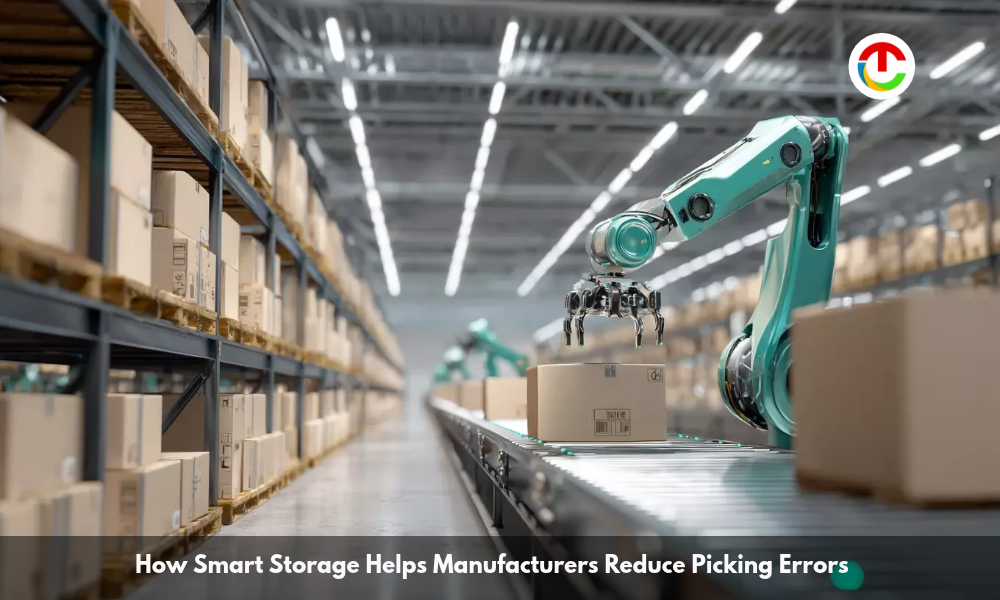
Every warehouse manager has a war story about the pick that got away. The wrong bracket shipped to a customer who needed it yesterday. The lookalike fasteners that ended up in the same tote and cost an afternoon to sort out.
If you have spent any time on a factory floor, you know the drill: picking errors are small mistakes with big, expensive consequences. The good news is that the fix no longer depends on yelling at people to be more careful.
A VLM machine, which uses vision technology to confirm every item a picker grabs, has become the sharpest set of eyes on the floor, catching mistakes at the moment they happen instead of three days later in a customer’s complaint email. Here are
six ways smart storage does the heavy lifting for you.
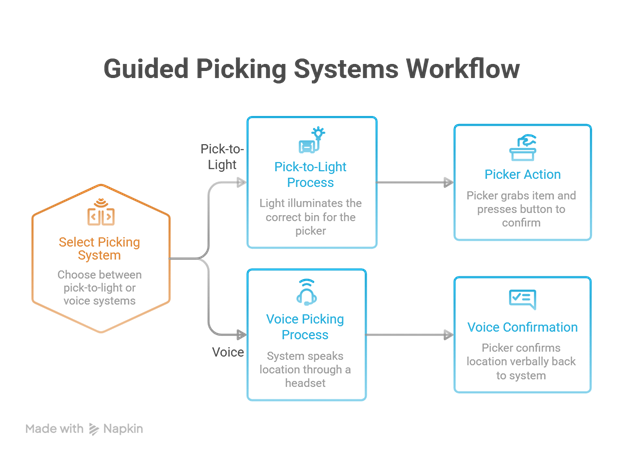
1. Guided Picking With Pick-To-Light and Voice Systems
Most picking errors come down to one thing: a personreaching for the wrong bin.Pick-to-light systems attack that problem head-on. A light turns on above the correct bin, the picker grabs the item, confirms with a button press, and the light goes out. No paper list, no squinting at a screen, no guessing which of twelve identical gray bins holds the right part.
Voice picking does the same for facilities that need hands and eyes free. The system speaks the pick location through a headset, the picker confirms it back, and off they go. Your pickers start following a system that physically points to the right answer.
2. Smart Storage Slotting That Puts the Right Items in the Right Places2. Smart Slotting That Puts the Right Items in the Right Places
When did you last check whether your fast-moving SKUs sit in your easiest-to-reach locations? Smart slotting software uses your actual order history to arrange the warehouse around reality instead of habit.
High-volume parts land at the golden zone between knee and shoulder height. Lookalike items get separated so nobody grabs the wrong one on autopilot. Heavy items go where lifting them will not wreck someone’s back by Thursday.
The software keeps rearranging as your order mix changes. Slotting is the least glamorous item on this list and the one most warehouses skip. It is also the cheapest fix per error prevented here.
3. Automated Verification at the Moment of the Pick
Catching an error after the order leaves the building is expensive. Catching it while the picker’s hand is still in the bin costs nothing. That is the whole logic behind automated verification.
Weight-sensing shelves notice the instant a picker grabs three parts instead of two, because the shelf knows exactly how much one part weighs. Vision cameras confirm the item matches the order. RFID tags log every movement automatically.
Traditional audits find errors after the fact, when corrections mean rework, reshipping and an apology call. In-the-moment verification stops the mistake before it finishes happening. Pickers get a buzz, put the item back, and move on. Ten seconds of correction instead of ten days of damage control.
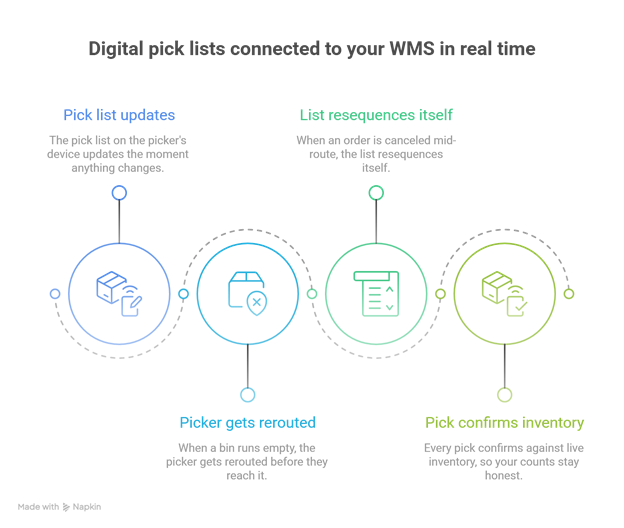
4. Digital Pick Lists Connected to Your WMS in Real Time4. Digital Pick Lists Connected to Your WMS in Real Time
Paper pick lists are a leftover from another era, and they cause exactly the kind of trouble you would expect from a document. An order gets canceled. A bin runs empty. The paper does not know, and your picker follows it anyway.
Smart storage tied directly into your warehouse management system kills that problem. The pick list on the picker’s device updates the moment anything changes.
Bin empty? The picker gets rerouted before they reach it.
Order canceled mid-route? The list resequences itself.
Every pick also confirms against live inventory, so your counts stay honest without a weekend shutdown for cycle counting.
5. Error-Proof Containment for High-Value and Lookalike Parts5. Error-Proof Containment for High-Value and Lookalike Parts
Some mistakes cost more than others, and smart storage lets you draw a line around them. Light-directed or locked carousel systems release only the correct bin for the current pick.
For high-value components, serialized parts or items that look nearly identical to their neighbors, that physical gate matters more than any amount of training. The picker physically cannot grab the wrong thing because the wrong thing stays locked up.
6. Analytics Dashboards That Find Your Root Causes6. Analytics Dashboards That Find Your Root Causes
The final piece turns your storage system from a set of shelves into a source of answers. Modern smart storage platforms log every pick, every correction and every error, then serve the patterns up on a dashboard.
Maybe errors spike on the night shift. Maybe one zone accounts for a third of all mis-picks. Maybe a specific picker-to-bin combination goes wrong every Friday.
Those are root causes, and root causes are fixable. Reroute the night shift workflow, re-slot the problem zone, add verification to the Friday bin. Without the data, you are guessing. With it, you are aiming.
The Bottom Line for Decision-Makers
Guided picking removes the guesswork, smart slotting removes the bad layout, verification removes the escape route, digital lists remove the stale information, locked containment removes the opportunity, and analytics remove the mystery.
Run your numbers. Pull last quarter’s error rate, multiply by the cost per incident and see what the total looks like. For most manufacturers, that number is the best sales pitch a smart storage vendor could ever make, and the data is already sitting in your own returns log, waiting for you to go read it.
Also Read ;- Automating the Warehouse Dock: How Strapping and Load Securing Affect Operating Costs