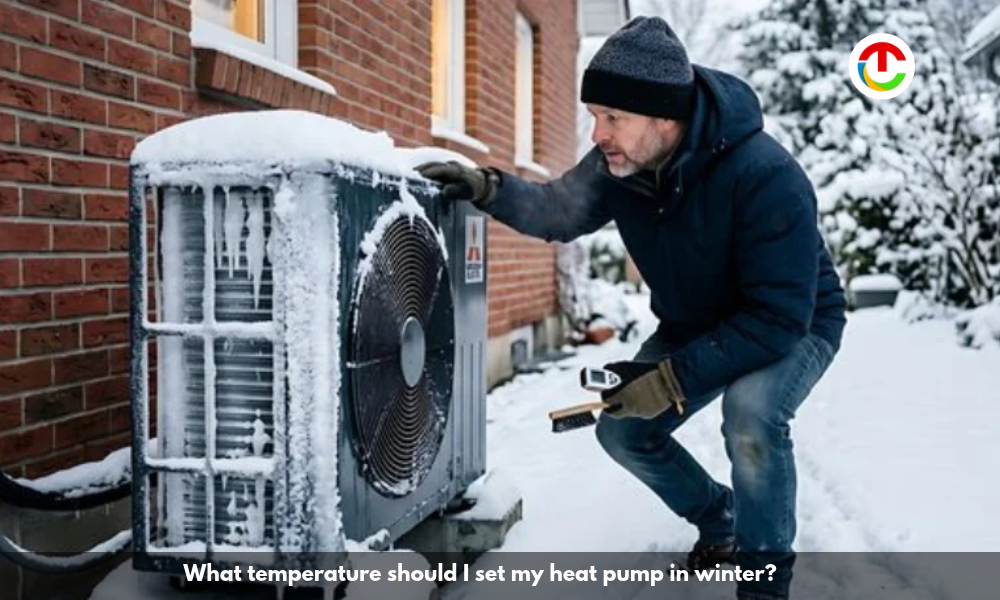
The first cold snap after trading a furnace for a heat pump often finds homeowners puzzling over the thermostat. Should it sit at 68, drop to 62 at night, or go off when everyone leaves? A bad guess could leave the living room chilly, inflate the power bill, or keep backup heat working overtime.
Find a good starting temperature for your heat pump and learn how to adjust it overnight or while away. Understand uneven readings, common performance issues, and how Puget Sound’s damp climate and your home affect comfort.
The Best Winter Heat Pump Setting: Start at 68°F
Start at about 68°F while you are home and awake. Live with 68°F for a few days, then move the setpoint up or down by a single degree whenever the house calls for it, until the comfort is right.
Why 68°F Makes Sense as a Starting Point
Each degree you add on the thermostat grows the gap with the outdoors, and a bigger gap means the house sheds warmth more quickly. For most people, 68°F balances comfort and cost well. Here is how the usual range plays out:
- 66 to 67°F: lower bills, good for active households or sweater fans.
- 68 to 69°F: a sound middle ground for most families.
- 70 to 72°F: extra warmth for babies, older adults, or quiet days, with higher energy use.
Adjusting in Single-Degree Steps
Winter days in Sumner, Puyallup and Bonney Lake typically sit somewhere in the 30s and 40s. A damp, mild climate like that lands near the ideal zone for heat pump operation. So the system tends to run efficiently and rarely needs backup heat.
Small moves still matter, because no single number fits every home, and insulation, equipment type, and backup heat all play a role. Technicians who handle heat pump repair sumner wa calls see the same pattern each winter: most comfort complaints trace back to settings, filters, or airflow. Good Heating Services visits start there, well before anyone mentions new parts.
Should You Turn the Heat Pump Down at Night or When Away?
A furnace can blast a cold house warm in minutes, but a heat pump delivers gentler heat. A deep setback therefore means a long climb back, and during that climb many thermostats call for auxiliary heat strips that cost far more to run.
Nighttime Setbacks and Morning Recovery
For most homes, an overnight setback of 1 to 3°F is plenty. A thermostat with smart or adaptive recovery eases this problem by beginning the warm-up ahead of schedule and at a gentler rate, leaving the compressor to carry the load.
Workdays Versus Trips of Several Days
A small setback during the workday is fine. For a trip of several days, hold the house near 60°F rather than switching the system off, because pipes, indoor humidity, and the house itself all need some warmth.
| Scenario | Typical Change | Recovery and Backup Heat | Comfort Impact | Best For |
| Steady setting | None | No recovery; backup rarely runs | Even all day | Homes occupied all day |
| Small overnight setback | Down 1 to 3°F | Short recovery; backup seldom needed | Barely noticed | Most households |
| Deep overnight setback | Down 6 to 8°F | Long recovery; backup strips likely | Cool mornings | Rarely worth it |
| Workday setback | Down 2 to 4°F | Moderate recovery | Mild on return | Homes empty 8 to 10 hours |
| Away several days | Hold near 60°F | One long recovery on return | Cool on arrival | Vacations and trips |
Why the Display May Not Match How the Room Feels
Ductless Indoor Units and Sensor Placement
A wall-mounted ductless unit reads air near the ceiling, where heat collects, so it may think the room is 70°F while your couch sits closer to 66°F. Trust how the room feels over several days instead of the figure shown on the display.
Airflow, Fan Speed, and Mode Settings
Auto mode may flip between heating and cooling, so during winter choose Heat mode for the unit. Many homeowners book Cooling Services for the same equipment in summer, so mode settings matter all year. Before raising the setpoint, try these quick fixes:
- Point the airflow vanes toward the spot in the room farthest from the unit.
- Raise the fan speed to spread warm air across the room.
- Open interior doors and move furniture away from vents.
What to Do When Your Heat Pump Struggles in Cold Weather
Balance Point, Auxiliary Heat and Dual-Fuel Setups
Your home’s balance point is the outdoor temperature at which heat loss outpaces what the heat pump can replace by itself. When temperatures fall under that point, backup heat takes over, meaning electric strips in all-electric homes and a gas furnace where the system is dual-fuel.
There is no universal lockout temperature, since the right setting depends on the model, the backup source, and your utility rates. Heat pumps work well when properly installed, and that includes the thermostat setup, so a trained technician should configure it.
Seeing aux heat now and then is normal, especially during defrost, when steam may rise from the outdoor unit. The true red flag is backup heat that never shuts off.
A Simple Checklist Before You Call for Help
- Swap out a clogged air filter for a fresh one.
- Remove any snow, leaves, and other debris surrounding the outdoor unit.
- Make sure the thermostat is switched to Heat mode.
- Raise the fan speed and look for closed vents or shut doors.
When those steps do not help, certain signs point to HVAC Repair: ice that does not clear after defrost, weak airflow, long runtimes without reaching the setpoint, or a sudden spike in your bill. Licensed HVAC Contractors can test refrigerant levels, check defrost controls, and match the thermostat to your equipment and backup heat.
Home and Maintenance Factors That Change Your Ideal Setting
Insulation, Ducts and Crawlspaces in Northwest Homes
Two identical heat pumps can behave very differently in two houses. Leaky ducts, thin attic insulation, and damp, uninsulated crawlspaces push owners toward higher settings and longer runtimes. If one bedroom stays cold, check its vent, duct run, and windows before raising the thermostat for the whole house.
Humidity plays a part as well, since damp indoor air in river-valley towns can make 68°F feel clammy while a well-sealed home feels warmer at the same setting.
Seasonal Upkeep That Keeps the Setting Efficient
Regular HVAC Maintenance helps the system hold its setting and recover as designed. A short routine takes care of the essentials:
- Clean or replace filters every one to three months.
- Keep about two feet of free space around all sides of the outdoor unit.
- Book a professional tune-up every autumn, ahead of the arrival of cold weather.
A typical tune-up checks refrigerant charge, coils, electrical parts, defrost function and airflow. Some local providers of Heating Services also offer maintenance memberships that keep these visits on schedule.
In Summary
Start at 68°F, live with it for a few days, and adjust one degree at a time until the house feels right. Limit overnight setbacks to 1 to 3°F, pick a vacation setting over shutting the system off, and make small temperature increases so the compressor handles the work.
When comfort slips, check the easy things first: the filter, the outdoor unit, the mode, and the fan speed. Constant aux heat means trouble. Stubborn ice or a house that never hits its setpoint is another red flag, because each signals trouble the thermostat cannot fix. In a mild Puget Sound winter, a well-kept heat pump held at a steady, modest temperature should keep your home warm without a painful bill.
Popular Questions About Winter Heat Pump Settings
At What Outdoor Temperature Does a Heat Pump Start Losing Its Efficiency?
Most standard air-source heat pumps stay effective down to roughly 25 to 30°F, though output and efficiency drop as the air gets colder. Cold-climate models can keep delivering usable heat near or below 0°F. Once the outdoor temperature falls below a unit’s balance point, backup electric or gas heat usually fills the gap.
Does Raising the Thermostat in Large Jumps Make a Heat Pump Work Harder?
Yes. Big, sudden increases often trigger the auxiliary heat strips, which use far more electricity than the heat pump alone. Raising the setting one or two degrees at a time, or using a smart thermostat with gradual recovery, keeps the compressor doing most of the work and helps hold down winter energy costs.
Should a Heat Pump Run Nearly Nonstop in Cold Weather?
Longer run cycles are normal in cold weather because heat pumps deliver gentler, steadier warmth than furnaces. Hours of running during a freeze are usually fine. Concern is only warranted when comfort suffers, such as the house falling short of the set temperature, cool air coming from the vents, or ice that lingers after a defrost cycle.