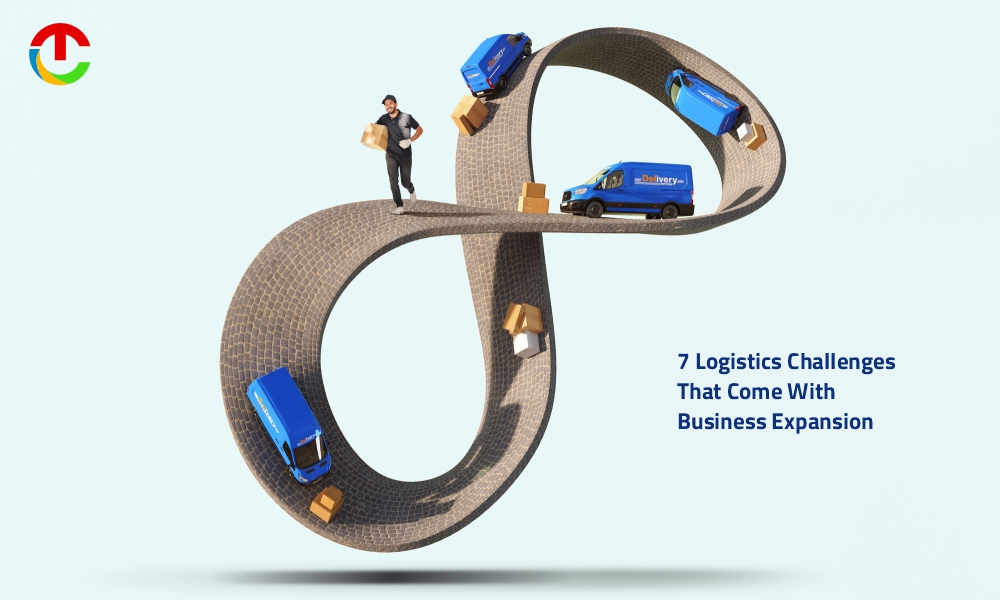
Expanding a business is a major milestone that signals strong product demand, brand growth, and increased market share. However, rapid growth places immense operational pressure on your supply chain. What worked seamlessly for a local or medium-sized operation often breaks down when scaled across multi-regional markets, higher order volumes, and expanding customer bases.
Scaling operations without upgrading your logistics infrastructure leads to delayed shipments, lost inventory, ballooning freight costs, and eroded customer trust. Understanding the primary logistics hurdles that accompany growth allows business leaders to build resilient, agile supply chain systems before operational bottlenecks compromise profitability.
1. Inventory Strain and Storage Capacity Shortages
Quick Answer: Rapidly expanding sales volumes quickly exceed existing warehouse footprints, leading to stock clutter, misplaced inventory, elevated holding costs, and fulfillment delays.
As order volume scales, managing inventory levels becomes exponentially complex. Storing extra stock to meet surging demand requires additional physical space, specialized material handling equipment, and organized inventory tracking.
When expanding into major regional hubs across the Western US or Intermountain West, businesses often struggle to secure flexible space without taking on massive capital expense. Partnering with a regional third-party provider for professional warehousing in Salt Lake City gives expanding brands on-demand storage, cross-docking capabilities, and localized order staging. Storing inventory closer to key regional transit corridors reduces transit times and prevents localized stockouts.
2. Freight Cost Inflation and LTL Inefficiencies
Quick Answer: Scaling sales into new territories increases freight distances and Less-Than-Truckload (LTL) volume, driving up shipping expenses if carrier networks are not optimized.
Shipping single pallets or small parcel batches to distant customers quickly drains profit margins. Small businesses moving into new regional markets often rely on spot-market freight rates, leaving them vulnerable to fuel surcharges and carrier price spikes.
Implementing scalable logistics expansion strategies requires consolidating cargo, leveraging regional freight networks, and establishing multi-hub distribution models to reduce total ton-mile shipping costs. Negotiating volume contracts with regional carriers ensures predictable freight expenditure during growth phases.
3. Last-Mile Fulfillment Bottlenecks and Customer Expectations
Quick Answer: The final leg of delivery is the most expensive and complex part of the supply chain, where traffic, rural routes, and tight delivery windows can cause missed deadlines.
Modern consumers and B2B buyers expect fast, transparent, and flawless delivery. As your customer base spreads across urban centers, suburban neighborhoods, and rural areas, executing timely last-mile delivery becomes increasingly difficult.
Overcoming last-mile fulfillment optimization challenges involves using route optimization software, offering localized white-glove service for heavy or high-value freight, and partnering with local courier assets. Providing real-time tracking updates and clear delivery communication protects customer satisfaction during growth periods.
4. Supply Chain Visibility and Technology Integration Gaps
Quick Answer: Disconnected inventory systems, manual spreadsheets, and outdated software create blind spots across orders, stock levels, and shipment tracking.
Operating multiple sales channels and expanded distribution points without unified software leads to costly mistakes. Siloed data causes sales teams to sell out-of-stock items, while warehouse managers struggle to track inventory movement in real time.
Growing companies must integrate state-of-the-art Warehouse Management Systems (WMS) and Transportation Management Systems (TMS) across their supply chain. Automated systems sync stock levels instantly across all sales platforms, providing total visibility from receiving to final doorstep delivery.
5. Reverse Logistics and High Return Volumes
Quick Answer: Higher sales volumes bring a proportional surge in product returns, which can clutter warehouse floors and drain profits if reverse logistics workflows are absent.
Handling returned goods requires a dedicated, efficient process. Without a structured reverse logistics workflow, returned items sit in receiving areas, tying up capital and taking up valuable storage space.
Establish a clear returns policy and dedicated inspection procedures. Categorizing returned items immediately for restocking, refurbishing, or liquidation restores inventory value quickly and prevents return bottlenecks from stalling daily outbound shipments.
6. Regulatory Compliance, Regional Licensing, and Multi-State Rules
Quick Answer: Expanding into new states or international territories introduces complex local tax laws, transport regulations, hazmat certifications, and freight permits.
Shipping across state lines or expanding regional distribution footprints requires compliance with varying Department of Transportation (DOT) guidelines, environmental rules, and commercial carrier insurance minimums.
Failure to maintain compliance results in highway inspections, impounded freight, and heavy fines. Working with established regional carriers ensures all vehicles, drivers, and staging hubs meet regulatory mandates across every state line you cross.
7. Workforce Shortages and Labor Management Strain
Quick Answer: Rapid facility growth demands hiring and training skilled warehouse workers and drivers, putting heavy pressure on human resources and operational productivity.
Labor represents one of the highest operational costs in logistics. As shipping volumes grow, relying on manual labor without structured automation or standardized workflows leads to employee burnout, increased packing errors, and high turnover rates.
Invest in ergonomic warehouse equipment, standardized operating procedures (SOPs), and automated packing tools. Cross-training warehouse staff across picking, staging, and receiving maintains high productivity during peak seasonal surges.
8. Myth vs. Fact: Logistics During Business Expansion
- Myth: Opening a single, massive central warehouse is always cheaper than using multiple regional hubs.
- Fact: Centralized warehousing often increases last-mile shipping distances, raising carrier costs and slowing transit times compared with strategic regional distribution-hub planning.
- Myth: Logistics software automatically solves supply chain bottlenecks.
- Fact: Software only optimizes existing physical processes; without well-organized warehouse layouts and clear operational workflows, technology cannot fix underlying inefficiencies.
Frequently Asked Questions
When should a growing business consider outsourcing to a 3PL partner?
A business should evaluate third-party logistics (3PL) partnerships when warehouse capacity exceeds 85%, shipping errors increase, or order fulfillment delays begin negatively impacting customer retention.
How can small businesses protect profit margins during logistics expansion?
Focus on consolidating freight shipments, negotiating volume carrier rates, storing stock closer to primary customer clusters, and automating order tracking to eliminate manual labor overhead.
Expanding your business is exciting, but long-term success depends on a supply chain that can support higher demand. By proactively managing storage capacity, streamlining freight transit, optimizing last-mile delivery, and integrating modern logistics technology, you protect operational efficiency. Investing in scalable logistics infrastructure ensures your business continues delivering exceptional customer experiences at every stage of growth.
Also Read :- Why On-Demand Production Is Replacing Bulk Inventory in Apparel Retail