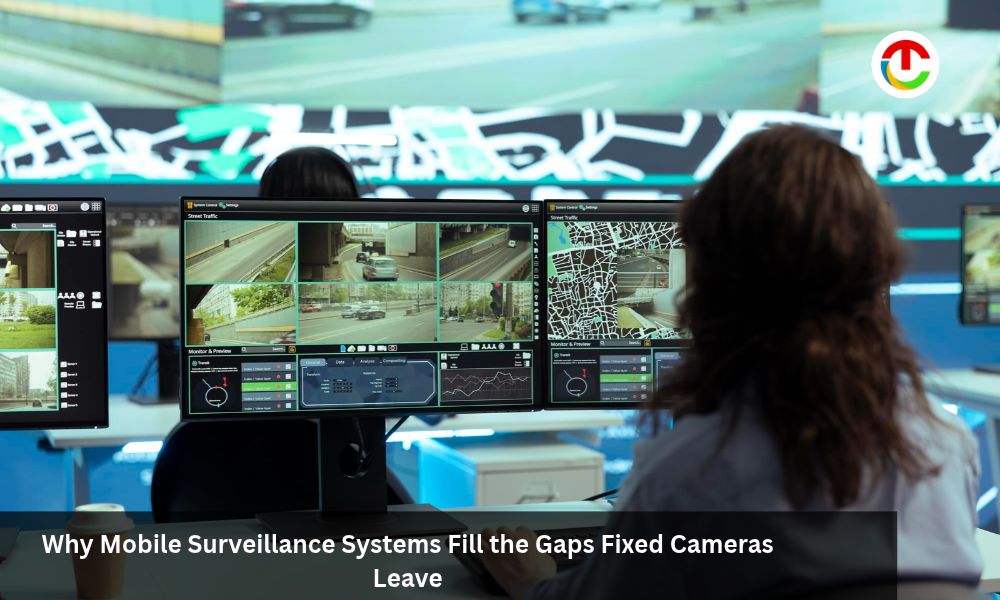
Permanent cameras are built around a permanent building. They bolt to walls, run on the building’s power, and feed into a network that someone trenched into the ground during construction. For a finished office or a retail store, that makes sense. The site is not going anywhere, and neither are the cameras.
Many places that need watching don’t fit that mold. A construction site changes shape every few weeks. A parking lot has no wall to mount a camera on. A remote yard sits far from the nearest power pole, and a pop-up lot may only exist for a season. Fixed infrastructure cannot reach any of these without months of lead time and a significant budget that often outweighs what it protects.
This is the space mobile surveillance systems were built for. A self-contained unit arrives on a trailer or a pole, runs on solar, battery, or available site power, connects over cellular, and starts watching the same day. When the site shifts, the camera moves with it. That single quality, portability, closes a long list of gaps that fixed cameras leave wide open.
Points That Mobile Surveillance Systems Covers
1. Coverage That Arrives in Hours, Not Months
Running a permanent camera to a new location means digging, wiring, and waiting. On an active job site or temporary lot, the project may be half over before installation finishes.
A mobile unit skips all of that. It shows up as a complete package: cameras, storage, power, and a cellular link in one rugged enclosure. Set it down where you need eyes, point the cameras, and it goes to work. When the risk moves to a different corner of the property, you reposition the unit instead of commissioning a second permanent install.
That flexibility suits sites that refuse to hold still:
- Construction projects where the vulnerable area changes as the build progresses
- Parking lots, loading zones, and logistics yards with no structure to mount to
- Seasonal or pop-up locations that exist for weeks, not years
- Large outdoor perimeters where fixed cameras would leave long blind stretches
2. Power Where the Grid Does Not Reach
Fixed cameras assume a wall socket. Many of the places most exposed to theft, like pre-construction lots, fence lines, and remote entrances, have no reliable power at all.
Mobile Surveillance Systems units solve this with their own supply. Some run on available site power when it exists. Others carry solar panels and battery storage, recharge during the day, and stay awake through stretches without sun. A camera that generates its own electricity can watch a spot the grid hasn’t reached yet, often the exact spot a thief counts on being dark.
3. Eyes That Work After Dark
At night, outdoor sites face the most risk, and standard cameras struggle most. A conventional lens needs light to see, and a poorly lit yard gives an intruder plenty of shadow to work in.
Thermal imaging changes the equation. Instead of depending on visible light, a thermal camera reads heat, so a person or vehicle stands out against a cold background even in total darkness. Across a wide, unlit perimeter, that means spotting movement a regular camera would miss and verifying what triggered an alert before deciding how to respond.
4. Detection That Knows What Matters
A camera that only records leaves someone to sort through hours of footage later. On a remote site with no one watching the screen, that often means an incident gets discovered long after it is over.
Analytics push the response earlier. The system is trained to detect people, vehicles, and after-hours activity while ignoring wind, wildlife, and shifting light that would otherwise bury real events under false alarms. When something genuine happens, it raises an alert in the moment. In a monitored setup, a trained operator reviews the alert, confirms what is happening, and follows a response plan: a live audio warning, a call to the right contact, or escalation to police.
5. One View Across Every Unit
Scatter a handful of mobile units across several sites, and you create a new problem: keeping track of them all. Checking each one separately would eat an entire day.
A shared platform pulls every unit into a single view. From one dashboard, a team can see live feeds, manage alerts, pull footage for an investigation, and move between locations without logging into a different system for each camera. For an operator overseeing multiple properties, that unified picture is the difference between manageable coverage and a pile of disconnected cameras.
6. Filling the Gap, Not Replacing the Wall
Permanent cameras still do their job well inside a finished, wired building. A mobile system covers what building-bound hardware can’t: temporary, remote, off-grid, and constantly changing sites. For sites that move, grow, and go dark at night, a deployable unit turns a blind spot into a watched one in an afternoon rather than a construct
Also Read :-Top 5 Cybersecurity Frameworks for Data Protection