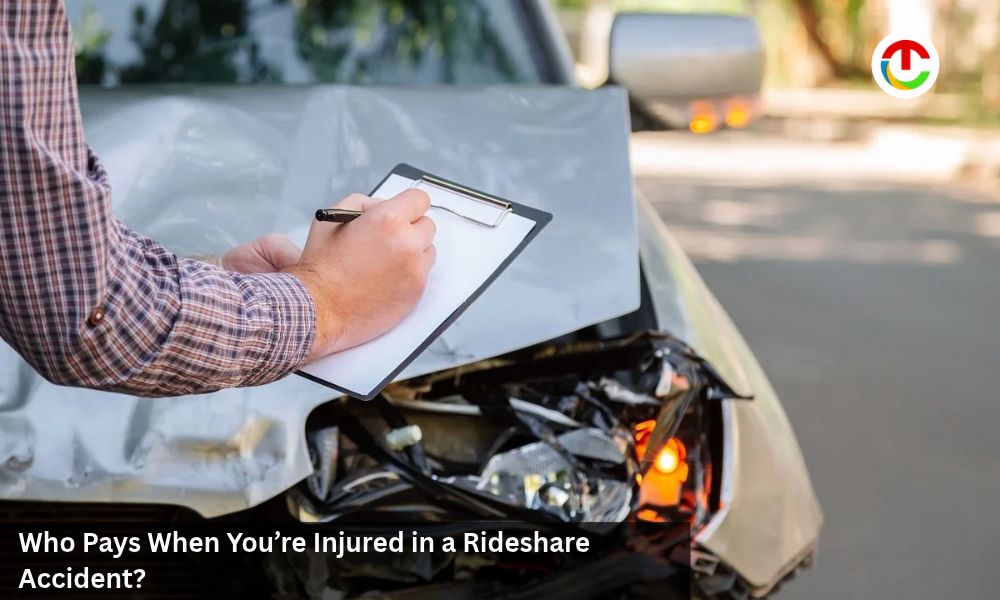
So you call a ride, hop in the car, and expect to make it home. Only for another driver to T-bone the car, or for your rideshare driver to cause a crash.
Well, you have medical bills, time off work, etc. So who pays?
This can get tricky with rideshare accidents. It comes down to who caused the accident, if the driver had their app open, and whose insurance will cover the accident. Here are some things that you should know if you were hurt as a passenger.
Table of Contents
- Who Is at Fault for the Accident?
- Does It Matter if the Driver Had Their App Open?
- What if Someone Else Caused the Accident With Your Rideshare?
- How Much Can You Recover as a Passenger?
- 5 Things to Do After a Rideshare Accident
- Who Should You Talk to About Your Case?
Who Is at Fault for the Accident?
Just because you were riding with Uber or Lyft does not mean that the company is liable for all accidents.
You have to see if the driver was at fault, the other driver, or both. There are many factors that can show who was at fault. Vehicle damage, eyewitnesses, weather, camera footage, etc. All can be used to show who caused the accident.
If the driver was running a stoplight, then they may be responsible for your injuries. However, if someone rear-ended your rideshare, you would want to file against that person’s insurance company.
Both could be at fault as well. Which would mean you have multiple insurance companies that may cover your accident.
Another thing to remember is that whoever is at fault may not be the one that pays for your injuries. An insurance company may pay a covered claim on behalf of a responsible driver, depending on legal liability, policy terms, and the losses proved.
Does It Matter if the Driver Had Their App Open?
There are different levels of insurance that are required when you drive for rideshare companies in the state of Texas. Whether the driver was just driving around, had the app open, or was in the middle of a ride can affect who will pay.
For a serious Dallas collision, a car accident lawyer can help examine app records, insurance details, and evidence of fault. If you’re unsure what that kind of assistance is available, learn more here about how car accident claims are investigated.
1. Driver Was Not on App
If the driver wasn’t on their app, they wouldn’t have the rideshare insurance that is required. You may be able to go against their personal auto insurance, if they have it.
2. Driver Was Waiting for Ride Request
When the driver is logged in but waiting for a request, Texas requires at least $50,000 in bodily injury liability coverage per person, $100,000 for bodily injury per incident, and $25,000 for property damage per incident. They haven’t accepted a ride at this point.
They can have that insurance on themselves, through the rideshare company, or a combination of both. Personal auto insurance may exclude rideshare use. If driver-maintained coverage lapses or does not provide the required protection, the rideshare company must provide the required coverage starting with the first dollar of a claim against the driver.
3. Driver Accepted a Ride
A prearranged ride starts when the driver accepts a request and ends when all the people who requested the ride have exited the vehicle.
Personal auto insurance may exclude rideshare use. If driver-maintained coverage lapses or does not provide the required protection, the rideshare company must provide the required coverage starting with the first dollar of a claim against the driver.
Remember, just because they have that much insurance doesn’t mean you will receive all of that money. It all depends on who is at fault, how much you can prove you lost, and what insurance will cover the accident.
What if Someone Else Caused the Rideshare Accident?
Say you are heading to the airport and someone cuts you off and causes an accident. Your driver did nothing wrong, but you were injured.
You would want to go after that driver’s insurance company to cover your injuries. If the other driver has no insurance or too little insurance, you may be able to seek payment through uninsured or underinsured motorist coverage that applies to your injuries, if that coverage is available.
Do not think that just because the driver has $1,000,000 in insurance, they will cover your injuries. Remember, it depends on who is at fault for the accident.
Distracted driving is a problem on Texas roads, whether it involves phone use or another activity. The Texas Department of Transportation showed that there were 86,384 crashes that were caused by distracted driving in 2025. That is not just rideshare, but everyone on the road.
Again, just know that there are ways to show that someone was on their phone while driving.
How Much Can You Recover as a Passenger?
There are many things that you can collect as a passenger. Not only your medical bills, but what you may not be able to do in the future.
Some things you can collect for:
- Medical Bills: Past and Future
- Lost Wages
- Pain and Suffering
- Any other expenses you may have that are related to your injury
You won’t be able to just collect based on your receipt from the app or the damages to your vehicle. You will need to provide medical bills, how long you are out, etc.
Your health insurance may cover your bills until you can recover from a liable party, but you will want to keep those records.
5 Things to Do After a Rideshare Accident
Make Rideshare Accident sure you and others involved are safe, and receive medical attention if needed. After that, here are some tips:
1. Get medical attention.
Tell the doctor all of your symptoms and make sure you are doing everything that they tell you to.
2 . Call the police.
Make sure you report the accident to the police and the app that you were using.
3. Save your trip information.
Take screenshots of your receipt, the driver, where you were going, and any information you can.
4. Gather information.
Take pictures, get witnesses, and any police reports that may be filed.
5. Keep track of your injuries.
Make sure you save bills, how long you are out of work, and anything that you may have to spend money on to get back to your normal life.
Don’t assume fault, or accept an offer that may not cover your full injuries.
Who Should You Talk to About Your Case?
The insurance company may deny your claim, question whether your treatment was necessary, or dispute who caused the accident.
In Texas, you have 2 years from the date your case accrued to file a lawsuit, with some exceptions. Act early to preserve your trip details and ask that relevant app records be retained. The deadline to file a lawsuit is a separate legal issue.
Make sure you get medical attention, and keep all your records. Once you know who was at fault and what insurance is covering the accident, you can begin working on who will pay.
Also Read :- When a Business Trip Uber Ride Ends With a Crash