
Nicolette Stepakoff: Leveraging AI with a Human Approach with Tangible Results

As artificial intelligence becomes embedded across enterprise operations, its impact on how organizations decide, collaborate, and deliver value is accelerating. But adopting it effectively isn’t just about the tools; success depends less on tools and more on how AI is introduced, governed, and integrated into day-to-day work.

Nicolette Stepakoff, Vice President of AI Change and Enablement at eliza, operates at the intersection of AI capability, organizational behavior, and enterprise strategy. She helps organizations become truly “AI-ready,” not just technologically, but culturally, creating environments where people embrace change as much as the technology itself. She has mastered the art of balance, operating at the intersection of psychology, technology, and organizational strategy. Her approach transforms resistance into readiness and readiness into measurable results.

Prioritizing Human-centricity

She emphasizes that AI transformation succeeds or fails based on human readiness, leadership alignment, and behavioral change, not technology alone.

For her, AI transformation succeeds or fails before deployment, during how leaders communicate intent, prepare teams, and design accountability. Across industries, research consistently shows that most large-scale transformations falter not because of technology limitations, but because organizations underestimate the behavioral, cultural, and leadership shifts required to adopt new ways of working.

She asserts, “AI changes how people make decisions, how work gets done, and how value is created.”

Nicolette Stepakoff, stresses that without intentionally designing for trust, understanding, and readiness, adoption remains superficial and ROI elusive. Organizations that prioritize human readiness, clear purpose, executive sponsorship, training, and psychological safety consistently outperform those that focus on platforms alone. In practice, she believes AI transformation is less about algorithms and more about aligning human behavior with new capabilities.

Aligning Principles

Her experience leading large-scale transformations across both public and private sectors offers valuable lessons for enterprises adopting AI today. She believes that scale does not have to be the enemy of adoption.

At Colgate-Palmolive, she led change efforts supporting a collaboration platform rollout to more than 34,000 employees globally, achieving sustained daily usage across the workforce. That level of adoption was intentionally designed through leadership alignment, clear expectations, and a strong change and enablement plan.

For her, the key lesson is that success at scale depends on clarity, consistency, and leadership alignment. People embrace change when expectations are clear, tools are relevant to their daily work, and leaders actively reinforce the transformation. The same principles applied in the public sector, including a statewide Google Workspace rollout at the State of Arizona that replaced all legacy collaboration tools. Nicolette Stepakoff, sees AI adoption following these same rules: when people understand the value and are supported through the change, achieving scale is entirely possible.

Crafting Strategies Right

Sitting at the intersection of psychology, technology, and organizational strategy, Nicolette Stepakoff, designs change strategies that scale human readiness alongside AI capability.

At Eliza, she takes a fundamentally human-first approach to AI. She avoids big-bang implementations and tool-centric rollouts that ignore readiness, governance, and behavior change. Instead, the focus is on partnering with organizations to ensure ChatGPT Enterprise and broader AI capabilities deliver measurable business outcomes.

Her change strategies are built to move in parallel with capability. Every engagement includes foundational education, structured use-case discovery, executive sponsorship, and clear success metrics. Employees participate in hands-on workshops and leave with minimum viable outputs, often custom GPTs, ready for immediate use and refinement. This approach not only accelerates adoption but also builds confidence, ownership, and momentum. For her, AI capability scales sustainably only when human readiness is intentionally designed.

Clarity in AI Initiatives

Many organizations invest heavily in AI tools yet struggle to realize ROI, and from her experience, Nicolette Stepakoff, sees clear behavioral and mindset barriers that quietly derail initiatives.
The most common barrier is the assumption that adoption will occur organically once AI access is granted. She is direct: there is no such thing as organic adoption.

She adds, “People need clarity on why technology matters, how it applies to their role, and what success looks like.”

Other systemic derailers include weak executive sponsorship, misaligned middle management, and underinvestment in enablement. When employees are expected to “figure it out,” uncertainty fills the gap. AI then becomes perceived as a risk rather than an opportunity. Organizations that treat AI as a behavioral shift, supported by training, use-case discovery, and leadership reinforcement, are the ones that convert investment into measurable outcomes.

Proactive Approach to Leadership

Resistance to AI is often framed as a fear of technology, but through her work, Nicolette has seen that resistance is really about something deeper.


In her experience, it is rarely about the technology itself. It stems from uncertainty, fear of losing relevance, lack of understanding, unclear expectations, and inconsistent leadership signals. She believes the strongest predictor of resistance is the absence of a visible, committed executive sponsor willing to say, “We are doing this, here is why, and here is how you will be supported.”


She also cautions leaders against labeling resistance as emotional or irrational. In most cases, it is a rational response to ambiguity. The appropriate response, she believes, is clarity, consistency, and sponsorship. When executives actively champion AI and equip managers to reinforce the message, resistance diminishes and engagement increases.

Leveraging AI

In organizations where complexity, scale, and urgency collide, she believes leadership behaviors become essential when deploying AI in environments where mistakes carry cultural, financial, or societal consequences.


In these high-stakes settings, Nicolette Stepakoff, sees leadership behavior mattering more than speed. In high-stakes environments, leadership behavior matters more than speed. Leaders must remain visible, decisive, and actively engaged.

She adds, “Leaders must create space for learning while maintaining governance and ethical oversight.”

Equally critical is modeling responsible risk-taking. She emphasizes creating space for learning while maintaining strong governance and ethical oversight. AI deployment in complex environments requires judgment rather than blind acceleration. When leaders balance urgency with accountability, organizations move faster and more safely.


As AI adoption is too often treated as a technical rollout instead of a behavioral shift, she believes executives must rethink ownership and accountability as AI reshapes how people work, decide, and collaborate. AI adoption cannot sit solely with IT when decision-making, collaboration, and accountability shift across the enterprise. When decision-making and collaboration change, accountability must live with business and operational leadership, with executives responsible for outcomes, not deployments.

Ownership, in her view, should be shared across technology, HR, operations, and leadership teams, with clear expectations around adoption, use-case value, and behavior change. When leaders treat AI as an operating model shift rather than a tool rollout, accountability becomes clearer, and results follow.

Sustaining AI Momentum

Her career spans global enterprises, government agencies, and healthcare systems, giving her a clear view of the patterns that distinguish organizations that build sustainable AI momentum from those that stall after early pilots.


From her experience, organizations that sustain momentum invest as much in people as they do in platforms. They establish strong executive sponsorship, prioritize use cases tied to real outcomes, and continuously measure impact beyond surface-level adoption metrics.


Those who stall tend to treat pilots as experiments rather than foundations. Without a clear path to scale, governance, and enablement, early success quickly plateaus. Nicolette sees sustainable momentum emerging only when AI is treated as a long-term capability, not a short-term initiative.

Measuring Impact

Measurement remains a recurring theme in Nicolette’s work, linking change to ROI, and she focuses on which metrics truly matter when evaluating AI enablement beyond surface-level adoption statistics. Logins do not equal value.

She adds, “Meaningful metrics include rework reduction, decision speed and confidence, operational ROI, and employee-driven innovation.”

One strong indicator of success appears when employees start building and sharing custom GPTs across teams. Another signal is progression from standalone AI usage toward true system integration. When employees innovate without being asked, adoption has already occurred across organizations.

Ethical Acceleration

As AI becomes increasingly embedded into daily workflows, she advises leaders to balance speed of adoption with psychological safety and ethical responsibility.
From her perspective, speed without structure creates risk. Psychological safety in AI-enabled work means employees can experiment, ask questions, and challenge outputs without fear of judgment or consequence. Operationally, this balance requires clear governance, visible leadership modeling, and explicit permission to learn.

She believes leaders must clearly signal that responsible use matters more than perfection. When people feel safe to engage critically with AI, adoption becomes not only faster but also more ethical.

Strategically Adopting AI

As AI becomes increasingly embedded into daily workflows, Nicolette believes leaders must carefully balance speed of adoption with psychological safety and ethical responsibility.


She emphasizes that speed without structure creates risk. Psychological safety in AI-enabled work means employees can experiment, ask questions, and challenge outputs without fear of judgment or consequence. Operationally, this balance r

equires clear governance, visible leadership modeling, and explicit permission to learn.
She also believes leaders must signal that responsible use matters more than perfection. When people feel safe to engage critically with AI, adoption becomes both faster and more ethical.

Storytelling Enhances Alignment

As a story-driven speaker, Nicolette is known for translating complex AI concepts into actionable insights, and she sees storytelling as a powerful, often underestimated tool in driving AI adoption and trust.
For her, stories create meaning, while data creates awareness. AI adoption requires both, but trust is built through stories. Since the beginning of human history, storytelling has been how knowledge is transferred, fear is reduced, and possibility is imagined.

She adds, “When people understand the story, adoption accelerates.”

In AI change, stories help people see themselves in the future state, how their work improves, how decisions become easier, and how value is created. At Eliza, customer stories, employee stories, failure stories, and ethical edge cases are used to make AI tangible.

Future Prognosis

Looking ahead to 2026 and beyond, she sees the role of AI change and enablement evolving as AI systems become more autonomous and less visible to end users.
As AI becomes embedded and less visible, the greatest risk becomes unexamined dependence without accountability. In response, the role of AI changes and enables shifts from simply driving adoption to safeguarding judgment.
She emphasizes that leaders will need AI judgment, not just AI literacy, the ability to know when to trust AI, when to challenge it, and when to override it. Enablement will shift from driving adoption to safeguarding judgment, governance, and decision accountability.

Uplifting People

Reflecting on her journey and impact so far, human-centered AI leadership means ensuring technology amplifies people rather than replaces them, especially as organizations navigate transformation.
For Nicolette, it means designing systems that empower employees, strengthen leadership, and create trust at scale.
She hopes her legacy is helping organizations shift AI from a technology conversation to a leadership and accountability conversation—where people thrive alongside AI rather than defer to it. When people thrive alongside AI, organizations do too.

Read For More Information :- Global AI Transformation Visionaries 2026
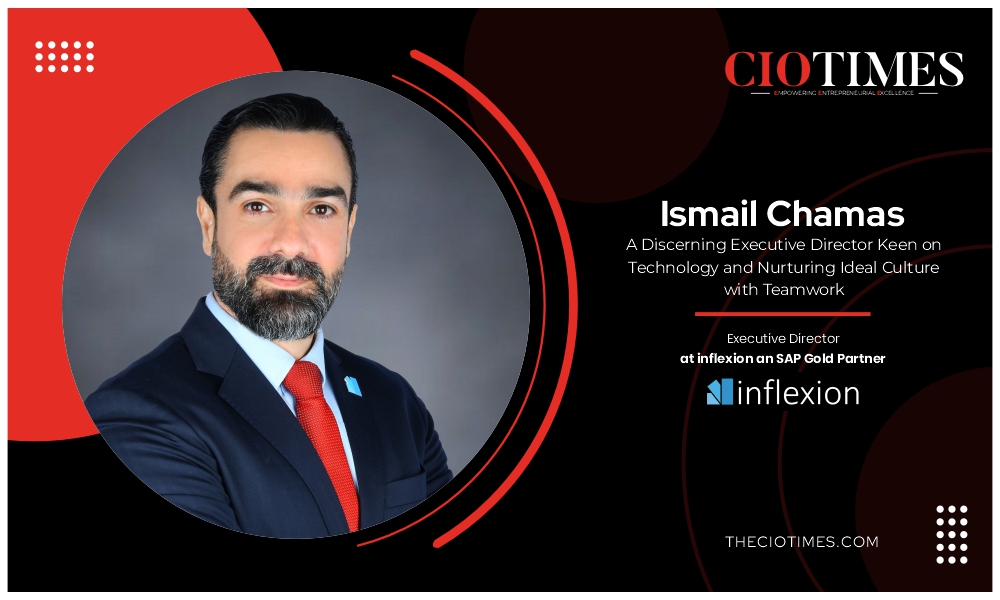
 

Ismail Chamas: Aligning Technology, People, and Outcomes

Being an Executive Director today is no longer about simply holding an organization together—it is about aligning vision, execution, and outcomes in a constantly evolving business environment. It requires balancing strategic direction with operational realities, making calculated decisions in complex and dynamic situations, and ensuring that teams are both empowered and accountable.

Ismail Chamas, Executive Director at inflexion, an SAP Gold Partner, represents a new generation of leaders operating at the intersection of technology, business, and execution discipline.

With nearly two decades of business experience across the MENA region, headquartered in the UAE, and supported by regional offices in Oman and Lebanon, alongside global delivery centers in India and Egypt, Inflexion has established a strong regional presence grounded in delivery excellence and technical depth. The organization employs over 250 professionals, bringing together more than 1,500 years of combined SAP consulting experience, with 98% of its consultants SAP-certified. Over the past eight years alone, Inflexion has successfully delivered more than 400 projects, sold and enabled over 65,000 SAP licensed users, and executed deployments across more than 30 country localizations.

Recognized as an SAP Cloud ERP Expert, and certified as both an SAP Partner Center of Expertise (PCoE) and SAP Cloud ALM partner, Inflexion has built a consistent record of recognition from SAP. Its achievements include the Delivery Excellence Award, Innovation Awards for Packages and Proprietary IP, the Top Demand Generation Award, the Best Package and IP Award, the SAP Partner Excellence Award for Marketing and Go-to-Market Best Practices, and the Partner IP of the Year. In addition, Inflexion has been recognized as both a winner and runner-up in multiple innovation hackathons, including the Hack2Build Generative AI Hackathon—further reinforcing its culture of innovation and forward-thinking execution. This portfolio reflects not only scale, but a sustained commitment to delivery quality across complex, multi-country engagements.

At inflexion, the focus goes far beyond implementing ERP systems; the organization is built on a clear principle that digital transformation is not an isolated initiative, but a continuous business transformation journey driven by AI, data, applications, and disciplined execution—enabling organizations to realize value progressively rather than through one-time implementations.

Ismail’s journey began early, shaped by diverse real-world experiences and strengthened through military service, which instilled resilience, responsibility, and a strong sense of commitment. Since entering the IT industry, he has continuously expanded his capabilities through learning, leadership development, and hands-on execution, believing that growth requires constant evolution in thinking, capability, and responsibility.

This philosophy defines his leadership approach today—remaining close to execution, ensuring alignment, building trust, and driving accountability. He views technology not as a system, but as a business execution engine that enables organizations to translate vision into action—starting from where the business needs value and scaling as it evolves—only when it is fully aligned with business objectives and embedded within operational processes. Every decision, therefore, is guided by a clear standard: it must move the business forward, strengthen trust, and deliver sustainable outcomes.

“Technology has no inherent value—its value is defined by the outcomes it delivers, the decisions it enables, and the long-term impact it creates.”

Shortened Distances

Ismail highlights that the MENA region is rapidly shifting from a phase of technology adoption to one of execution leadership, compressing what traditionally took years into a much shorter timeframe. Digital transformation is no longer viewed as a standalone technological initiative, but as a core enabler of business transformation, closely aligned with organizational strategy, growth, efficiency, and long-term sustainability.

According to him, leadership mindsets across the region have evolved significantly, with stronger executive ownership, faster decision-making, and a sharper focus on outcomes rather than activity.

Transformation today is not about implementing systems—it is about enabling organizations to operate differently, compete more effectively, and continuously create value. This shift is further supported by the adoption of integrated platforms that bring together AI, data, and applications into a unified ecosystem, such as SAP Business Suite, enabling a continuous intelligence loop across the enterprise.

Within this context, the UAE has positioned itself as a leading force in AI and digital innovation, not only regionally but increasingly on a global stage, accelerating this evolution. Ismail also emphasizes that organizations are becoming more collaborative in their approach, working closely with partners to ensure transformation is not simply delivered, but co-created, aligned with their vision and supported by shared accountability. He believes that this combination of leadership alignment, technological maturity, and execution discipline is what is enabling the region to move forward with confidence and clarity.

“Most importantly, organizations are engaging more closely with their partners, ensuring that transformation is not delivered to them, but built with them—aligned with their vision and driven by shared accountability.”

Cloud SaaS Applications for Long-Term Value

Ismail explains that Cloud SaaS Applications are often perceived as rigid or complex when implemented without clear alignment to business vision; however, in reality, they should serve as the foundation of flexible and evolving business operations within a broader Cloud SaaS application landscape.

At inflexion, solutions are not approached as standalone systems, but as part of an integrated, end-to-end platform—where the core remains structured, stable, and governed by a clean core philosophy, while surrounding capabilities enable continuous innovation, agility, and scalability.

As an SAP Gold Partner with full Sell, Build, Run, and Service capabilities, inflexion delivers comprehensive transformation across Cloud ERP, Financial Management, Spend Management, Supply Chain Management, Human Capital Management, Customer Experience, Business Data Cloud, SAP Business Technology Platform (BTP), and SAP business transformation management BTM enhanced by embedded Business AI and Joule, enabling intelligent automation and real-time decision support. This unified approach allows organizations to move beyond siloed applications toward a harmonized, end-to-end business suite experience, where processes, data, and insights are seamlessly connected and delivered out of the box.

Ismail emphasizes that transformation is not about deploying everything at once, but about helping organizations realize value progressively starting where the business needs it most, adopting the required capabilities gradually, and expanding as needs evolve. This modular approach allows customers to begin anywhere within the suite while still benefiting from a fully integrated environment that provides intelligent insights and meaningful recommendations across the enterprise, rather than within isolated applications.

He highlights that true agility is achieved not only through technology, but through the alignment of strategy, processes, data, and people, all connected to the client’s vision. Through this approach, Cloud SaaS applications become a long-term enabler of continuous transformation, allowing organizations to adapt with confidence, scale efficiently, and sustain measurable business outcomes over time.

inflexion’s SAP services span the full transformation lifecycle, encompassing Implementation and Roll Outs, Support and Maintenance, Migrations and Upgrades, and Extensions and Integrations—ensuring that clients are supported from initial deployment through continuous evolution. Its industry coverage is equally broad, with deep experience across Consumer Products, Manufacturing, Wholesale Distribution, Engineering, Construction and Operations, Automotive, Life Sciences, Chemicals, Oil and Gas, Utilities, Professional Services, and Mill Products.

To accelerate adoption for mid-size organizations, inflexion offers two SAP Qualified Partner Package solutions: S4EXPRESS, which helps organizations confidently adopt Cloud ERP with embedded best practices and adoption acceleration services for a move to SAP S/4HANA® Cloud, public edition, with speed and predictability; and S4Express XS, a tailored cloud-based ERP solution with embedded AI— This is further supported by inflexion’s proprietary solutions—RunPayroll, SSPortal, ProprietyZone, and EC—which embed intelligence directly into operations, enabling scalable and value-driven adoption.

RunPayroll delivers payroll as a fully integrated, ERP-ready extension. SSPortal provides an anytime, anywhere responsive self-service portal that improves insights, enables faster turnarounds, and delivers actionable visibility for host businesses, their customers, and vendors. ProprietyZone enables organizations to sell, lease, and manage properties with confidence—eliminating silos, accelerating decision-making, and integrating seamlessly into ERP for true end-to-end property management.

EC gives construction teams control over projects, assets, and billing within a single connected platform, capturing field data instantly and monitoring performance in real time, engineered for accuracy, efficiency, and integration.

fostering innovation, enabling unhindered expansion, and empowering organizations to launch operations with confidence and in a timely manner.

“Real transformation happens when organizations are enabled to start where they need, scale as they grow, and continuously realize value through an integrated, intelligent, and agile SaaS-driven platform.”

Responsible Use of AI

Ismail emphasizes that organizations truly succeed with AI when it is treated not as a technology initiative, but as a core business capability, driven by alignment, discipline, and trust in execution. The real differentiator lies in establishing a strong foundation—because AI is only as effective as the data it is built on.

Organizations must ensure that their data is reliable, structured, and governed, while also preparing their teams and operating models to adopt and scale AI effectively. AI must operate within a clear governance framework, where it accesses only relevant and authorized organizational data, and where decisions generated by AI are controlled, traceable, and aligned with business policies. This becomes even more critical when integrating with external or third-party sources, where the same standards must be enforced, ensuring that AI remains relevant, reliable, and responsible across all data interactions.

When these foundations are in place, AI delivers its greatest value within an integrated ecosystem where data, applications, and AI work together seamlessly, enabling a continuous intelligence loop across the enterprise. By bringing these elements together, inflexion enables organizations to move beyond fragmented insights toward real-time, actionable intelligence, where decisions are informed, execution is faster, and outcomes are measurable. Leveraging SAP Business AI and intelligent agents embedded across business processes, organizations gain enhanced visibility, control, and the ability to act with clarity rather than assumption.

At inflexion, AI is not implemented in isolation, but embedded as part of a long-term transformation journey, aligned with the client’s strategic direction and operating model, ensuring that adoption is gradual, scalable, and value-driven. The focus remains not on how much AI is deployed, but on how effectively it is governed, trusted, adopted, and scaled to deliver sustainable business outcomes.

“AI must be governed, built on relevant and reliable data, and executed responsibly—only then can it truly drive decisions, strengthen operations, and deliver long-term business value.”

Internal Clarity

Ismail views leadership not as control, but as the ability to create clarity, trust, and aligned execution across the organization. At inflexion, the focus is on building an environment where teams operate with confidence rather than competition, fostering a culture that strengthens collaboration, reinforces partnerships, and aligns everyone toward a shared vision.

This clarity is not assumed—it is actively built by ensuring that every team member understands not only what needs to be done, but more importantly why it matters and how it contributes to the broader business objectives. This shared understanding creates alignment, and alignment naturally drives focus and performance.

From this foundation, ownership emerges. Teams are empowered to take responsibility, make informed decisions, and deliver outcomes with accountability, knowing they are supported within a structured yet trusting environment.

At inflexion, this is reinforced through a continuous commitment to learning, enablement, and capability development, where individuals are equipped with the right knowledge, tools, and growth paths to evolve alongside the business and the market. This ongoing development ensures that the organization remains adaptive, resilient, and ready to meet new challenges without losing execution discipline.

Ismail also emphasizes that leadership must remain present, connected, and engaged—not distant—because trust is built through proximity and consistency. Strong organizations are not created through structure alone, but through a culture where people are aligned, empowered, and committed to delivering outcomes that reflect the organization’s vision and long-term value.

“Clarity creates alignment, alignment drives ownership, and ownership delivers performance—this is how strong teams consistently execute and grow.”

A Comprehensive Approach

Looking beyond technology has become imperative for modern leaders, as the role of technology executives continues to evolve into that of business leaders with a technology mandate. This dual responsibility is no longer about managing systems—it is about driving measurable business outcomes, shaping strategy, and enabling sustainable growth. It requires a deep understanding of business priorities, operational realities, and customer expectations, ensuring that every technology decision is fully aligned with long-term strategic objectives.

For Ismail, true leadership exists where business and technology operate in complete alignment, not as parallel tracks, but as a unified force that drives performance, agility, and value realization.

At inflexion, this approach is reflected in how solutions are designed and delivered—connecting Cloud SaaS applications, data, and AI into an integrated business environment that supports end-to-end transformation. This ensures that technology is not introduced as an isolated capability, but as a strategic enabler embedded within the operating model, allowing organizations to execute with clarity, adapt with confidence, and continuously deliver outcomes that matter.

“Technology should never exist in isolation. It must serve the business, align with its vision, and contribute to measurable outcomes.”

AI Empowers Businesses

AI adoption is rapidly moving from experimentation to operational integration, where it becomes part of how organizations run their day-to-day business. Ismail highlights that leading organizations are not just adopting AI—they are redesigning decisions, processes, and roles to improve speed, accuracy, and accountability. This shift enables businesses to move from intuition-driven actions to data-driven execution, enhancing both decision quality and responsiveness.

He emphasizes that real impact comes when AI is embedded into core business functions, not treated as an overlay, while operating within clear governance to ensure consistency, control, and trust.

At inflexion, the focus is on helping organizations move from AI experimentation to AI accountability, where every initiative is tied to a clear business outcome.

“AI creates real impact when it becomes part of how the business operates—enhancing decisions, accelerating execution, and reinforcing accountability.”

Ideal Bureaucracy

Ismail believes that sustainable innovation is only possible when it operates within a well-defined governance framework. At inflexion, innovation is not pursued in isolation. It is systematically aligned with business vision, structured through clear processes, and designed to scale with control and consistency.

Each initiative is approached with a focus on outcomes, structure, and long-term sustainability, ensuring that progress does not come at the expense of stability. He emphasizes that the absence of governance does not accelerate innovation—it introduces risk, weakens trust, and ultimately limits growth. True progress, therefore, lies in achieving the right balance, where organizations can move forward with confidence while maintaining clarity and discipline.

“The balance comes from integrating innovation and governance into one approach—enabling organizations to innovate with confidence while maintaining control, trust, and consistency.”

Long-term Unity

Ismail emphasizes that transformation must be viewed as a continuous journey, not a one-time project. Organizations often fall short not because of technology, but due to misalignment between vision, processes, and people, leading to a disconnect from real value creation. The root causes are clear—lack of direction, weak leadership alignment, limited collaboration, and ineffective change management.

True success comes from adopting a unified approach, where leadership, teams, and partners operate with shared clarity and accountability. At inflexion, this is reflected in supporting clients across the full lifecycle—from advisory and implementation to integration, rollout, and continuous support—ensuring a scalable and future-ready foundation. Ismail highlights that value does not begin at go-live; it begins after, where adoption, optimization, and continuous improvement drive sustained business outcomes.

“Organizations that shift from implementation to continuous value realization are the ones that achieve long-term success.”

Lasting Value

Ismail emphasizes that for technology investments to deliver real impact, they must be guided by clear alignment and strong accountability from the outset. Every initiative begins with a defined understanding of the expected outcomes and how success will be measured, ensuring that execution remains focused and purposeful. This requires early and continuous involvement of both business and technology stakeholders, creating shared ownership and minimizing gaps between strategy and execution.

Throughout the journey, progress is not assumed—it is continuously assessed against intended results, ensuring that investments remain on track and relevant. Ultimately, technology investments are evaluated not by implementation milestones, but by their ability to deliver sustained business value over time, reinforcing performance, resilience, and long-term growth.

“Our role is to ensure that every investment strengthens the business, supports its vision, and creates measurable value.”

Undergoing Shifts

The MENA region continues to present strong opportunities driven by vision, investment, and execution capability, but as Ismail highlights, the real differentiator lies in the mindset. Organizations across the region demonstrate a clear willingness to act, collaborate, and embrace change, creating an environment where innovation is not only accepted but actively pursued. This is further reinforced by stronger alignment between leadership, partners, and the broader ecosystem, enabling faster execution and more scalable outcomes. As a result, the region is not only adapting to global trends—it is increasingly contributing to shaping them.

“There is a strong willingness to act, collaborate, and embrace change. Organizations are open to innovation and committed to transformation.”

Common Cultural Norms

Ismail believes that culture is the true foundation of transformation, often more decisive than technology or strategy. It is culture that drives action, shapes behavior, and sustains progress over time. Successful organizations build environments rooted in trust, collaboration, and shared purpose, where people are empowered to contribute, continuously learn, and align around common objectives. In such environments, evolution is not enforced—it is naturally embedded, enabling organizations to adapt, grow, and perform with consistency.

This commitment to community and shared growth extends beyond the enterprise. Inflexion, in collaboration with IC CONS—a professional platform dedicated to empowering individuals and organizations to reach their full potential—continues to drive initiatives that foster knowledge sharing, innovation, and meaningful impact across the broader ecosystem.

Active across the UAE, Oman, and Lebanon, IC CONS delivers high-quality professional development events, activities, and collaborations that foster continuous learning, meaningful connections, and a strong sense of belonging within a professional community.

Over the past three years, Inflexion has sponsored more than 20 events in collaboration with IC CONS across three countries, bringing together over 20 speakers and engaging more than 1,000 attendees—reflecting the growing demand for platforms that place human development at the center of business progress. These initiatives focus on key themes such as Time and Energy Management, Digital Transformation, Leading Through Change, Emotional Intelligence, Self-Belief, and Employee Motivation—reinforcing the conviction that sustainable transformation begins with people.

Among the flagship initiatives are events such as The Art of Leading, Fostering an Entrepreneurial Mindset in Employees, Successful Educators Communicate to Connect, and Unleashing the Power of Business Planningeach designed to elevate professional capability, inspire purposeful action, and build a community of forward-thinking leaders equipped to navigate an ever-evolving landscape.

Extending this impact beyond physical events, Inflexion also launched its podcast series, Innovate and Conversate, which featured more than 30 interviews in its first season with leaders from diverse backgrounds, sharing insights on leadership, innovation, and real-world experiences. Building on this success, Season Two—titled “The Hidden Self Experience”dives deeper into the untold journeys of well-known leaders, uncovering the stories behind the scenes and the realities that shaped their paths.

Guided by the belief that we rise by lifting others, IC CONS represents a leadership-driven platform that transforms individual growth into collective momentum.

“Culture is what turns strategy into action—it aligns people, drives behavior, and sustains transformation over time.”

Connecting Business and Technology

Ismail highlights that the next generation of leaders will be defined by their ability to deliver outcomes through alignment, trust, and disciplined execution. Success will depend on how effectively they connect technology with business vision, ensuring that every initiative serves a clear purpose and drives measurable impact. This requires leaders to continuously evolve themselves, lead with clarity, and manage people through example, not instruction. It is this combination of self-awareness, structure, and execution discipline that enables organizations to perform consistently in a rapidly changing environment. At its core, the approach remains clear—not to deliver systems, but to enable transformation, intelligence, and measurable business value.

“Technology will continue to evolve, but leadership will always be about people, decisions, and outcomes.”

Revolutionizing Construction: The Future of Robot Blocks

Robotically built building blocks have the potential to completely change the construction business. This technology ushers in a new era when machines and AI-driven systems transform the design and construction of buildings, from lowering labor costs to improving precision and sustainability. According to experts, construction robotics in the future will reduce environmental effects and expedite project timetables, providing a model for more intelligent and environmentally friendly urban development.

The Construction Robot Revolution

A revolution in construction is being ushered in with the introduction of robotic construction systems. Robots can assemble modular components with unparalleled speed and accuracy by automating labor-intensive and repetitive processes. This strategy minimizes human mistake, minimizes material waste, and maximizes on-site safety in contrast to conventional approaches.

According to studies, using robotics into construction can increase productivity by as much as 50%, especially for large-scale infrastructure projects, prefabricated buildings, and high-rise buildings. Businesses at the forefront of this technology point out that the robot revolution article highlights a paradigm shift in construction management in addition to efficiency.

How the Industry Is Changing Due to Robot Blocks

Robotically built building blocks allow for precise, scalable, and adaptable construction since they are made to fit together like digital LEGO bricks. By combining sensors, AI algorithms, and automated quality checks, this technology can transform the construction sector in ways that conventional techniques cannot.

These advancements, which range from robotic bricklaying to automated wall assembly, are lowering reliance on human labor while maintaining constant quality. For developers, this means reduced expenses, increased sustainability, and quicker project completion. Long-term urban planning initiatives are supported by modular architecture, which also makes building upkeep and renovations easier.

Automation and Sustainability

The contribution of robot revolution technology to sustainability is among its most persuasive advantages. Robots minimize waste from misaligned or damaged components by optimizing material consumption. Automated systems can also effectively include eco-friendly materials and run on less energy.

Robotic assembly may be essential to reaching carbon reduction targets as cities work toward more environmentally friendly infrastructure. The building industry is undergoing a transition that is in line with international sustainability goals by combining precise engineering with intelligent resource management.

Read our Exclusive interview with Kelly Weger

The Ultimate Guide To Choosing The Right Clothing Design Software

Fashion design has moved far beyond paper sketches and fabric swatches, and digital tools now shape how ideas come to life. Modern creators rely on software that helps refine concepts quickly while keeping creativity intact, and this shift has made design more accessible than ever. A well-chosen platform supports both imagination and precision, which allows designers to move from rough ideas to polished visuals without friction.

With so many tools available, choosing the right one requires a clear sense of what actually supports creativity. Many creators explore different apps to design clothing as a starting point, but the real goal is to find software that fits naturally into the design process. The right choice feels intuitive, supports creativity, and keeps the workflow smooth from start to finish.

Ease Of Use And Learning Curve

A clean and intuitive design helps designers feel comfortable from the start, even without prior experience. Clear icons, logical tool placement, and responsive controls reduce hesitation and make each step feel natural. When a tool feels easy to use, creativity tends to follow without resistance.

Support materials also play a key role in shaping the learning experience. Built-in tutorials, helpful templates, and simple guides allow designers to explore features at their own pace while building confidence. Over time, this gradual learning process leads to more refined and thoughtful designs.

Compatibility And Device Flexibility

Clothing design software works across various devices, and that flexibility can shape how comfortably a designer works. Some tools are optimized for tablets with touch controls, while others perform best on larger screens that allow more detailed editing. Choosing a platform that matches the preferred device ensures a smoother and more enjoyable process.

File compatibility also adds to this convenience, especially when designs need to be shared or refined later. Export options that preserve quality and structure make collaboration easier and keep designs consistent. This seamless movement between tools helps maintain both accuracy and creative intent.

Design Precision And Customization

Precision tools help translate creative ideas into designs that feel balanced and accurate. Features like measurement guides, alignment grids, and scaling options allow designers to maintain proper proportions while refining each detail. This level of control becomes especially useful when designs move closer to production.

Customization adds personality and depth to every project. Designers can experiment with textures, patterns, and color variations without limitations, which allows each piece to stand out. Flexible settings ensure that creative expression stays at the center of the design process.

Performance And Workflow Efficiency

Smooth performance keeps the design process enjoyable and productive from start to finish. Fast loading times and responsive controls prevent interruptions, which helps designers stay focused on their work. A reliable tool supports creativity without slowing it down.

Efficient workflow features also reduce unnecessary effort during complex projects. Options like reusable templates, quick edits, and organized layers make it easier to manage multiple elements within a design. This structure allows designers to spend more time creating and less time handling repetitive tasks.

Choosing the right software comes down to finding a balance between ease, performance, and creative freedom. A tool that feels natural to use can support better ideas while making the process more enjoyable from start to finish. Clear features, thoughtful design, and reliable performance all contribute to a smoother experience. Exploring apps to design clothing with a clear understanding of personal needs helps narrow down the most suitable option. The right choice supports creativity while keeping every step simple and satisfying.


When Is The Best Time To Start Lawn Care Cary NC For Optimal Growth?

Cary, North Carolina, falls within the Transition Zone. This horticultural zone has humid subtropical climates, with sweltering, moisture-laden summers and unpredictable winters. The environment offers the conditions that fungal pathogens need to survive. Without proper timing, these pathogens can outgrow your lawn, leading to stunted growth. In addition to the favourable air temperature, the region has red clay soil with superior moisture-holding capacity.

During the heavy afternoon thunderstorms, prevalent in this region, the soil becomes waterlogged and can suffocate the grass root systems. Given this, those who want healthy, lush grass must invest in timely care. You want to leverage pH balancing and strategic aeration to break up the soil so the grass can breathe and grow.

So, considering the weather variables and extreme soil conditions in this region, what is the best time to start lawn care? This blog opens your eyes to when lawn care should start in different seasons.

1. Spring Season

Starting lawn care in the spring can impact the growth throughout the year. The care strategies implemented in early March determine whether the lawn will thrive or struggle the rest of the year. It is during this period that crabgrass and other dormant weed seeds grow and start competing with your grass. Neglecting care during this period leaves the grass at the mercy of the weeds as they outcompete it for nutrients and space.

Proper lawn care in early spring addresses the underlying Cary’s soil chemistry. For beginners, the North Carolina clay soil has higher acidic levels, ranging from 6.2 pH. This extremely low level can lock essential nutrients in the ground. 

However, Lawn care Cary NC experts can initiate soil testing and lime treatment to neutralize the acidity and unlock your soil’s potential. The strategy allows the early fertilization to bear maximum results, ensuring proper absorption into the root system.

Robust Spring lawn care strategies feed the grass and clean the surrounding mess to optimize growth. It involves applying pre-emergent weed control to stop invaders and custom-blended fertilizer to fill the nutrient gaps of this soil. These strategic care routines ensure the grass develops a thicker and more resilient structure that can withstand the intense sauna effect.

2. Summer Season


The summer months in Cary experience the highest heat levels and extreme dew points. These conditions can stress your turf, making it struggle to survive. In this season, you must offer protective care strategies that defend your turf from biological threats and environmental extremes. Lawn care experts highly recommended fungicide treatments to safeguard the turf against the sauna effect. Proactive fungicide applications create a robust protective layer around the grass blades. That prevents the spores from taking hold during the humid nights, while keeping brown patch and other deadly diseases.

Efficient pest control and grub strategies can help your turf fight the underground battle. These care strategies can protect against beetle larvae and grubs that feed on the root system. Considering they eat the grass from beneath, you can barely tell until the damage is extreme.

Also, strategic mowing in summer offers effective defence against the extreme heat. For optimal results, raise the mower blades to the highest settings. That leaves the turf longer enough to shade the soil beneath, reducing water evaporation and cooling the root crowns. The height encourages deeper root growth, enabling the lawn to have superior structural strength.

3. In the Winter Season

In winter, most turf looks dormant, but the soil remains biologically active. Neglecting proper care in this season leaves an uphill task for Spring. The lack of a strategic winter care strategy allows the hardy cool-season invaders to outcompete your turf. They grow bigger and wilder, making them tricky to eradicate in the spring season. In the winter, your grass is undergoing energy conservation, and minor issues can lead to delayed growth.

Strategic winter weed control strategies are mandatory to keep things going. In this season, expect rampant growth of wild onion, henbit, and chickweed. Post-emergent treatments can do well in cleaning the lawn and eliminating the competitors. The soil is dormant, and eliminating these weeds ensures the turf grows better when the soil warms up in March.

Similarly, winter is the ideal time for equipment maintenance. Thorough mechanical audits give you clear details about the condition of the equipment. It is time to sharpen the mower blades, ready for the spring season. Remember, dull blades shred the grass, leaving jagged, white edges that offer room for moisture to penetrate the fungal spores.

Wrapping Up

Making your Cary, North Carolina, lawn stand out requires strategy and precision. You must align the care routine with the town’s environmental rhythms. You must also work on neutralizing the acidic soil and aerating the red clay soil to allow space for grass to thrive. Additionally, you should be ready to battle the humidity-driven fungi of winter. Introducing a year-round care strategy keeps your turf looking healthy.

It is crucial to be consistent in your care routine, ensuring you handle each step at the right time. Preparing for each season and the challenges it brings can make your lawn care more effective and penetrative. A healthy lawn requires investment in time and care, and knowing when to address issues before they grow bigger is critical.

How to Choose the Best Mass Tort Case Management Software

When your firm specializes in mass tort cases, complex intake management, high caseload volume, and sensitive documents are part of the day. Your staff needs case management software that lightens the administrative burden and lets them focus on what really matters. But what should that software actually do?

From managing organization to keeping deadlines on track, this guide shares how to choose the best mass tort case management software for your firm.

Mass Tort Versus General Legal Case Management Software

You know that all legal fields don’t fit under one category, and neither should your case management software. Mass tort cases require complex and diverse organization, cross-referencing across multiple offices, and constant communication across many staff and plaintiffs. 

General legal case management software can’t keep up with high-volume litigation. Your firm needs a platform that provides centralized case data, document storage, long-term deadline tracking and calendar syncing, and secure communication tools — a system built for large-scale client coordination and workflow management.

Features That Make Mass Tort Case Management Software Stand Out

Because so much is at stake, your mass tort case management software should solve your biggest pain points. When comparing brands like CasePacer and similar competitors, review the features each offers side-by-side and choose the option that makes your workflow easier, reduces administrative overwhelm, and supports scalability as your caseload continues to grow. 

For many legal offices, the best mass tort case management software includes:

  • Centralized case management that organizes documents, including plaintiff data, medical records, notes, and case status updates.
  • Streamlined intake forms, lead-to-case conversion tracking, and reduced manual entry.
  • Searchable files, document organization, and sensitive record support.
  • Client portals, mass messaging, communication tracking, and automated responses.

Managing medical records and other sensitive data isn’t just about organization. How does the software handle HIPAA compliance, cybersecurity regulations, and other federal laws? Does it protect confidential information and reduce risk? Look for a program that can help your firm meet its legal and ethical obligations while streamlining daily work processes.

Where Automation Adds Time Freedom to the Workflow

Investing in case management software doesn’t just make the day-to-day tasks easier; the right automation tools add time to your day.

Automation handles tasks such as intake follow-ups, task assignments, deadline reminders, and document updates. Without the need to manually enter each of these repetitive steps, your staff has more bandwidth to focus on client work and strategy.

Software that automates routine steps gives your staff time freedom. Cases move forward faster. Manual errors are reduced. Organization becomes second-nature without the administrative staff feeling pressured to keep everything perfect.

Customization Matters in Mass Tort Software

Every mass tort firm has different goals and workflows that align with those objectives. Although “mass tort software” is a broad category, a platform that offers customizable features can deliver a much more tailored fit. 

Look for software that integrates with your preferred email and calendar systems. If you already rely on productivity tools that work, will the software enhance them or complicate them? The goal is to implement your new case management platform so it adapts to your firm, not force your staff to overhaul how they already work and increase stress.

How to Compare Vendors Before Choosing Software

The brands are professional. The features and price points seem to be comparable. So, how do you choose the software that will work best for your mass tort law offices?

Start by assessing your firm’s needs. What’s working well, and where are the gaps? Can your current workflow handle the volume of cases? Is intake complexity delaying progress? Do reporting features show the strengths and weaknesses to help make future decisions? How does communication happen between team members and amongst clients?

Use this list of pain points to evaluate potential software systems. Select two or three highly recommended platforms, then review a side-by-side comparison table of their features. Request demos and have trusted staff use the programs and provide feedback. How user-friendly and intuitive are they? Is the support offered sufficient? What part of the daily processes is streamlined, and where do you notice friction or slowdowns?

Finish your comparison by asking how the platform supports scalability as your caseload grows, and what support features are provided once you purchase the system. Let those answers guide your final selection.

Simplify Your Case Management

For firms that specialize in high-volume litigation, the best mass tort case management software prioritizes efficiency, communication, and case oversight. Choose a platform that aligns with your current processes and make steps like intake, data centralization, and communication easier, and let the results show in smoother workflows, fewer missed deadlines, and stronger client relationships. 

The Future of Chocolate Labeling with Epson Technology

Both the chocolate industry and how it is marketed to consumers are changing. Chocolate manufacturers are using technology to keep ahead of the curve due to hazards associated with cocoa production and shifting consumer expectations. With its colorful, customizable, and on-demand labels that improve branding, expedite processes, and cut waste, Epson ColorWorks printers are assisting both large-scale and artisanal chocolate manufacturers in embracing the future of chocolate labeling.

The Future of Chocolate: The Dangers to Cocoa Production

Significant obstacles to global cocoa production include supply chain interruptions, workforce constraints, and climate change. The way chocolate companies handle production, packaging, and distribution is changing as a result of these challenges. Because of this, technology and chocolate are now closely related in both production and consumer presentation.

Chocolate manufacturers may react swiftly to changes in production, seasonal variations, and limited-edition runs by implementing contemporary labeling options. This flexibility is essential for sustaining supply and satisfying consumer demands, underscoring the significance of chocolate manufacturing technologies outside of the factory.

How Chocolate Labeling is Changing Due to Technology

At the forefront of this change are Epson ColorWorks printers, which enable chocolate manufacturers to produce premium, full-color labels as needed. Pre-printed labels used to need huge inventories, which reduced flexibility and increased waste. On-demand digital printing allows manufacturers to:

Make labels unique for new tastes, seasonal products, and promotions.
Cut down on label waste and inventory expenses
Make sure all product lines have a professional, uniform brand.

By combining technology with chocolate labeling, businesses can quickly adjust to consumer tastes and market shifts without sacrificing operational effectiveness.

In the end, what effect did technological advancements have on chocolate supply?

The supply chain for chocolate has been significantly impacted by the switch to digital labeling. Products may go from factory to retail shelves more quickly thanks to faster label production, which also helps businesses adapt to changing cocoa supply.

Additionally, small-batch and artisanal companies can retain quality while expanding their operations thanks to the adaptability of Epson technology used to create chocolate labels. In the end, this fortifies the supply chain, guaranteeing that chocolate goods are delivered to customers without sacrificing freshness or presentation.

Candy’s Future and Consumer Expectations

Labeling technology becomes a crucial distinction as the future of sweets embraces sustainability and personalization. Aesthetically pleasing packaging that conveys company values, ingredients, and origin tales appeals to consumers. Chocolate and confectionery manufacturers can satisfy these needs by using Epson ColorWorks to create packaging that is both useful and an extension of the brand experience.

The technology used to create chocolate is influencing how products connect with consumers, boosting sales and brand loyalty in a cutthroat market through everything from colorful seasonal packaging to limited-edition promotional labels.

The Delightful Meeting Point of Chocolate and Technology

The use of Epson’s printing technology is indicative of a larger trend in the confectionary sector: the incorporation of technology into chocolate operations to boost productivity, innovation, and sustainability. Innovative labeling solutions help businesses remain resilient, satisfy customer expectations, and provide high-quality products globally as cocoa production continues to face problems.

In order to ensure that chocolate and candies continue to thrill consumers for many generations to come, clever, flexible, and sustainable production and presentation are just as important to the future of chocolate as taste.

Read our Exclusive interview with Arina Arinnitti

What Does Provident’s Acquisition Mean for Memphis Real Estate?

The commercial real estate market is being affected by Provident Industrial’s recent acquisition of a portfolio of 13 buildings in the Memphis metropolitan area. This action strengthens the city’s position as a major logistics hub and demonstrates the company’s strategic focus on industrial expansion. Provident’s investment shows market confidence and a dedication to strengthening its presence in high-demand industrial areas given the rising demand for warehouse and distribution spaces. Understanding the ramifications of this deal gives businesses and investors alike insight into how Memphis real estate is changing.

Key Logistics Expansion

The essential location of the Memphis metropolitan region in the U.S. logistics network, which links the Mississippi River, major roadways, and railroads, has long been acknowledged. The acquisition of a 13-building portfolio by Provident is an example of a strategic extension of vital logistics infrastructure. The company is positioning itself to serve expanding e-commerce, distribution, and supply chain operations—all crucial for companies that depend on effective transportation and storage solutions—by acquiring top-notch industrial assets.

Considerable Capital for Investments

Provident Industrial’s trust in Memphis as a growing industrial market is demonstrated by this acquisition, which represents a substantial financial capital commitment. Capital infusions into industrial assets frequently indicate a promising future for market expansion, drawing in more developers and investors. These buildings, which have state-of-the-art amenities built for scalability and operating efficiency, improve the entire industrial ecosystem and increase Memphis’ appeal to regional and national companies looking for dependable industrial space.

Confidence in the Market

Additionally, Provident’s action is a clear sign of market confidence in the Memphis real estate market. Investors’ optimism over the city’s long-term growth possibilities, especially in the industrial and logistical sectors, is demonstrated by the acquisition. A number of elements, such as the strong demand for warehouse space, the area’s closeness to important transportation routes, and its business-friendly atmosphere, contribute to this confidence. The deal might therefore promote additional investment in comparable industrial assets, enhancing the city’s standing as a logistics center.

Expanded Industrial Portfolio

With this transaction, Provident’s industrial holdings have grown dramatically, improving its capacity to satisfy tenant demands in a variety of industries. The company’s expanded industrial portfolio allows it to facilitate supply chain expansion, offer flexible lease choices, and adjust to changing market demands. Provident maximizes property management, streamlines operations, and provides value to investors and tenants by combining premium assets into a single portfolio.

Geographical Extent and Strategic Consequences

Because of its size and accessibility to national markets, the Memphis metropolitan area continues to draw interest. With the acquisition, Provident is in a strategic position to take advantage of Memphis’s transportation networks, which include interstate highways, the Mississippi River corridor, and FedEx’s worldwide center. In addition to helping tenants looking for effective distribution, this geographic advantage strengthens Provident’s ability to draw in long-term leases and quality tenants.

Considering the Future

The purchase of the 13-building property by Provident Industrial is more than just a real estate deal; it’s a calculated move in line with supply chain efficiency, industrial growth, and logistics trends. Memphis’s position as a vital logistical and industrial hub is expected to grow as businesses place a higher priority on having access to strategically located industrial sites. This investment highlights the city’s attractiveness to institutional investors and indicates continued prospects for expansion, innovation, and sustained economic growth.

Read our Exclusive interview with Kelly Weger

How Do Portable Oxygen Concentrators Improve Mobility For Oxygen Users?

Going about the day with the aid of oxygen therapy may seem limiting as the equipment restricts movement. Some people find it hard to go out to do errands, meet friends, or even walk around due to the large size of conventional oxygen systems or the reliance on fixed systems.

Limited battery life, bulky cylinders, and frequent refueling requirements are also very inconvenient. This may, over time, decrease the trust in going outside and keeping an active schedule.

Nonetheless, the technology of oxygen therapy has developed such that these limitations are directly overcome. Contemporary portables are capable of supporting movement and not limiting it, which provides flexibility in various settings. This change enables users to live their daily routines more conveniently as they control their oxygen requirements.

This article describes the benefits of portable oxygen concentrators and how they enhance mobility and enable oxygen users to live a more active life.

1. Freedom Of Movement with Portable Oxygen Devices

When oxygen supply is reliant on a heavy tank or a stationary machine, mobility is likely to be restricted. This is where contemporary solutions come in to make a difference.

Portable Oxygen Concentrators enable users to move freely without necessarily being tied to refill routines or a stationary oxygen supply. These machines absorb oxygen in the surrounding air, and this implies that the user can walk around the block, go shopping with it, or even visit friends.

Subsequently, movement is less planned around equipment and more of following routine daily activities in a natural manner. Moreover, a smaller size and shoulder carry make carrying less physical and allow one to remain active longer without pause.

2. Travel Convenience Across Daily Routines

Short trips are a part of daily travel and may involve flexibility like commuting, running errands, or going to appointments. Portable oxygen devices make this process easier by eliminating reliance on external oxygen supply systems.

Since they are mobile, users do not have to stop to change equipment when switching between outdoor and indoor environments. This enhances uniformity in oxygen delivery during movement, which is a requirement for ensuring comfort during the day.

Moreover, most of the devices have portable characteristics like easy-to-control features and simple charging systems. As a result, users are able to plan their day less restricted and with more certainty on their capability to stay mobile.

3. Battery Performance and Power Reliability

Battery life is one of the determining factors of mobility. Even lightweight equipment is a limiting factor without dependable power.

Portable oxygen devices are designed with rechargeable batteries, which enable them to be used for many hours, after which they may be recharged. There are also models that have interchangeable batteries, further increasing the time of usability even during long outings.

Moreover, modern battery systems are set in such a way that they produce the same amount of oxygen until they run out, ensuring stable operation. This dependability minimizes the necessity of continuous supervision and lets users concentrate on actions as opposed to equipment constraints.

Consequently, the increased travel time is more viable and less stressful.

4. Lightweight Design Supporting Physical Comfort


Travelling with medical equipment may be physically exhausting when the equipment is heavy or poorly balanced. Portable oxygen systems can solve this problem with constructions that are small in size and designed in an ergonomic manner.

The majority of the units are constructed to be worn or carried over the shoulder or in small bags, which evenly distribute the weight and lessen the strain on the body. This is especially necessary for those who have low levels of strength or endurance.

Besides, smaller form factors allow navigating crowded areas, using staircases, or moving through transportation systems more easily. This decreased physical load over time helps to provide more regular movement throughout the day with no additional fatigue.

5. Airline and Outdoor Use Accessibility

Air travel and outdoor activities often present challenges for oxygen users due to strict equipment regulations and environmental limitations. Portable oxygen systems are designed with these scenarios in mind.

Many devices are approved for airline use, allowing individuals to carry them onboard without switching to alternative oxygen sources. This eliminates one of the biggest barriers to long-distance travel.

Outdoors, these devices perform well in different environments such as parks, sidewalks, or recreational areas. Because they do not rely on pre-filled oxygen tanks, users can remain active in open spaces without worrying about supply restrictions. This opens opportunities for travel and leisure that would otherwise require careful planning.

6. Better Independence at Home Environment

Portable oxygen systems make everyday movement inside the home much easier by removing the need to stay close to a fixed oxygen setup. Instead of adjusting activities around equipment placement, users can move naturally between rooms, complete daily tasks, and maintain regular routines without interruption.

This flexibility is especially helpful during activities like cooking, light cleaning, or simply moving from one space to another. Since the device travels with the user, there is no need to pause and reconnect equipment repeatedly, which often slows down routine work.

In addition, quiet operation plays an important role in maintaining a calm home environment. Conversations, rest, and leisure activities continue without disruption. Over time, this ease of movement supports a more comfortable and independent living experience within familiar surroundings.

7. Stable Oxygen Delivery During Physical Activity

Maintaining steady oxygen levels during movement is essential, especially when activity increases breathing demand. Portable oxygen systems are designed to adjust oxygen delivery in response to changing activity levels, which helps users stay active without frequent interruptions.

During walking, climbing stairs, or performing light physical tasks, the device continues to supply oxygen consistently. This reduces the need to stop frequently to rest, making movement feel more natural and less restrictive throughout the day.

In addition, the responsiveness of these systems helps manage unexpected changes in activity, such as walking faster or moving between different environments. As a result, users experience greater confidence in staying active, knowing their oxygen support adapts alongside their daily movements.

Conclusion

Portable oxygen systems have changed the way oxygen users experience daily movement by reducing dependency on stationary equipment and heavy tanks. With improved battery life, lightweight construction, and travel-friendly features, these devices support both short routines and extended outings with greater ease.

They also allow smoother transitions between home and outdoor environments while maintaining consistent oxygen delivery during activity. Over time, this flexibility contributes to a more active and less restricted lifestyle.

As technology continues to advance, mobility-focused oxygen solutions are expected to become even more efficient, helping users maintain independence while managing their respiratory needs effectively in everyday life.


How Do Custom ELISA Kits Improve Sensitivity And Specificity In Detection?

Precise protein detection can be more difficult than it seems, particularly with low-abundance biomarkers or complicated biological samples. Inconsistent results, background noise, or cross-reactivity that make the data hard to trust are some of the problems that many researchers struggle with.

When experiments are more specialized, the standard kits might not necessarily be as suitable as needed, causing repetition of the experiment and wastage of resources.

It is at this point that customized assay solutions can come in. Custom methods can greatly enhance sensitivity and specificity by matching the design of assays to the particular requirements of a given experiment. Consequently, scientists obtain more credible data and a better understanding of biological mechanisms.

This article describes the benefits of using custom ELISA kits to improve detection and provide more accurate experimental results.

1. Optimized Antibody Selection Improves Target Recognition

In the case of custom ELISA kits, one of the greatest benefits is well-chosen antibody pairs.

When antibodies are engineered in most standard assays, they are intended to be used generally, and this can result in poorer binding to particular targets. Nonetheless, custom kits enable antibody screening with your specific analyte, which guarantees more powerful and specific binding.

Consequently, the capture and detection of antibodies identify specific epitopes on the same protein that are more precise. This decreases the non-specific interactions and enhances the signal quality.

Your assay is therefore more dependable, particularly when dealing with closely related proteins or complex sample matrices.

2. Tailored Assay Design Enhances Detection Sensitivity

The sensitivity of low-abundance biomarkers is frequently a determining factor in whether they can be detected at all. Not all standard kits are capable of giving the necessary detection limits, especially in early-stage studies or analysis of rare proteins.

Custom ELISA kits can deal with this by optimizing assay factors, including antibody concentration, incubation period, and detection chemistry. These modifications are such that even small concentrations of analyte result in detectable signals.

Furthermore, assay conditions may be optimized to minimize loss of signals as each step is undertaken. The result is better signal-to-noise ratios, so you can confidently detect subtle biological changes. In the long term, such sensitivity enhances more precise data interpretation and prevents the necessity of several experiments.

3. Reduced Cross Reactivity Strengthens Specificity

Cross-reactivity is one of the most frequent problems with immunoassays. With the binding of antibodies to unanticipated targets, the outcome is misleading and not easy to interpret.

Custom ELISA kits reduce this risk by confirming the specificity of antibodies to similar proteins and other possible interfering substances. Moreover, the conditions of the assays are adjusted to reduce non-specific binding.

Due to this fact, the assay is specific to the intended analyte, even when dealing with complex samples such as serum or plasma. This enhanced specificity makes sure that your results do represent genuine biological activity and not background interference. As a result, this leads to a more accurate and meaningful downstream analysis.

4. Sample Matrix Compatibility Improves Data Accuracy

The type of sample used introduces various degrees of complexity, and this can usually influence the performance of assays. As an example, serum and plasma have proteins, enzymes, and lipids that may interfere with the binding of antibodies or signal detection. As a result, using a non-optimized assay may lead to inconsistent or misleading outcomes.

This is countered by custom ELISA kits that test the performance of assays using a particular sample matrix. These involve changing buffer compositions, blocking reagents, and washing conditions to minimize interference of undesired components. As a result, the assay environment is more controlled and predictable.

Besides, matrix-specific optimization assists in preserving the signal integrity of various types of samples. This guarantees that the differences in outcomes can be explained by biological differences and not by technical constraints to increase the total data accuracy.

5. Standard Curve Optimization Ensures Precise Quantification

Accurate quantification depends on how well the standard curve matches the target protein in your samples. In many standard kits, general protein standards are used, but they may not fully behave like the real biomarker. This can sometimes lead to errors in measurement.

Custom ELISA kits help fix this problem by using recombinant protein standards that are very similar to the actual target. Because of this, the standard curve becomes more realistic and closely reflects real sample conditions. As a result, your concentration readings become more accurate and consistent.

In addition, the assay range can be adjusted based on expected protein levels. Whether the levels are very low or very high, the curve stays reliable and linear, which improves overall confidence in your results.

6. Controlled Assay Conditions Improve Reproducibility

Reproducibility is very important because it helps you get consistent results over time. However, even small changes in assay conditions can affect the outcome. This becomes more challenging when you run multiple experiments or use different batches of reagents. Because of this, it can be difficult to tell if the changes in results are real or caused by technical issues.

Custom ELISA kits help reduce this problem by standardizing each step of the assay. Antibody levels, incubation times, and reagents are carefully optimized and tested. This helps the assay perform in a stable and predictable way every time.

Also, batch-to-batch validation ensures that reagents work consistently. This makes it easier to compare results. In the end, better reproducibility improves data reliability and saves time by reducing repeated experiments.

7. Custom Development Supports Complex Research Needs

Modern biomedical research often deals with complex targets and changing study needs. In many cases, standard assays are not enough to handle these requirements. For example, new biomarkers or engineered proteins may not have ready-to-use detection kits, which can limit how experiments are designed.

Custom ELISA kits help solve this issue by allowing assays to be built for specific research goals. You can design them for unique targets, adjust detection methods, and optimize protocols to fit your workflow. This makes the assay more suitable for your experiment.

In addition, custom development helps match assay performance with research objectives. Whether you are working on immunotherapy or biomarker studies, this flexibility is valuable.

Overall, it helps keep experiments efficient, relevant, and capable of producing reliable results.

Conclusion

Improving sensitivity and specificity in protein detection often needs more than standard kits, especially when samples are complex or target proteins are present in very low amounts. Custom ELISA kits help solve this by adjusting every part of the assay, including antibody choice and protocol design. This leads to clearer signals, less background noise, and more accurate measurement of proteins.

In addition, proper validation and optimized conditions help ensure the results stay consistent across different experiments. This saves time and reduces errors. Overall, custom solutions make research more reliable and help you get better and more precise results.